Trust & transparency
Evidence & disclosures
Evidence basis: Researched analysis. The article compares public evidence and does not claim hands-on testing unless a section says otherwise.
Linked company releases and attributed reporting; unresolved allegations distinguished from confirmed events.
Sources checked: Nov 12, 2026
Linked references: 16 explicit sources in the article.
Synthetic media: Thumbnail and inline NVIDIA illustration are user-supplied satire, not documentary evidence. Cover and social art are AI-generated empty-chair concepts. Official Google, Adobe and Claude imagery is credited inline.
November 6–12, 2026 · Updated with Thursday’s reported market close.
The biggest AI story this week was a leadership crisis at the company supplying much of the industry’s computing power. NVIDIA confirmed Jensen Huang’s departure, while Anthropic and Google shipped models intended to tackle increasingly difficult work. Here is what changed, what remains alleged, and what deserves attention next.
Source note: Release details come from NVIDIA, Anthropic, Google, and Adobe. Reporting is credited to Reuters, AP, and the original investigations identified below. This is a researched roundup, not hands-on model testing.
TLDR
- NVIDIA confirmed Huang’s immediate departure; CFO Colette Kress becomes interim CEO.
- Admitted infidelity, a reported second affair, and espionage allegations require different levels of certainty.
- NVIDIA’s sharp Thursday opening drop eased substantially by the close.
- Claude Fable 5.2 launched; Mythos 5.2 retains restricted access.
- Gemini 4 Carbon expanded access, and Hydrogen began rolling out.
- Adobe announced more agent-driven creative tools; Anthropic’s IPO preparations add another business story.
NVIDIA: what is confirmed, and what is alleged?
November 12 · Leadership change confirmed. NVIDIA says Huang resigned as president, CEO, and director, effective immediately. Colette Kress takes over as interim CEO, and Harvey Jones becomes board chair. The company says operations, customer commitments, and its product roadmap continue uninterrupted. That is NVIDIA’s assurance, not an independent guarantee about future performance.
Read NVIDIA’s announcement
Huang acknowledged being unfaithful in a November 8 employee message. Reuters’ timeline says NVIDIA opened an independent investigation into reports that he had been targeted by foreign intelligence. The central allegation concerns Alice Huang, associated with Singapore-based Megaspeed, whom US officials reportedly identified as working for Chinese intelligence. She and Jensen Huang are not related.
The New York Times subsequently reported a second affair, with an NVIDIA executive who reported to him; Reuters credited that reporting in its timeline. This raises a separate workplace-governance issue. An admission of infidelity does not establish espionage, unlawful technology transfers, or responsibility for alleged export-control violations. Those questions require evidence from the investigations.
Reuters’ dated timeline · Original Times reporting on the second affair
Reuters also reports allegations involving chip shipments and a shareholder lawsuit. China has rejected the espionage claims, and Megaspeed has denied wrongdoing. A lawsuit states accusations; it is not a finding that investors were defrauded.
AFP’s explanation of the allegations and responses · AP on the shareholder suit
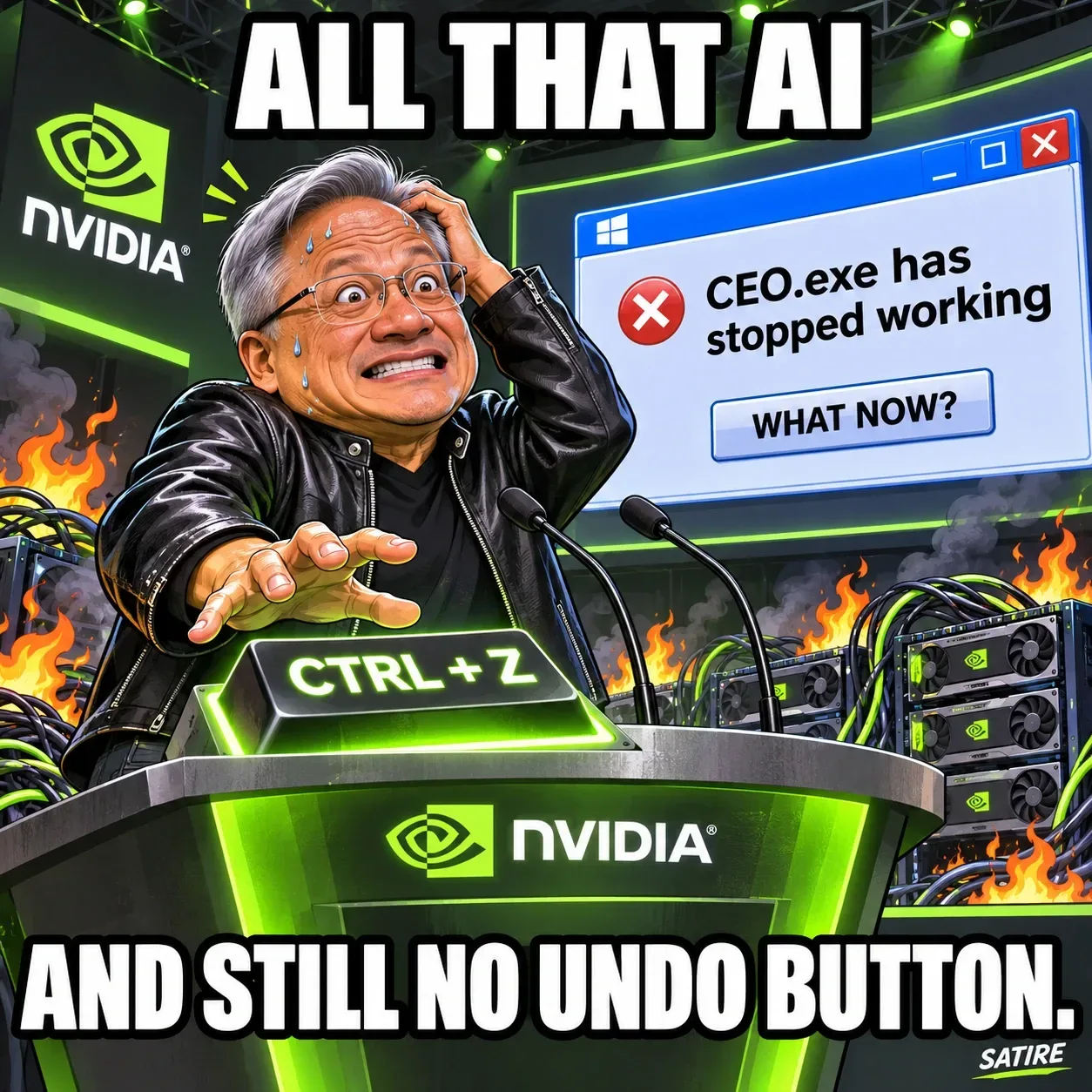
Satire supplied by Colin. This illustration is commentary, not a photograph or evidence of the alleged events.
Watch the NVIDIA news
Watch: Jensen Huang resigns as NVIDIA CEO — Yahoo Finance, November 12, 2026 (2:59)
This is news coverage of the announcement, not an official NVIDIA address. Published at 8:58 a.m. Eastern, it predates the closing-market figures discussed below.
How the market reacted
Reuters reported roughly $430 billion in NVIDIA market value lost over November 9–10. That measures a change in stock-market valuation, not cash leaving the company’s bank account.
Reuters’ two-session market report
On November 12, AP reported an initial NVIDIA plunge of about 14%, followed by a recovery to a closing loss of approximately 4%. The S&P 500 finished down 0.4%. Those are different measurements: the opening shock was much larger than the end-of-day decline.
AP on NVIDIA’s Thursday session · AP’s closing index report
My reading: investors are pricing leadership uncertainty and possible business restrictions, but the partial recovery complicates any claim that the market has written NVIDIA off. Wider concerns about AI spending and market conditions also matter; the entire selloff cannot responsibly be assigned to one headline.
What happens next—and what it means for AI
Watch three things: the independent investigation, any concrete changes to export rules or enforcement, and NVIDIA’s November 17 earnings report, which the company says remains scheduled. Lawmakers had requested a November 18 briefing from Huang; the leadership change makes its eventual arrangements something to verify, not assume.
The possible consequences include tighter customer checks, restrictions on particular sales or access arrangements, litigation costs, and changes in leadership. None is a settled outcome. Existing chips do not stop operating because a CEO leaves. For AI developers, the consequential question is whether access to computing capacity, its cost, or delivery schedules change. That is an inference about the risks—not a forecast of NVIDIA’s collapse.
New models: Claude Fable 5.2 and Mythos 5.2
November 9 · Fable released; Mythos access restricted. Anthropic positions these models for demanding coding, reasoning, and scientific work. They share an underlying model, with stronger cyber and biology safeguards in Fable; Mythos access requires verification for relevant organizations.
Standard API pricing is $8 per million input tokens and $40 per million output tokens. Optional fast mode costs more. Anthropic’s striking engineering and science examples are company-reported demonstrations, not results I independently reproduced. Paid-plan allowances and cloud access should be checked for your account.
Anthropic’s release, examples, pricing, and access details
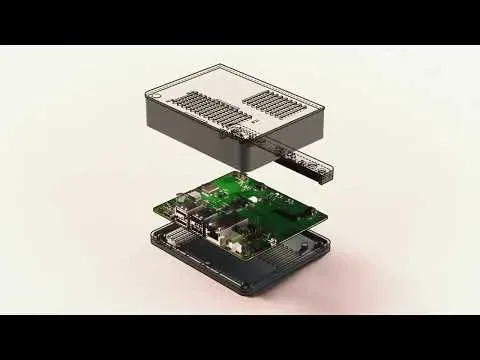
Official demo thumbnail: Claude / Anthropic. Publisher demonstration; not a test conducted by Colin.
Watch: Claude Fable 5.2 designs a working voice-assistant hub — official Claude demo
Watch the companion video on YouTube
Google: Carbon expands access, Hydrogen targets everyday work
November 10 and 12 · API access and product rollouts. Gemini 4 Carbon moved beyond its earlier restricted introduction to paying developers and enterprises, with rollout to Google AI Ultra subscribers. Google positions it for difficult, extended reasoning and coding tasks.
Hydrogen followed on November 12, emphasizing faster execution for everyday coding and agent workflows. Google announced rollout across developer, enterprise, and consumer products; individual features still have plan requirements. The practical distinction is task size: deeper reasoning versus faster routine work, rather than one universal winner.
Carbon availability · Hydrogen rollout
Official launch artwork: Google. Product announcement artwork, not independent testing.
Adobe’s creative tools and Anthropic’s IPO preparations
November 10 · Adobe MAX announcements. Adobe expanded Firefly’s creative-agent direction, introduced a design experience, and described Firefly Graph for repeatable workflows. These announcements point toward coordinating editing tools and models in one workspace. Check the individual feature’s availability before assuming every announced capability is in your subscription.
Adobe’s announcement and official demonstration
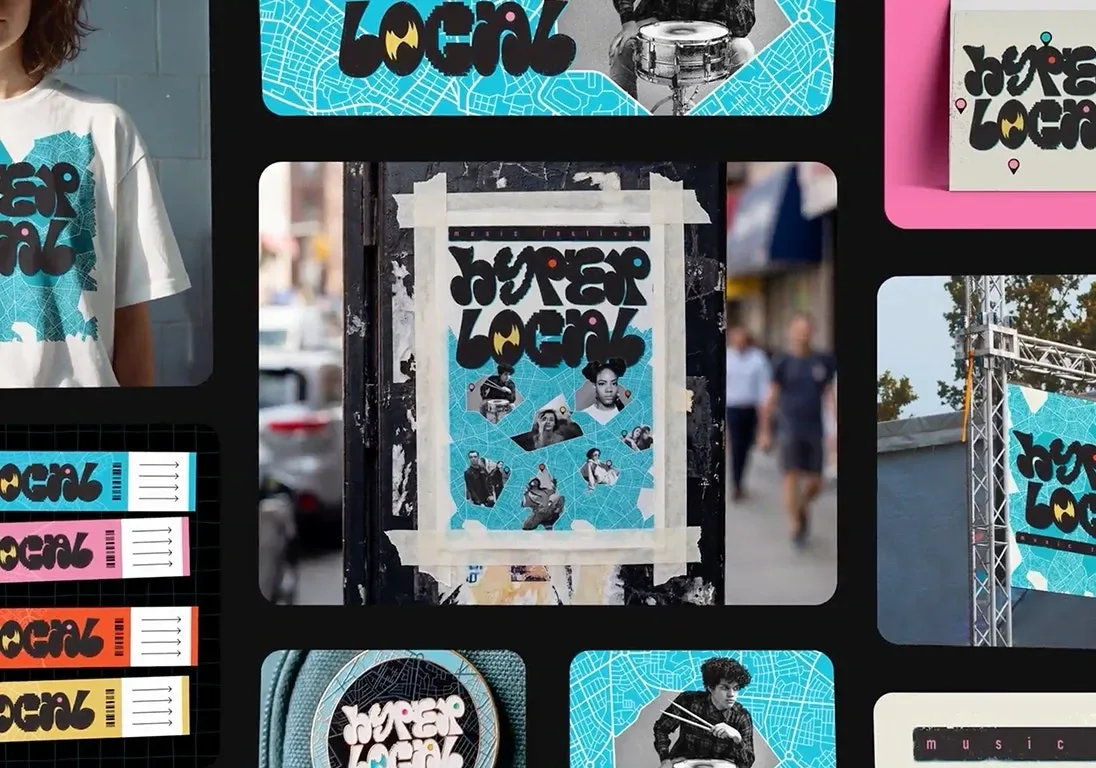
Official announcement artwork: Adobe, November 10, 2026.
Anthropic also has an official IPO site and a November prospectus. This is an offering process, not proof of completed trading or a guaranteed valuation. Alongside NVIDIA’s turmoil, it makes the financial relationships behind AI worth watching as closely as the product launches.
Anthropic’s IPO materials · US prospectus
Your 15-minute check
Pick one ordinary task you already understand. Run it through your current model and one newly available option. Check the answer, time spent correcting it, and cost or usage consumed. A model earns its place by reducing your work—not by winning the week’s loudest announcement.
Final Thought
This week’s story is about both capability and accountability. Better models are arriving, but the companies building and powering them still need trustworthy leadership and credible oversight. Next week, NVIDIA’s earnings and any documented investigation or access changes will tell us more than speculation about who wins or loses the entire AI race.