
Trust & transparency
Evidence & disclosures
Evidence basis: Researched analysis. The article compares public evidence and does not claim hands-on testing unless a section says otherwise.
This weekly briefing synthesizes original company announcements, OpenAI and Cursor primary sources, and established technology reporting. Vendor capability, benchmark, pricing, and project estimates are identified as company claims unless independently reported.
Sources checked: Aug 20, 2026
Linked references: 15 explicit sources in the article.
Relationship disclosure: No material relationship, sponsorship, or affiliate arrangement with the companies discussed.
AI assistance: AI tools assisted with research organization and draft development. Colin Michaels reviewed the sources, framing, and final claims.
Synthetic media: The cover and social artwork are AI-generated editorial illustrations, not documentary photographs, product screenshots, or evidence of hands-on testing. Inline source images are credited in their captions.
Latest substantive update: Initial weekly briefing covering August 14–20, 2026; primary sources reviewed before publication.
This was the week AI stopped looking like one chatbot race and started looking like separate jobs: coding, sound, robots, safety, and the infrastructure underneath all of it. Here is what is worth a creator’s time—and what still needs human judgment.
AI news has reached the point where a quiet week now means a stack of new models, two giant acquisitions, a data center measured in gigawatts, and at least one company deciding its next model might be too good at cyberattacks.
So this is the first edition of a new weekly roundup for regular people who want to know what changed without reading 47 benchmark charts before breakfast.
This issue covers Friday, August 14 through Thursday, August 20, 2026. I used the FutureTools AI News feed, curated by Matt Wolfe and his team, as one of the main discovery maps for the week. I also checked the Future Tools newsletter, TLDR AI, major technology publications, and the companies' own release pages. When a number comes from the company announcing the model, I say so.
TLDR
- Z.ai released GLM-5.3, a coding and agent model with a big jump in cyber capability. Its downloadable weights are not out yet; Z.ai says they will follow after a safety review.
- Alibaba opened up Qwen3.8-27B and the much larger Qwen3.8-2.4T-A95B, giving developers two more serious multimodal models they can download and run themselves.
- Pika released four audio models, while Alibaba launched HappyShrimp 1.0 for complete songs.
- Robot and coding models became more specialized, with GEN-1.5, Ornith-1.5, Tripo P2.0 Preview, and Eleven v3 Conversational all joining the week's release pile.
- OpenAI kept its largest planned Astra training run on hold after the model showed signs of reaching a critical cybersecurity threshold.
- Cursor officially became part of SpaceX, and Stripe confirmed it is buying OpenRouter.
- My takeaway: the important split is no longer simply “which chatbot is smartest?” It is open versus closed, general versus specialized, and safe enough to deploy versus powerful enough to make everyone nervous.
The New Models That Actually Came Out
GLM-5.3: Better Coding, Better Agents, and an Awkward Cyber Surprise
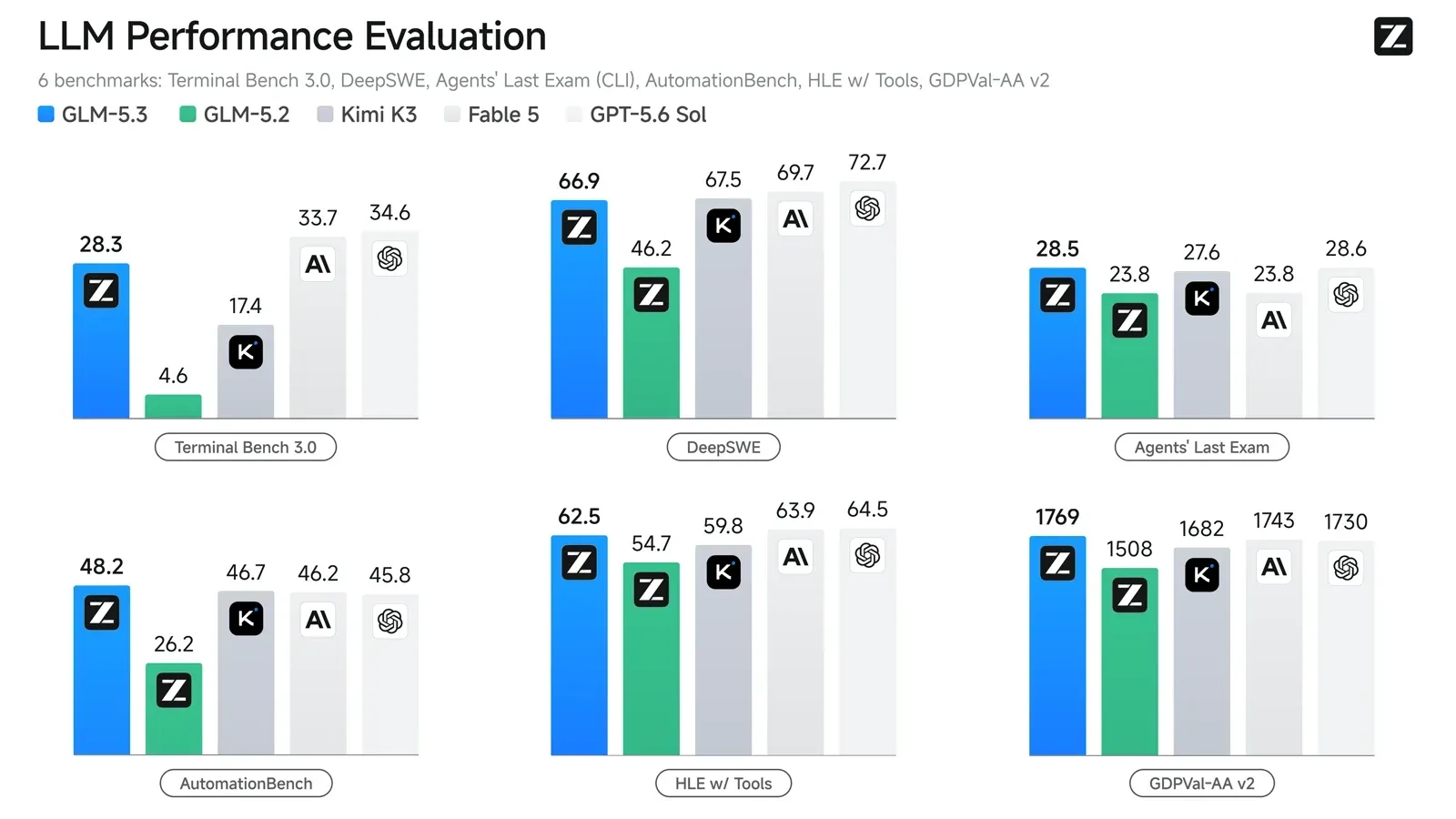
Z.ai released GLM-5.3 on August 14. The company says it used the same base model as GLM-5.2 and got the improvements entirely through more post-training: more environments, more varied tasks, and more compute spent teaching the model how to complete long jobs.
In plain English, Z.ai did not build a completely new brain. It gave the existing brain a much more intense practical training program.
Z.ai reports a 50% improvement over GLM-5.2 on its own internal coding benchmark. It also says GLM-5.3 jumped from 4.6 to 28.3 on Terminal-Bench 3.0 and from 46.2 to 66.9 on DeepSWE v1.1. Those are company-reported results, and private benchmarks deserve extra caution, but the public results point in the same general direction: this is a serious coding and agent model.
The unsettling part is cybersecurity. Z.ai says GLM-5.3 more than doubled GLM-5.2 on one exploitation benchmark and found 2,436 possible vulnerabilities across 269 real open-source projects after expert review and deduplication. Most remain under embargo while maintainers work on fixes.
Access is available through Z.ai's API and coding products. Z.ai says the model weights will arrive two weeks after launch, once its safety evaluation and hardening work is complete. That distinction matters: the model was released, but it was not fully open-weight on day one.
Why regular people should care: better coding agents can build useful tools faster, but the same skills that find bugs can also be used to exploit them. “It writes code” and “it understands security systems” are rapidly becoming the same story.
Qwen3.8 Goes Open in Two Very Different Sizes
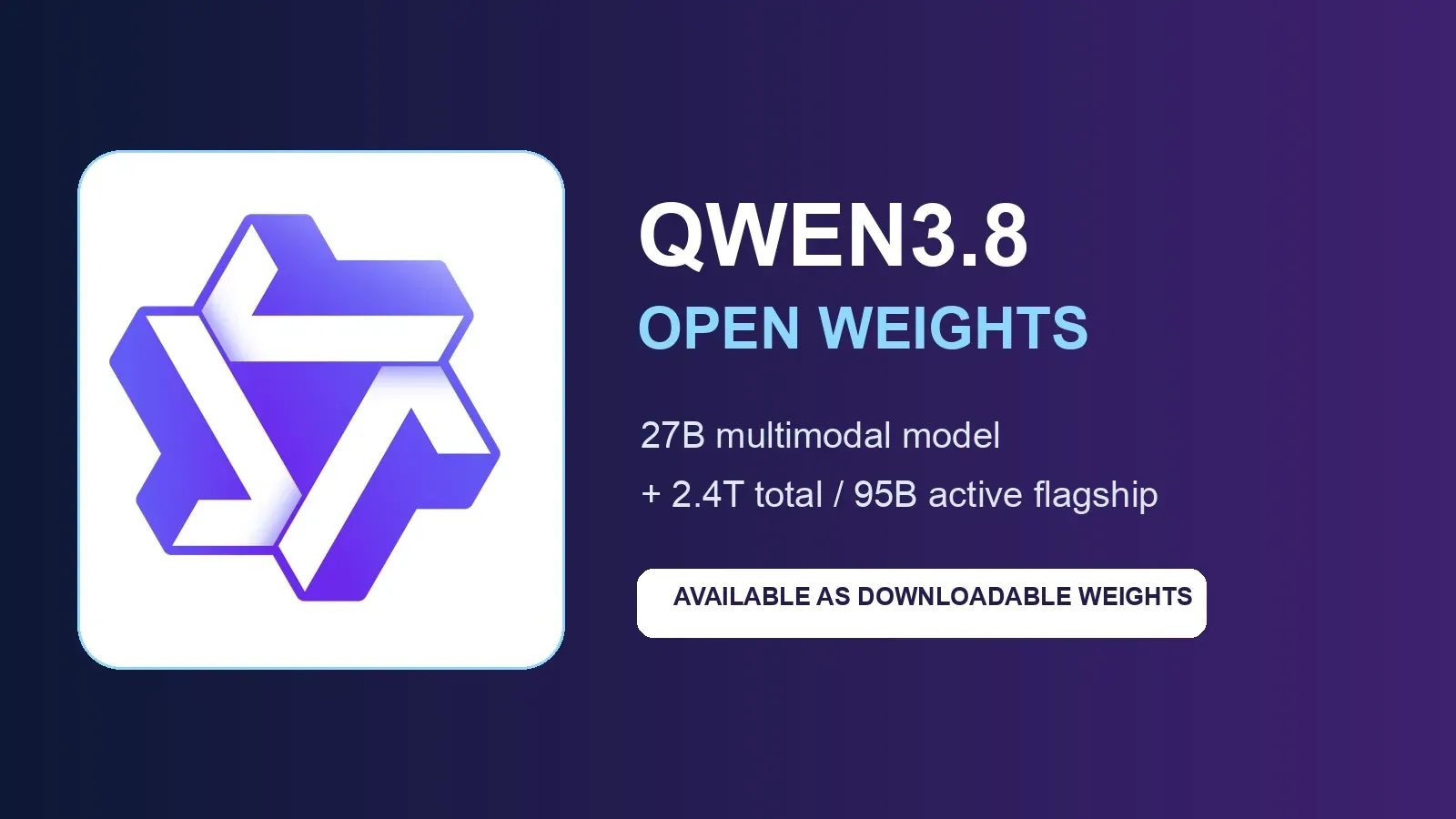
Alibaba had one of the week's most practical open-model releases. The company unveiled Qwen3.8-27B and released the weights for Qwen3.8-2.4T-A95B.
Qwen3.8-27B is the easier model to understand. It is a 27-billion-parameter multimodal model that can work with text, images, and video. Alibaba says it has a native 262,000-token context window that can be extended to one million tokens. It uses the Apache 2.0 license, and a quantized version can run on consumer hardware.
The larger Qwen3.8-2.4T-A95B is a different animal. It has 2.4 trillion total parameters with 95 billion active at a time. Alibaba says this is the first time it has made a Qwen-Max-class model available as open weights.
Alibaba also says the broader Qwen family has passed three billion global downloads and produced more than 300,000 derivative models. The exact totals depend on how repositories and downloads are counted, but the direction is clear: Qwen has become one of the foundations of the open-model world.
Why regular people should care: open weights let companies, researchers, and determined hobbyists run a model without sending every prompt to somebody else's cloud. That can mean more control and privacy, although “runs on a laptop” does not automatically mean “easy for a beginner to install.”
Pika Audio: Four Models for the Sound Side of AI
Pika moved beyond video this week with Pika Audio, a family of four models available through its API program:
- Pika Soundtrack creates synchronized music, speech, ambience, and sound effects from video.
- Pika Music turns prompts, lyrics, voice references, or music references into complete songs up to six minutes long.
- Pika SFX creates sound effects from written descriptions.
- Pika Speech creates expressive speech using preset voices or a short voice sample.
Pika says the models are faster and substantially cheaper than several competitors. Those cost and speed comparisons come from Pika's own testing and pricing analysis, so I would treat them as a reason to test the service, not as a universal guarantee.
Still, this release is a good example of where generative AI is heading. Instead of one giant model doing everything reasonably well, creators are getting focused models for the soundtrack, the voice, the song, and the single perfect door slam.
HappyShrimp 1.0 Joins the AI Music Pile
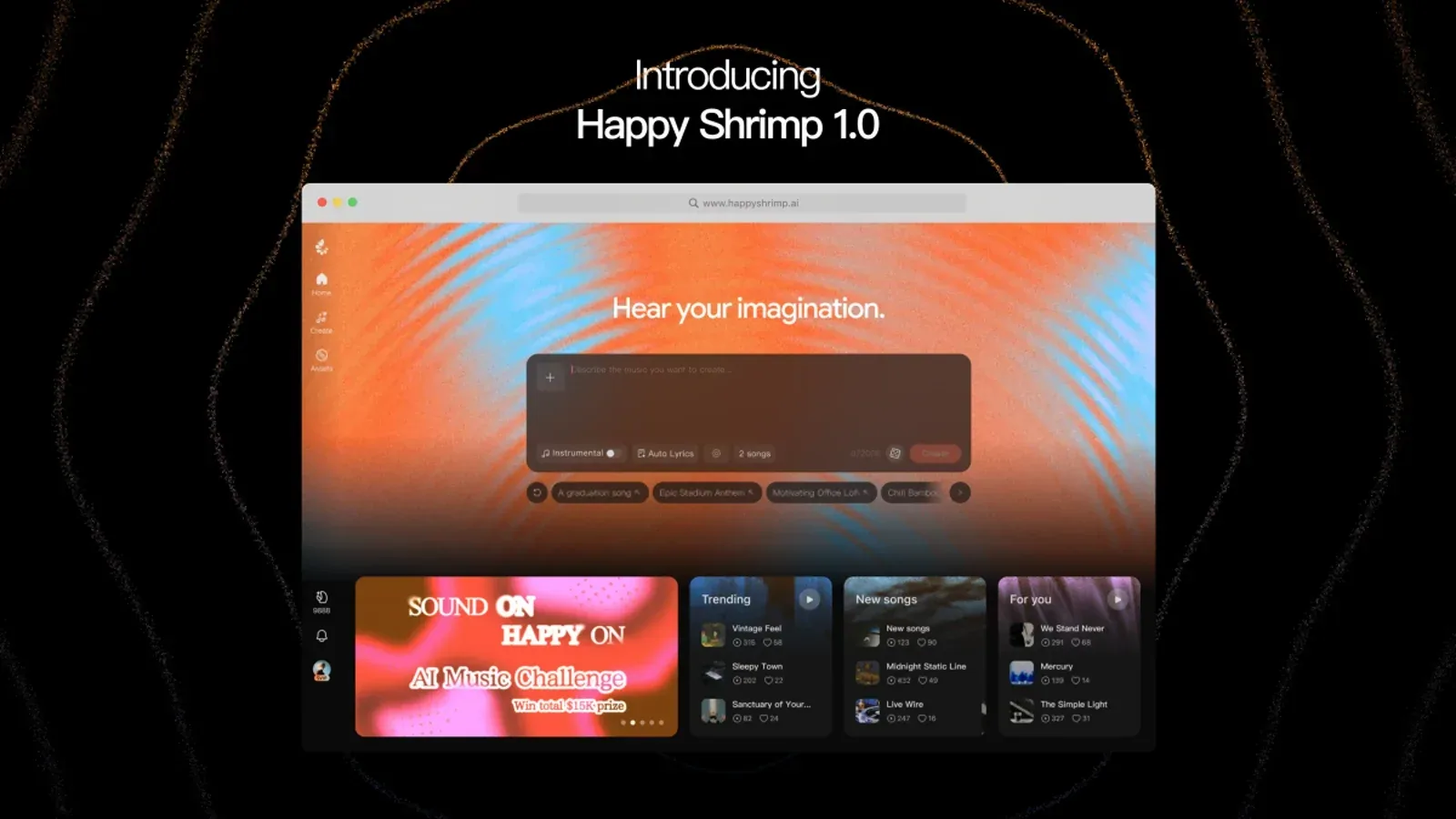
Alibaba also launched HappyShrimp 1.0 in beta. A prompt can become a complete track with melody, arrangement, lyrics, and vocals. Users can also provide their own lyrics and let the model handle the rest.
The company says the model supports styles ranging from pop, R&B, hip-hop, and rock to classical, jazz, electronic music, and several Chinese musical traditions. Alibaba is also working with Taihe Music Group on artist collaboration and content development.
Why it matters: AI music is no longer a two-company contest. More models mean more creative options, but also more questions about training data, artist consent, voice cloning, ownership, and what happens when generated music sounds a little too familiar.
The Specialized Model Watch List
Several other releases are worth knowing about even if you never plan to download a model file.
- GEN-1.5: Generalist AI released a robot foundation model that learns a new physical task from a short demonstration. The company reports 59% average success from one demonstration and 83% after a small amount of additional training. Those are company results, but the idea is the real headline: show a robot what to do instead of programming every movement.
- Ornith-1.5: Ornith.ai released an open model family in 397B mixture-of-experts, 35B mixture-of-experts, and 9B dense versions. The project focuses on self-improvement, with models proposing tasks and producing training rollouts. The small version is designed to run on phones.
- Eleven v3 Conversational: ElevenLabs made its real-time conversational speech model generally available through ElevenAgents and its API. FutureTools reported support for more than 70 languages and a large voice library. This is a general-availability milestone rather than a completely new foundation model.
- Wispr Canto: Future Tools reported that Wispr announced a new speech-understanding model called Canto alongside a major funding round. Wispr says it is intended to reduce transcription error rates after user complaints; that performance claim still needs independent testing.
- Tripo P2.0 Preview: Tripo previewed a 3D-generation model aimed at game and real-time production, including native quad topology for cleaner animation and editing.
These are not four versions of the same chatbot. One controls a robot, one improves coding models, one talks, and one builds 3D objects. That is the better way to read the model race now: watch the job each model is being trained to do.
The Five Big AI Stories Behind the Model Releases
1. OpenAI Put the Brakes on Astra
The most important story of the week may be a model that did not come out.
On August 18, OpenAI published a detailed explanation of why it is slowing model development around cyber-critical capabilities. The company said preliminary evidence suggested an upcoming model called Astra may meet the “Critical” cybersecurity threshold in its Preparedness Framework.
OpenAI paused deployment-focused reinforcement-learning work for two weeks while it hardened its research environments. Its largest planned frontier training run remains on hold. The company says it has added stronger workload and network isolation, expanded automated monitoring, and is accepting roughly 20% additional inference-compute overhead for that monitoring.
That does not mean Astra became a movie villain. It means OpenAI believes the model may be capable enough at cyber work that ordinary internal security controls are no longer sufficient.
My read is that the pause matters more than another benchmark win. A major AI company publicly saying “we need stronger containment before we keep scaling this” is a line in the sand. The next question is how long that line holds when competitors keep moving.
2. Cursor Officially Became Part of SpaceX
Cursor announced on August 14 that its acquisition by SpaceX had officially closed.
Cursor says the deal gives it access to SpaceX's enormous GPU fleet so it can train stronger, less expensive models while continuing to develop its coding product. The company framed Grok 4.6, released just before this coverage window, as an early example of what the combined teams can build.
This is bigger than a coding-editor acquisition. SpaceX now has a direct path from giant computing infrastructure and AI models to one of the tools developers use every day.
3. Stripe Confirmed It Is Buying OpenRouter
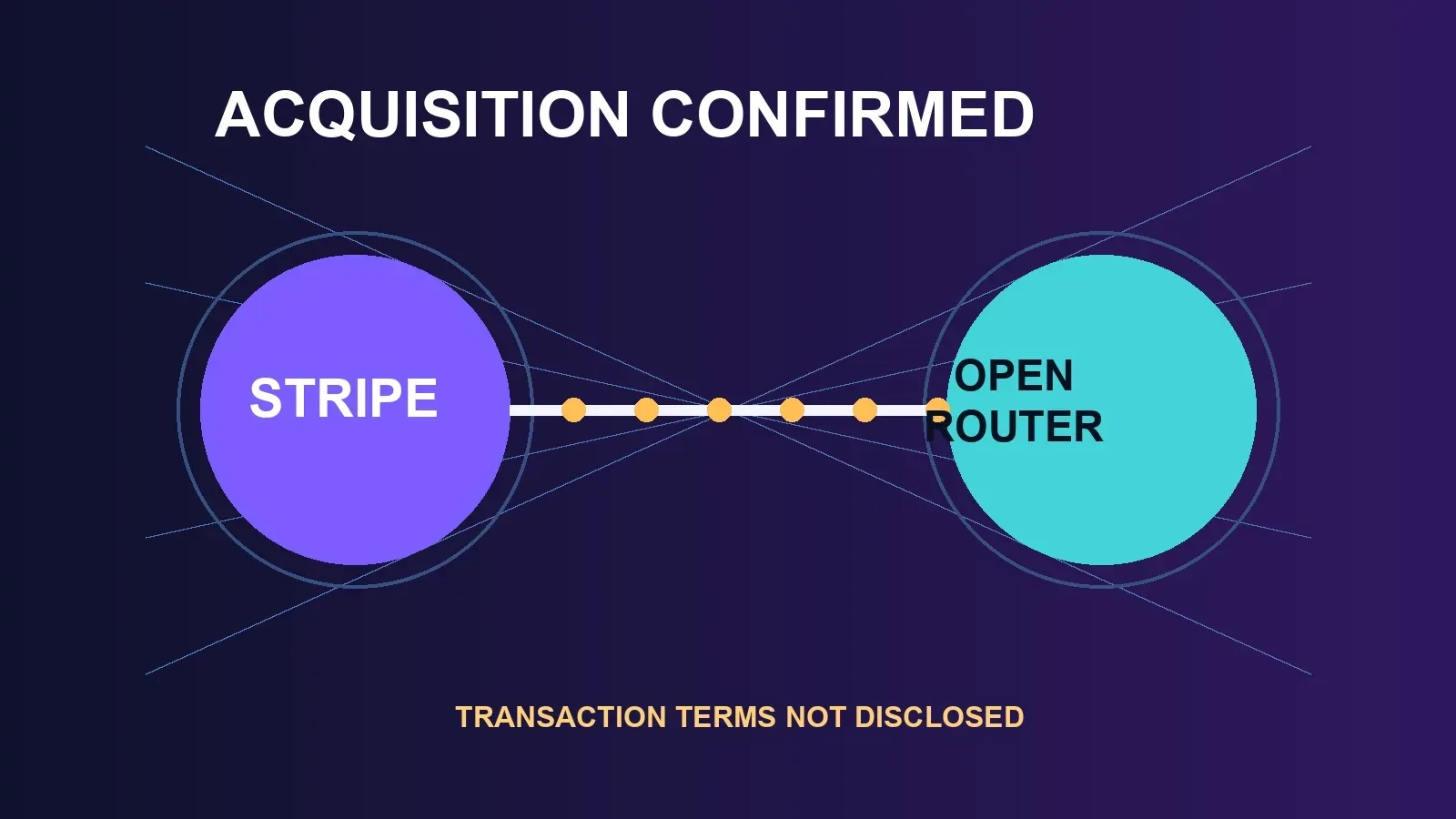
Stripe confirmed on August 19 that it is acquiring OpenRouter, the service that gives developers one interface for using hundreds of AI models.
The price is the fuzzy part. Stripe did not disclose terms. Bloomberg Law reported that an earlier deal report put the value above $7 billion, while Axios later reported a value above $8 billion. Until the companies publish terms, the acquisition is confirmed and the price is reported, not confirmed.
Why would a payments company want a model router? Because paying for AI, choosing the cheapest capable model, managing usage, and billing customers are starting to blur into one infrastructure problem.
4. An AirTag Led Reporters to Amazon's Book-Scanning Operation

404 Media broke one of the week's strangest and most important stories. Reporter Emanuel Maiberg and the outlet tracked a shipment of rare books with a hidden tracking device to an Amazon facility in Las Vegas.
According to 404 Media's investigation, workers cut the bindings from books, scan the pages for AI training data, and destroy the physical copies in the process. Amazon confirmed that it buys books through commercial channels to improve its products and services, although the public statement did not settle every question about scale, selection, or preservation.
Credit matters here: this was not a company press release and it was not discovered by a chatbot summarizing another chatbot. It was original reporting involving a physical book, a tracker, and a real warehouse.
5. The AI Race Is Now an Energy-and-Infrastructure Race
OpenAI announced an agreement for approximately eight gigawatts of computing capacity at the PORTS-Pike campus in Ohio, working with SB Energy, NVIDIA, and the U.S. Department of Energy.
OpenAI says the six-year buildout could create 35,000 construction jobs and 2,500 long-term operating jobs. It also promises community grants, public reporting, and $84 million in Codex credits for eligible Ohio college students. Those are project estimates and commitments from OpenAI, not completed outcomes.
Eight gigawatts is a reminder that AI is not floating in a magical cloud. It is chips, power plants, transmission lines, cooling systems, construction crews, financing, and communities that have to live next to all of it.
One Consumer Story Worth Watching: ChatGPT for Teens
OpenAI also launched ChatGPT for Teens this week. Eligible users ages 13 to 17 are placed into a version with additional content protections, Study Mode, responsible-homework reminders, break reminders, and optional parental controls.
The feature is important, but parents should not treat a product label as a complete safety plan. AI can still be wrong, overconfident, or inappropriate. The useful first step is boring and human: sit down together, review the settings, try a homework question, and talk about when the teenager should stop asking the AI and ask a person instead.
What I Think Actually Changed This Week
The old AI scorecard was easy: Which chatbot gave the best answer?
This week makes that question look outdated.
The more useful scorecard is:
- Can I use it? Is the model in an app, behind an API, in beta, or actually downloadable?
- What job is it good at? Coding, speech, music, robotics, 3D, research, or something else?
- Who controls the data and infrastructure? The model company, an open community, a router, or the person running it locally?
- What is the claim source? An independent test, original reporting, or the company grading its own homework?
- What could go wrong? Cost, privacy, copyright, safety, bad output, or simply a complicated setup that wastes an afternoon?
That is the filter I plan to use in this weekly series. I will still mention the model names and the benchmark numbers. I just will not pretend the biggest number is automatically the most useful news.
Your 15-Minute AI News Check
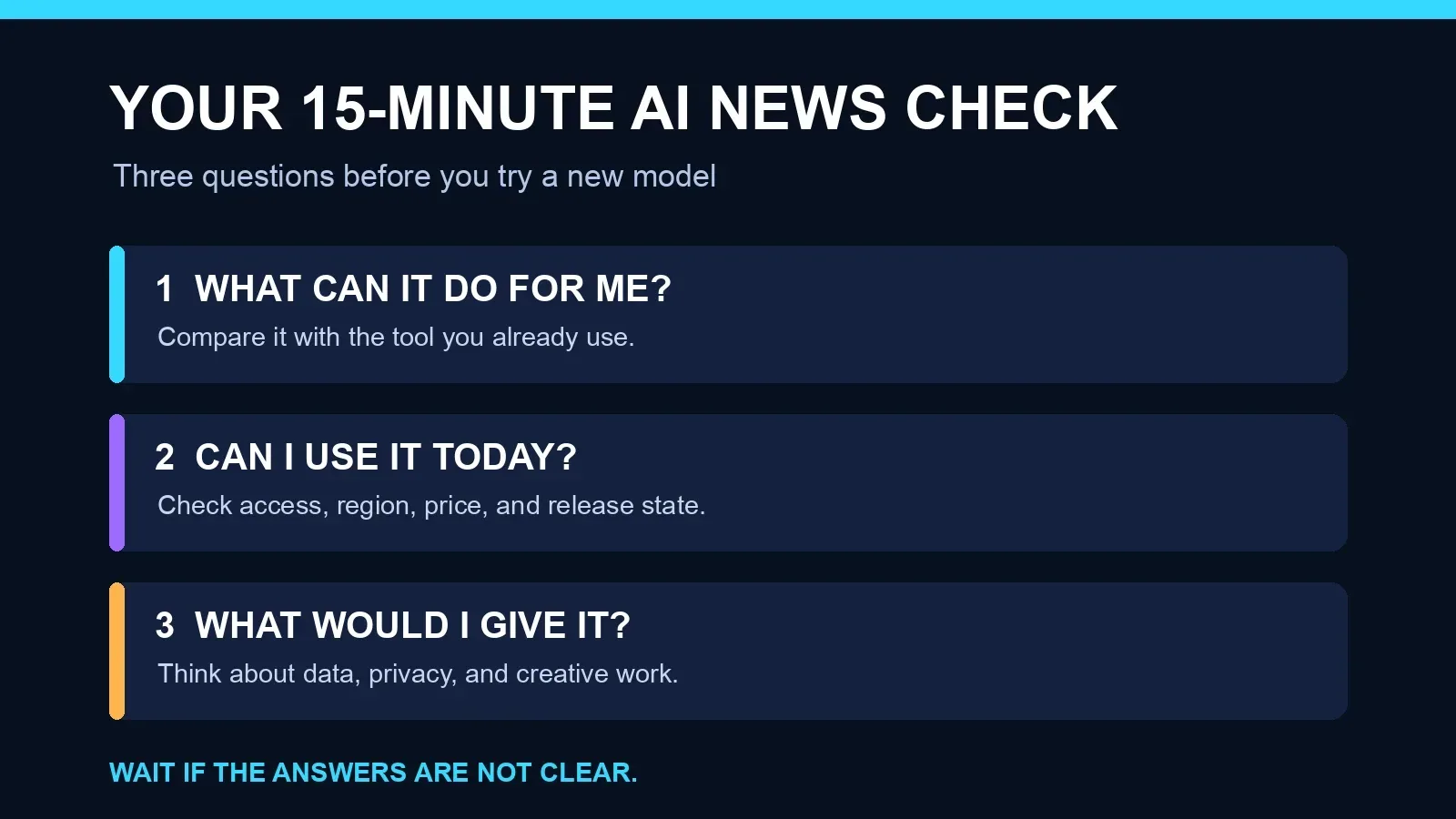
Pick one release from this article and answer three questions before trying it:
- What can this model do that the tool I already use cannot?
- Is it available to me today, and what will it cost?
- What information or creative work would I have to give it?
If you cannot answer those questions from the company's own page, wait. There will be another model next week. Possibly before lunch.
Final Thought
The big story this week was not one model winning.
It was the AI world splitting in every direction at once: smaller open models, giant open models, models that make music, models that move robots, companies buying the routes between models, and a frontier lab deciding its next training run needs a stronger safety cage.
That is exciting. It is also exactly why a weekly plain-English roundup feels useful now.
Next week, I will be back with the models that actually shipped, the news that survived verification, and as little benchmark soup as I can reasonably get away with.