Trust & transparency
Evidence & disclosures
Evidence basis: First-person field notes. The article is based on Colin's own project, flight, recovery experience, media, or documented workflow.
A first-person reflection on rebuilding trust and confidence after surgery; it is lived experience, not mental-health or medical advice.
Sources checked: Aug 20, 2026
When I went into open-heart surgery, I expected pain. I expected weakness. I expected a long recovery. What I did not expect was fear.
Not fear of surgery. Not fear of hospitals. Fear of ordinary life.
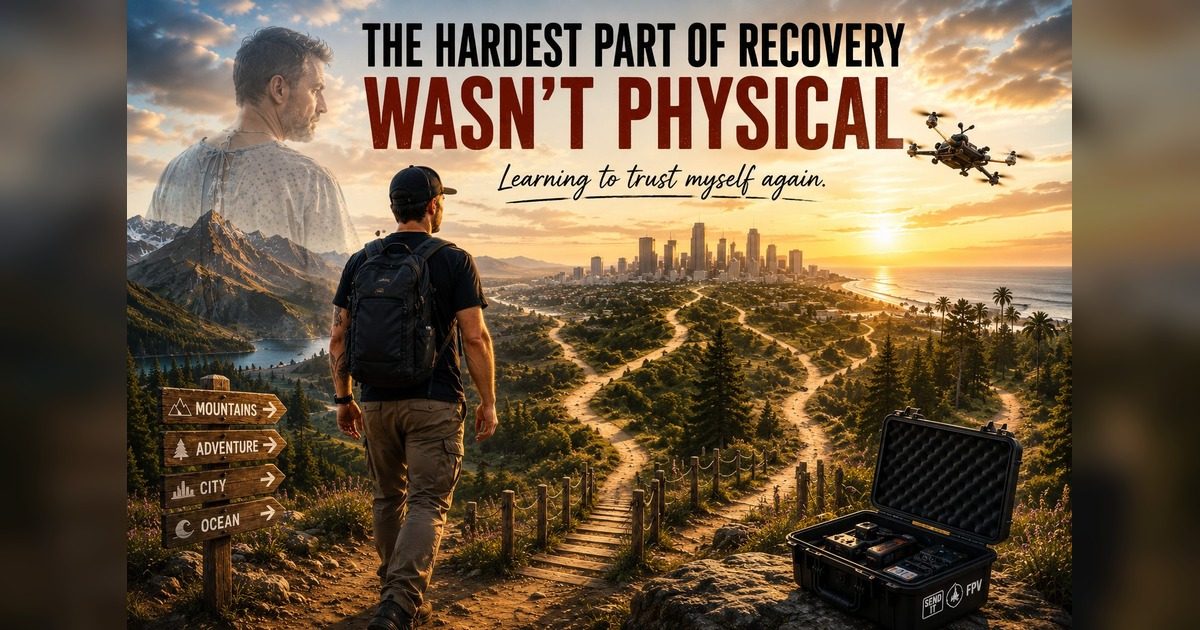
The hardest part of recovery was not physical. It was learning to trust myself again.
The Fear Nobody Talks About
Nobody tells you that after a major life event your confidence can reset. Suddenly things you have done for years feel unfamiliar. Walking down stairs. Driving a car. Going to work. Being alone. Even hobbies you love can feel intimidating.
My doctors told me I was healing. Cardiac rehab showed I was getting stronger. My body was improving. My mind had not caught up yet.
Sometimes the body heals faster than the mind.
A lesson from recovery
The Drone Flight
One of the clearest examples was flying my drones again. Flying FPV has been one of my favorite hobbies for years. Yet after surgery I kept finding reasons to delay it.
I told myself maybe next weekend. Maybe when I felt stronger. Maybe when I had more energy. The truth was that I was waiting for fear to disappear before I acted.
Then one day I packed my gear, went out, and flew. Nothing terrible happened. The drone lifted off and so did a weight I had been carrying for months.
Fear had predicted disaster. Reality gave me a beautiful flight.
The Trap of Avoidance
The more we avoid something because it scares us, the more power we give it. Avoidance feels safe in the moment, but it quietly teaches our brain that the danger is real.
Every small step I took during recovery challenged that story. Returning to work. Going to cardiac rehab. Taking walks. Managing the house. Living alone again. Each success became evidence that I was capable.
What Comes Next
Recovery has changed how I think about fear. I no longer want fear making decisions for me. I want curiosity making those decisions.
I want to travel more. Visit places I have never been. Meet new people. Try activities that push me beyond my comfort zone. Say yes more often. Explore more. Live more.
Not because I am fearless. Because I have learned that confidence is not something you find. It is something you build.
Learning To Trust Myself Again
Open-heart surgery repaired my heart, but recovery revealed something deeper. Fear had quietly been shrinking my world for years.
The goal is not to eliminate fear. The goal is to stop giving it a vote.
So I am going to keep moving forward. One flight. One trip. One conversation. One new experience at a time. Because the hardest part of recovery was not physical. It was learning to trust myself again.
You’re Not Alone: What I Learned About Fear
While writing this article, I spent some time reading about fear, confidence, and recovery. What surprised me most was discovering that what I was experiencing is incredibly common.
Psychologists have spent decades studying something called the avoidance cycle. The concept is simple: when something scares us, avoiding it feels good in the moment. The anxiety disappears temporarily, and we feel relief.
The problem is that our brain interprets that relief as proof that the danger was real.
Over time, the fear grows larger while our confidence grows smaller. We begin avoiding more things, which creates even more fear. Eventually, our world starts shrinking without us even realizing it.
What researchers have found is that confidence is often rebuilt through action, not thought. By gradually facing fears and collecting evidence that we are capable, we teach our brains a new story.
That realization hit me hard.
For months I was waiting to feel confident enough.
What I actually needed was to start moving before I felt ready.
People Who Refused to Let Fear Decide
Theodore Roosevelt
Theodore Roosevelt spent much of his childhood sick and physically weak. Rather than accepting that as his future, he challenged himself through exercise, outdoor adventures, and personal discipline.
He eventually became one of the most energetic and adventurous presidents in American history.
Roosevelt didn’t wait until he felt brave.
He acted until bravery became part of who he was.
Michael J. Fox
After being diagnosed with Parkinson’s disease at a young age, Michael J. Fox could have quietly stepped away from public life.
Instead, he became one of the most visible advocates for Parkinson’s research in the world. His diagnosis became part of his story, but it did not define his future.
Everyday Recovery Stories
Perhaps the most inspiring examples are the ones we rarely hear about.
Every day, people recover from surgeries, illnesses, accidents, divorces, career setbacks, and personal losses.
Many of them face the same challenge I did.
Not rebuilding their body.
Rebuilding trust in themselves.
Every walk, every workout, every conversation, every first step back into normal life becomes evidence that recovery is possible.
What I’m Taking Forward
Recovery has taught me several lessons that I hope to carry into the next chapter of my life:
- Fear is often trying to protect us, but it is not always correct.
- Confidence does not come before action. Confidence comes from action.
- Avoiding something may reduce anxiety today, but it often increases anxiety tomorrow.
- Small victories matter more than dramatic breakthroughs.
- Growth usually happens just beyond the edge of comfort.
- The goal is not to become fearless. The goal is to keep moving anyway.
“A comfort zone is a beautiful place, but nothing grows there.”