Trust & transparency
Evidence & disclosures
Evidence basis: Mixed evidence. The article combines more than one evidence type; the evidence summary identifies which claims come from which basis.
Combines my 1993 memory with concert archives, contemporary records, and music-memory research; personal recollections may be imperfect.
Sources checked: Aug 20, 2026
Linked references: 12 explicit sources in the article.
Some Memories Never Stop Playing: Buckeye Lake, 1993
TLDR
- A YouTube recommendation dropped me back into a Grateful Dead concert I attended with my cousin at Buckeye Lake in 1993.
- We arrived in a maroon Volkswagen bus convinced we were hippies, survived a ridiculous night at a nearby campground, and walked into a concert experience that stayed with me for more than three decades.
- My memory exaggerated some facts and lost others, but it kept the grilled cheese, the kindness of strangers, the dancing, and the feeling of sharing it all with somebody who was more like a brother.
- Research helps explain why: music can cue unusually rich autobiographical memories. The details fade, but the feeling keeps playing.
YouTube has a funny way of digging through your past when you are not looking for it.
Most mornings, the algorithm serves me some combination of programming tutorials, AI news, drones, cars, and whatever strange rabbit hole I wandered into the night before. Then it placed a full Grateful Dead concert from Buckeye Lake, Ohio, in front of me.
June 11, 1993.
I clicked.
Within a few seconds, I was not sitting at a computer in 2026 anymore.
I was about 16 years old again, riding with my cousin in a classic maroon Volkswagen bus, both of us with longer hair and just enough confidence to believe we had the whole hippie thing figured out.
We did not have it figured out.
Not even a little.
A Maroon VW Bus and Two Teenage Hippies
My cousin's bus was not just a vehicle. It was freedom with questionable ventilation.
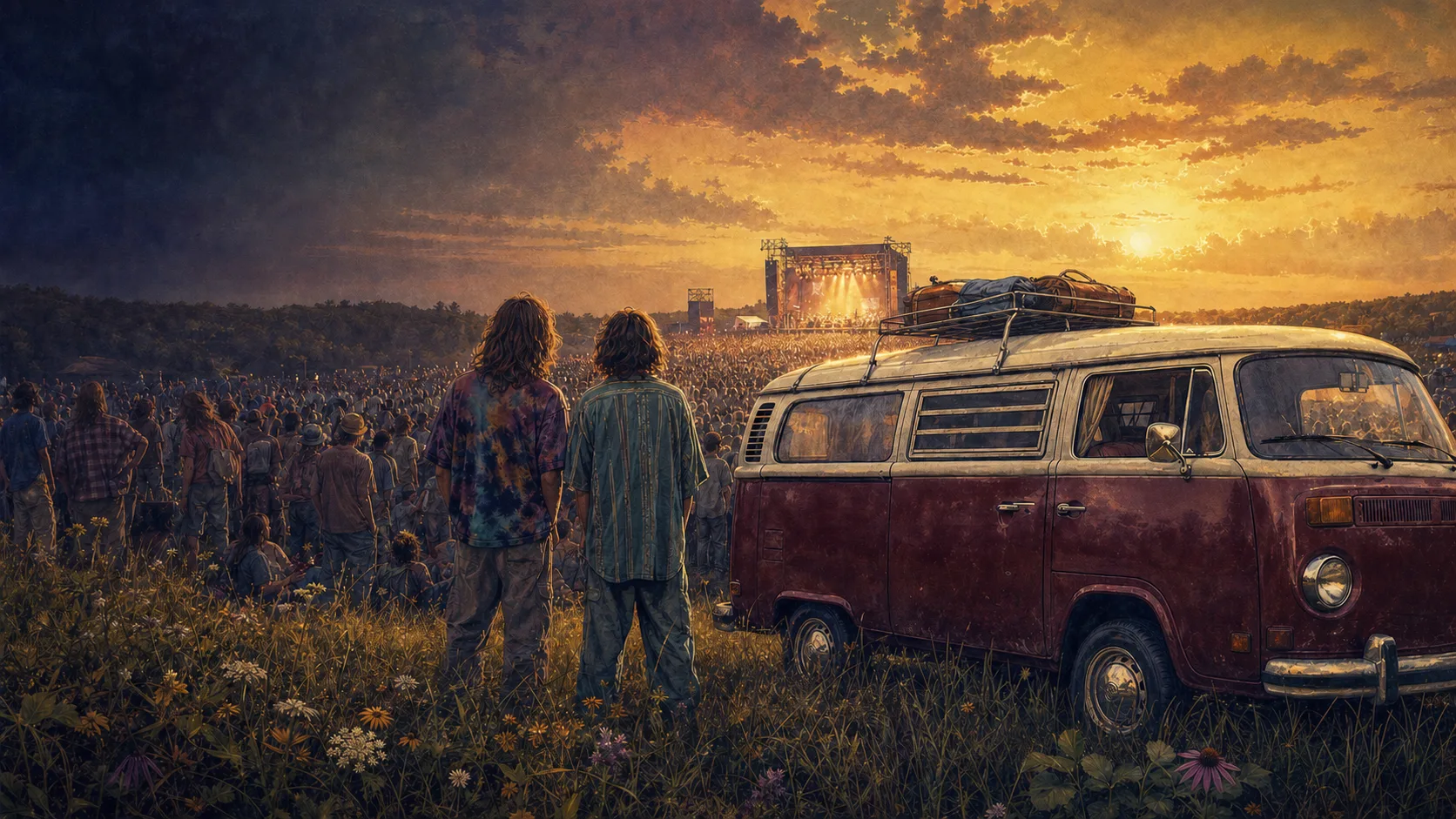
I remember falling asleep on the rear shelf over the engine during the drive. This was apparently how teenage Colin evaluated automotive safety: Is the surface mostly flat? Good enough.
I woke up feeling a little strange, possibly from exhaust fumes and definitely from being young enough to think the back of an old VW bus counted as first-class seating. It was not the smartest opening chapter to our adventure, but it established the weekend's general level of decision-making.
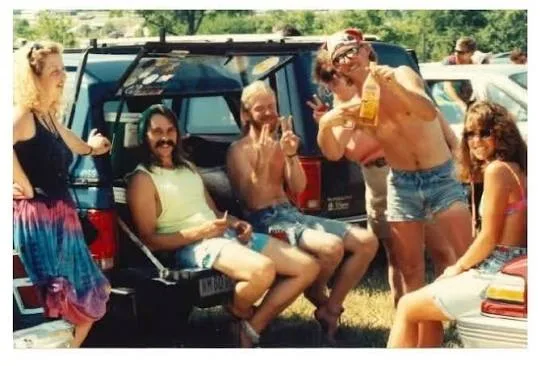
We reached a KOA campground near Buckeye Lake, set up camp, and immediately felt like we had arrived at the center of the universe.
Music floated between the campsites. Campfires burned. Strangers talked like old friends. Everybody seemed to be heading toward the same shared experience, and the party had already started long before anybody walked onstage.
Somewhere along the way, the party got ahead of me.
I will leave the chemistry lesson out of this version. The responsible summary is that I was young, dumb, and much less indestructible than I believed. My body eventually filed a formal complaint, and I wandered off in search of a portable restroom.
That is where I spent a large and deeply unglamorous part of the night.
My cousin had no idea where I had gone. He searched the campground for hours, moving from one campsite to another and asking the same question:
Have you seen my cousin?
The funny part is that almost nobody simply said no.
They invited him to sit down. They gave him something to eat. They told him to warm up by the fire or hang around for a while. By the end of the night, he had not found me, but he had apparently become friends with half the campground.
The next morning, I woke to pounding on the portable-restroom door.
There he was.
Relieved. Exhausted. Probably annoyed. Definitely entitled to ask what in the world had happened to me.
We dragged ourselves back to camp, grabbed clean clothes, and headed toward the communal showers. While we waited in line, people kept spotting my cousin.
"Hey, man! Did you ever find your cousin?"
And there I stood directly behind him, wishing the ground would open up and finish the job the portable restroom had started.
That was Act One.
The concert had not even begun.
The Best Grilled Cheese Sandwich in Ohio
After cleaning up and recovering with the unfair speed available only to teenagers, we headed to the venue.
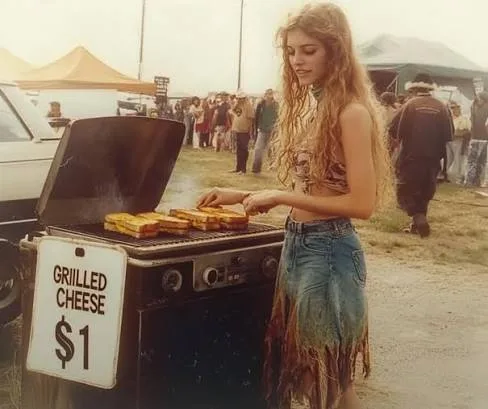
The approach to the concert was an experience of its own. Vendors lined the way with handmade art, tie-dye, food, and all the wonderfully strange things that appeared wherever Deadheads gathered. There were bright colors, music, dancing, campfire smoke, and every other scent you might expect at a Grateful Dead show in the early 1990s.
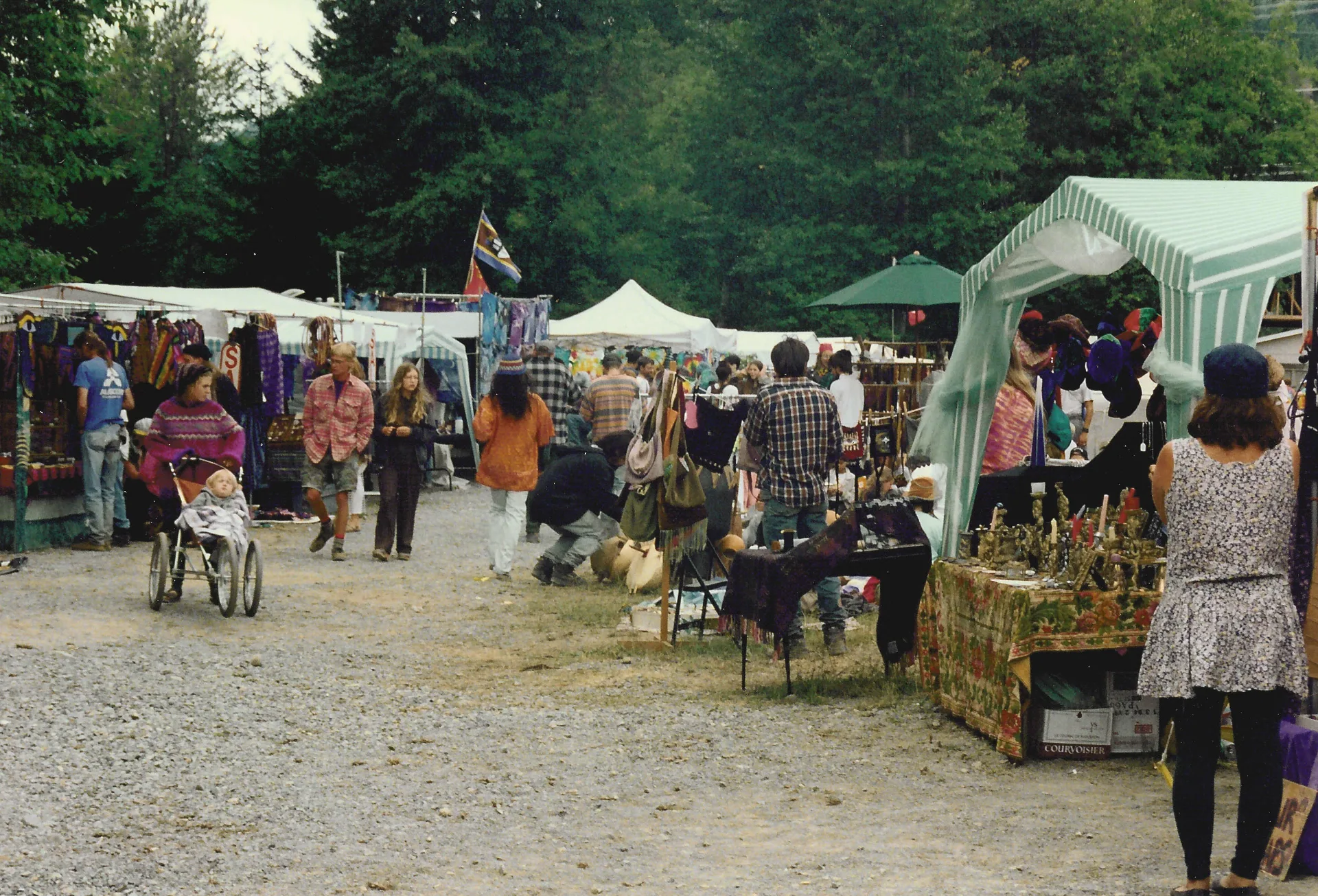
What I remember most is the grilled cheese.
I was hungry, tired, and still negotiating a peace treaty with my stomach. The smell found me before the sandwich did. When I finally took a bite, it tasted like somebody had studied my exact condition and invented the perfect food.
I have eaten many grilled cheese sandwiches since 1993.
None of them had that much responsibility riding on them.
Then we reached the field and saw the crowd.
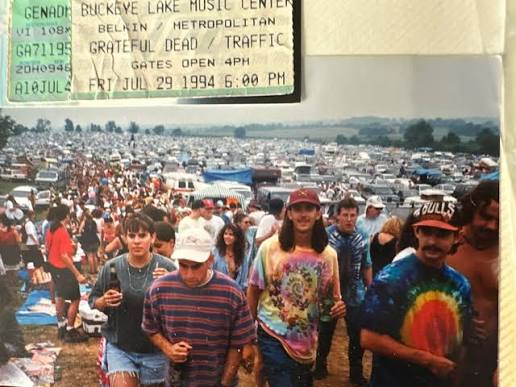
For years, my memory estimated something like 250,000 people. The contemporary reports are not perfectly consistent either. Pollstar listed 50,000 tickets sold for a 50,000-person capacity, while another account preserved on Sting's site described more than 70,000 people inside and perhaps 25,000 more gathered outside without tickets.
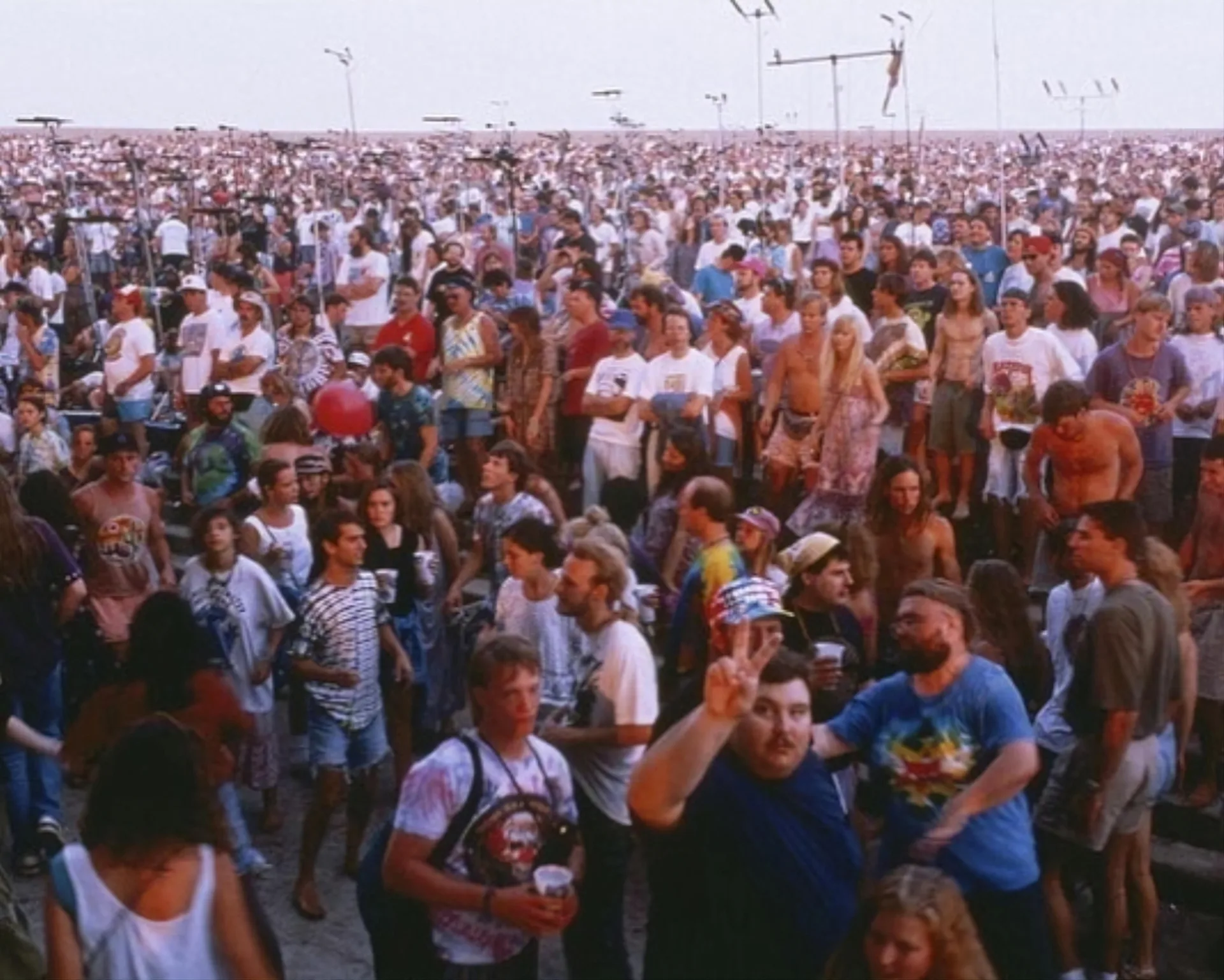
Apparently my teenage brain was not the only one trying to count a sea of people. Whatever the exact total, it was enormous.
Everywhere I looked, somebody was moving. People danced without checking whether anybody approved. Some wore tie-dye. Some wore very little. Hair was allowed to grow wherever it wanted. Nobody seemed interested in looking polished, and that may have been the most beautiful part.
My cousin and I found a place in the middle of that huge field. When the band started playing, the crowd stopped feeling like 50,000 separate people.
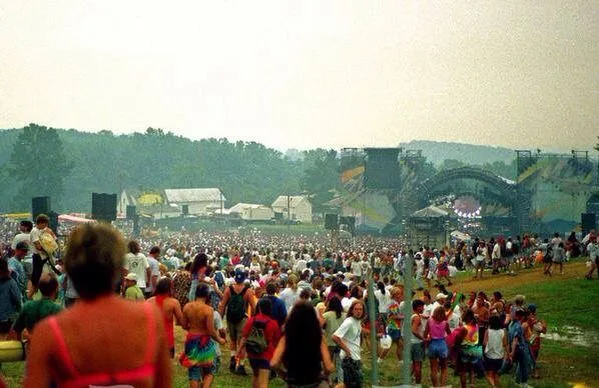
For a few hours, it felt like one living thing.
I danced harder than I probably ever had before. I almost certainly looked ridiculous. The wonderful thing was that nobody cared—including me.
The music filled the space where self-consciousness usually lives.
That freedom stayed with me.
What My Brain Saved—and What It Did Not
Watching the concert again showed me how strange memory can be.
The official Grateful Dead archive says Sting opened that day.
I remembered grilled cheese.
The archive confirms that the second set opened with "Eyes of the World," moved through "Playin' in the Band" and "Uncle John's Band," and ended with "Brokedown Palace" as the encore. "So Many Roads" appeared in the first set, which feels almost too perfectly named for a memory built around a road trip.
I could not have recited that setlist before looking it up.
But I remembered the bus. I remembered the campground. I remembered strangers taking care of my cousin while he searched for me. I remembered the embarrassment of standing behind him in the shower line. I remembered the smell of food on the walk in and the feeling of being surrounded by people who had temporarily decided that joy was more important than looking cool.
Memory is not a hard drive. It does not preserve every file in order.
It keeps the pieces that still carry a charge.
That is why the full Buckeye Lake concert video hit me so hard. The video supplied details my brain had misplaced, but the emotional part was already there waiting for it.
Why "Eyes of the World" Fits This Memory
At 16, I heard "Eyes of the World" and danced.
Now I hear the people inside the memory.
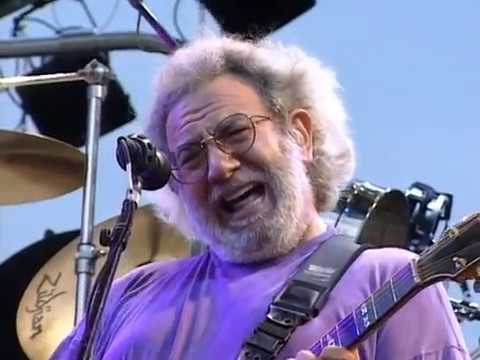
I do not need to quote the lyrics or pretend there is only one correct interpretation. Robert Hunter described the song's heart in terms of compassion and seeing from another person's point of view.
That is what stands out to me now: my cousin refusing to stop looking, strangers inviting him to sit by their fires, and thousands of people briefly sharing one field without asking one another for a résumé first.
The recording stayed the same.
I did not.
Why Music Can Feel Like Time Travel
There is research behind that experience.
Scientists use the term music-evoked autobiographical memory for personal memories brought back by music. In a 2022 study, memories cued by music were more episodically rich and contained more perceptual detail than memories cued by faces, even when researchers compared involuntary memories in both groups.
In plain English: a song can bring back more than an event. It can bring back the weather, the people, the movement, the smell of the food, and the version of yourself who heard it then.
Another line of research connects familiar music with brain activity involved in self-reflection and autobiographical memory. That does not mean every song works like a perfect neurological filing cabinet. It means my reaction to that Buckeye Lake video is not unusual. Music is an especially powerful doorway.
Research on music and social bonding offers another piece of the answer. When people move, sing, or keep time together, that synchrony can help create a sense of connection. That sounds clinical until you remember what a concert feels like: tens of thousands of strangers begin moving to the same beat, and individual lives overlap for a little while.
Music can affect stress and well-being too, although I do not want to turn one concert memory into a medical miracle. The National Center for Complementary and Integrative Health says reviews of music-based interventions have found promising effects on several stress-related measures, while also noting that results and study quality vary.
My non-scientific version is simpler: music can give the mind somewhere else to go. Sometimes it calms us. Sometimes it energizes us. Sometimes it returns us to a person we almost forgot we used to be.
I think that is also why our teenage music stays so close to us.
Those were years when we were deciding who we might become. The songs did not just play in the background. They became attached to first cars, first freedoms, road trips, friendships, mistakes, and moments when the world suddenly felt much larger.
The Grateful Dead gave me more than music I liked. They showed me what it felt like when music created a community around itself. That shared experience fed my creativity, lowered my guard, and made me curious about what other sounds and experiences were waiting outside the little world I already knew.
The Part That Matters Most
Looking back, this story is not really about a perfect concert.
My memory of the show is incomplete. My choices that first night were not exactly a master class in responsible travel. The Volkswagen bus was probably safer parked than moving. Even the contemporary reports cannot quite agree on the size of the crowd.
What matters is that I was there with my cousin.
He was—and still is—one of my best friends, more like a brother than a cousin. We grew up sharing music, cars, road trips, and the kind of experiences that become family mythology. Life gets busier as we get older. Careers, health, distance, and responsibility have a way of changing how often we can simply get in a vehicle and go.
But the shared history does not disappear.
One concert video brought back the version of us who believed an old maroon bus could take us anywhere.
Maybe, for that weekend, it did.
Try Your Own Soundtrack Memory
Pick one song that instantly takes you somewhere else. Do not choose the song you think is most impressive. Choose the one that opens a door.
Then take ten minutes and answer five questions:
- Where are you?
- Who is with you?
- What is the first physical detail you notice—a smell, a color, the weather, the seat beneath you?
- What did that younger version of you believe about life?
- Is there somebody from that memory you could send the song to today?
You do not need to turn it into an article. Write one paragraph. Send one text. Make one phone call.
Sometimes the best reason to revisit a memory is not nostalgia.
It is connection.
Final Thought
The official record can tell me the date, the setlist, the opener, and the actual size of the crowd.
The video can show me the stage again.
But the most valuable part is the feeling that came back with it: being young, being free, being foolish, being found, and standing beside somebody I loved while the music moved through a field full of strangers.
The greatest souvenirs are not always ticket stubs or concert shirts.
Sometimes they are the people who stood beside us while the soundtrack of our lives was playing.
The details fade.
The feeling keeps playing.
Watch the Concert and Explore the Show
- Grateful Dead — Live at Buckeye Lake, June 11, 1993 (full concert video)
- Grateful Dead — "Eyes of the World" at Buckeye Lake (official live video)
- Buckeye Lake Music Center — June 11, 1993 show archive and setlist
Sources
- Grateful Dead show archive: Buckeye Lake Music Center, June 11, 1993 (accessed July 15, 2026)
- Pollstar, July 5, 1993 box-office report (records 50,000 attendance and a 50,000 capacity; accessed July 15, 2026)
- Contemporary concert account preserved on Sting's site (reports more than 70,000 inside and an estimated 25,000 outside; accessed July 15, 2026)
- Background on "Eyes of the World" and Robert Hunter's interpretation (accessed July 15, 2026)
- Investigating the role of involuntary retrieval in music-evoked autobiographical memories (Memory, 2022)
- The Neural Architecture of Music-Evoked Autobiographical Memories (Cerebral Cortex, 2009)
- Music and social bonding: self-other merging and neurohormonal mechanisms (Frontiers in Psychology, 2014)
- NCCIH: Music and Health—What You Need To Know (accessed July 15, 2026)
- JamBase: Grateful Dead Lazy River Road at Buckeye Lake, 1993 (source page for the official-video still used in the thumbnail; accessed July 15, 2026)
- Jambands: Buckeye Lake 1993 show recreation announcement (source page for the archival crowd image used in the thumbnail; accessed July 15, 2026)
Creation Note
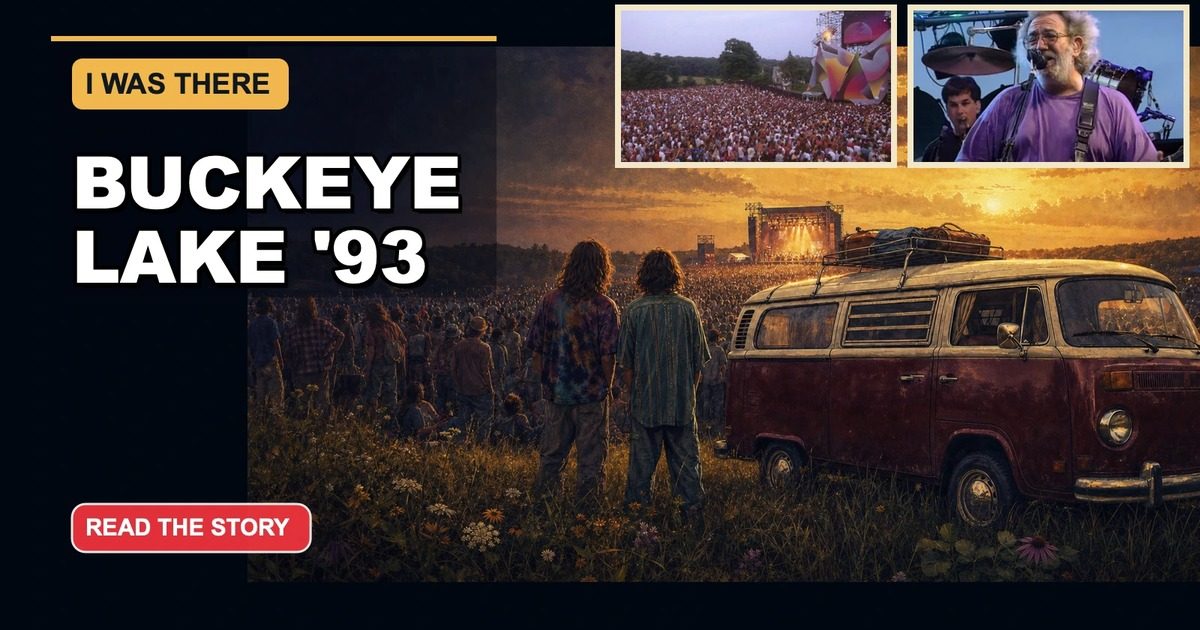
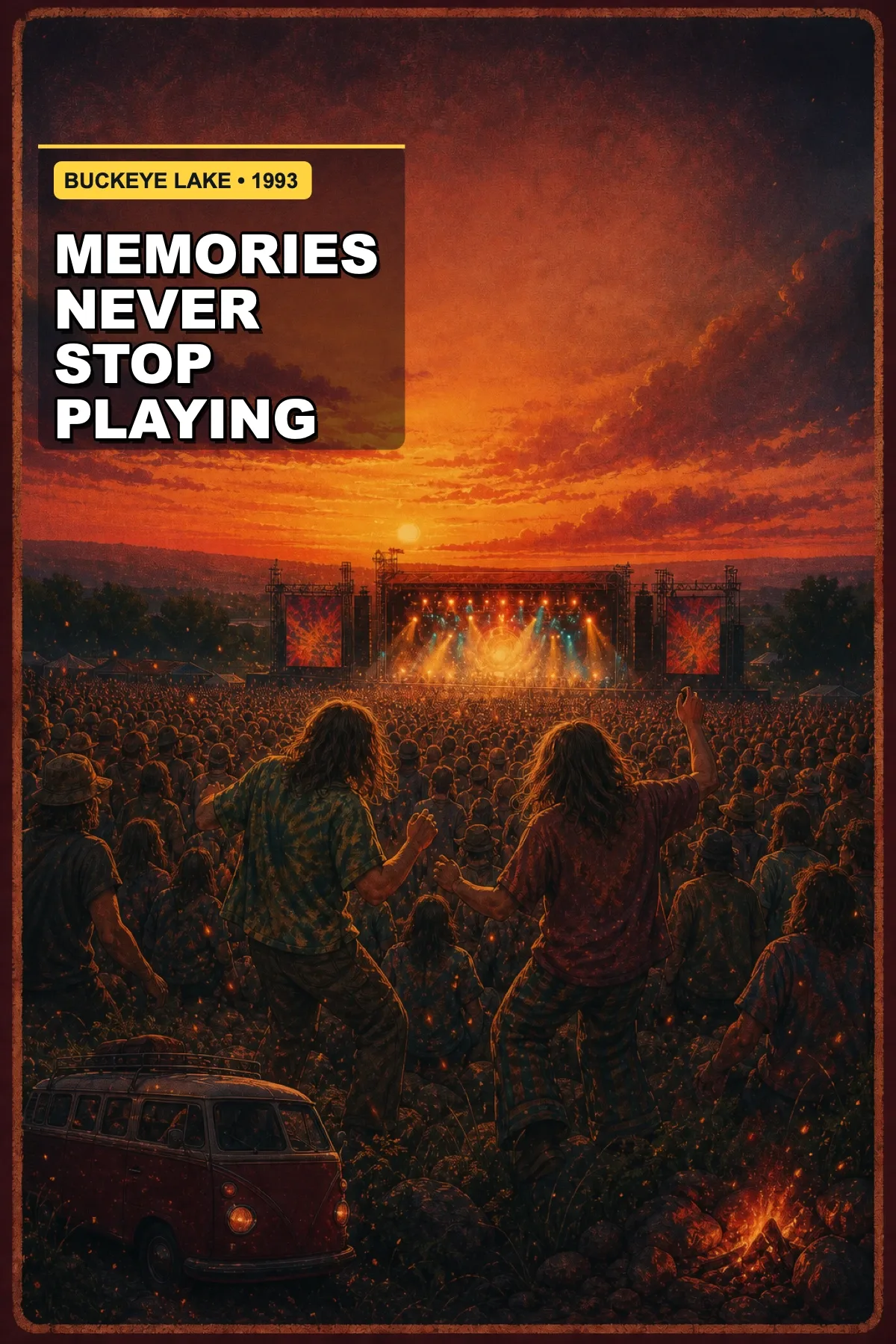
This article began with my spoken memories. AI helped organize the story, check public facts, prepare the CMS package, and create visual reconstructions. I reviewed the result before publication. The main thumbnail combines an AI-assisted memory scene with two small archival images from public coverage of the June 11, 1993 show; the inline poster is an AI-assisted reconstruction, not a documentary photograph.