Trust & transparency
Evidence & disclosures
Evidence basis: Mixed evidence. The article combines more than one evidence type; the evidence summary identifies which claims come from which basis.
Combines lessons from my medical crisis with federal health, leave, billing, and emergency-fund resources; the checklist is not legal or medical advice.
Sources checked: Aug 20, 2026
Linked references: 7 explicit sources in the article.
Most adults do not plan for a medical disaster. We plan for birthdays, vacations, work projects, car repairs, and retirement, but we rarely plan for the day when we might be lying in a hospital bed unable to make decisions, answer questions, pay bills, or explain what we need.
That is a mistake. A major illness, injury, or surgery can turn normal life into chaos fast. Suddenly, the most important things are not abstract anymore. Who has your insurance card? Who knows your medications? Who can talk to the hospital? Who can call your job? Who can make decisions if you cannot speak for yourself?
This checklist is not about expecting the worst. It is about removing avoidable stress from the worst moments. When your body is focused on survival and recovery, your paperwork, support system, and financial plan should not be starting from zero.
A medical disaster plan is not a prediction. It is a seatbelt.
Recovery note
Why This Checklist Matters
When you are healthy, it is easy to believe you will be able to handle whatever happens. But medical events have a way of taking away the exact abilities you normally rely on: focus, mobility, memory, patience, and independence.
If you have family or close friends nearby, they can help. But even the best support system is limited if nobody knows where your documents are, what coverage you have, who your doctors are, what medications you take, or what you would want if decisions had to be made quickly.
The goal is simple: make it easier for the people who love you to help you. Do not make them solve a mystery while you are sick.
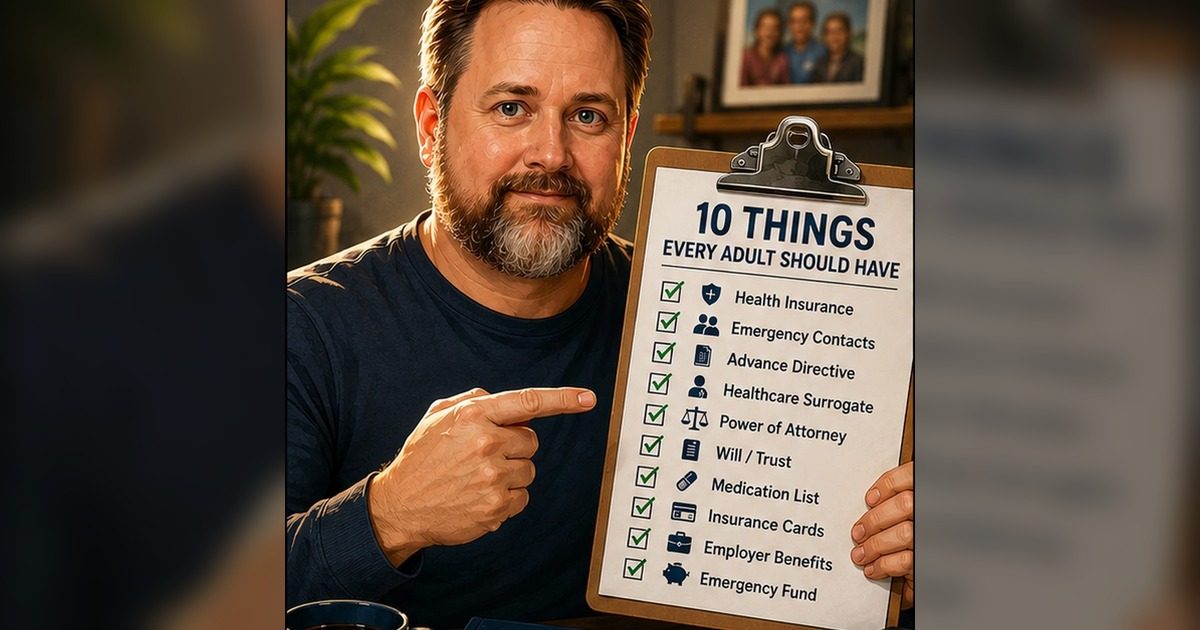
1. Health Insurance
Health insurance is the first line of defense against a medical event becoming a financial disaster. That does not mean insurance makes everything cheap or simple. It does mean you have a structure for coverage, negotiated rates, claims, appeals, and limits on certain covered costs.
- Know your plan type: HMO, PPO, EPO, POS, or high-deductible health plan.
- Know your deductible, copays, coinsurance, and out-of-pocket maximum.
- Know which hospitals, doctors, labs, imaging centers, and pharmacies are in-network.
- Know whether major procedures require prior authorization.
- Know your prescription coverage and whether your medications require step therapy or special approval.
- Keep a digital and paper copy of your insurance card.
The worst time to learn your insurance terms is while you are in recovery. Take one evening and read the summary of benefits for your plan. It may be boring, but it can save you from expensive surprises.
2. Emergency Contacts
Your emergency contact list should be more than one name buried in your phone. Hospitals, doctors, employers, and family members need to know who should be called first and who can step in if that person is unavailable.
- Primary emergency contact.
- Backup emergency contact.
- Local contact who can physically get to you quickly.
- Out-of-town family contact who can coordinate with others.
- Employer or HR contact for leave and benefits questions.
- Primary care doctor and major specialists.
- Preferred pharmacy.
Put these contacts in your phone, but also keep a printed copy in your wallet, medical folder, and emergency binder. If your phone is locked, dead, lost, or unavailable, the paper copy matters.
3. Advance Directive
An advance directive is a document that explains your wishes for medical care if you become unable to communicate. This can include what treatments you would want, what treatments you would refuse, and who should help make decisions.
This is not just for older people. Any adult can be in an accident, have a sudden illness, or go through a surgery where decisions may need to be made while they are sedated, unconscious, or medically unstable.
- Write down your care preferences.
- Talk through those preferences with the person you trust most.
- Give copies to your healthcare surrogate, primary doctor, and close family.
- Review the document after major life changes.
4. Healthcare Surrogate
A healthcare surrogate, healthcare proxy, or medical power of attorney is the person you choose to make medical decisions if you cannot. The name varies by state, but the purpose is the same: someone needs clear authority to speak for you.
- Choose someone calm under pressure.
- Choose someone who will honor your wishes, not just their own emotions.
- Choose someone who can ask direct questions of doctors and hospital staff.
- Name a backup in case your first choice cannot serve.
- Make sure the person actually agrees to the responsibility.
Do not assume everyone in your family will automatically agree during a crisis. Clear paperwork can reduce confusion, conflict, and delay.
5. Power of Attorney
Medical decisions are only one part of a crisis. Bills still need to be paid. Insurance paperwork still needs attention. Rent, mortgage payments, utilities, pets, vehicles, and banking issues do not pause just because you are in the hospital.
A financial power of attorney can allow someone you trust to handle certain financial and administrative tasks if you are unable to do so. The exact authority depends on the document and your state's law, so this is one area where professional legal guidance is usually worth it.
- Decide who could responsibly manage urgent financial tasks.
- Specify what authority they do and do not have.
- Keep the signed document somewhere accessible.
- Tell your trusted person where the document is stored.
- Review it periodically so it still matches your life.
6. Will or Trust
Nobody likes thinking about death, but avoiding the topic does not protect your family. It just leaves them with more confusion if something happens.
A will explains how you want your assets handled after death. A trust can provide more control over how assets are managed and may help simplify certain parts of the estate process, depending on your situation and state law. Beneficiary designations on accounts and insurance policies also matter and should be reviewed.
- Create or update a will.
- Consider whether a revocable living trust makes sense.
- Review beneficiaries on retirement accounts, life insurance, and bank accounts.
- Document where important account information is stored.
- Talk to an estate-planning attorney if you own property, have dependents, have blended-family considerations, or want to avoid leaving a mess.
7. Medication List
A current medication list can prevent delays and mistakes. Do not rely on memory, especially during an emergency. If you are unconscious, sedated, confused, or in pain, someone else may need to answer medication questions for you.
- Medication name.
- Dosage.
- How often you take it.
- Why you take it.
- Prescribing doctor.
- Pharmacy.
- Allergies and bad reactions.
- Supplements and over-the-counter medications.
Keep this list on your phone and in printed form. Update it whenever a medication changes. An outdated medication list is almost as bad as no list at all.
8. Insurance Cards
Your insurance card is small, but it can control a lot of the administrative process. Keep copies where they can be found quickly.
- Health insurance card.
- Prescription insurance card.
- Dental insurance card.
- Vision insurance card.
- Medicare or Medicaid card, if applicable.
- Secondary or supplemental coverage card, if applicable.
Do not scatter sensitive information everywhere. Use a secure folder, a trusted emergency binder, or an encrypted digital vault. The point is controlled access, not careless exposure.
9. Employer Benefits Summary
Your job benefits may matter almost as much as your health insurance during a major medical event. The problem is that most people do not read the details until they are already overwhelmed.
- Short-term disability coverage.
- Long-term disability coverage.
- FMLA eligibility and process.
- PTO, sick leave, and unpaid leave policies.
- Life insurance through work.
- Health Savings Account or Flexible Spending Account details.
- Return-to-work rules and medical certification requirements.
- HR contact information.
If you are employed, download your benefits summary before you need it. Save it somewhere your trusted person can access if you authorize them to help.
10. Emergency Fund
Even with good insurance, a medical event can create immediate cash pressure. Deductibles, copays, medications, transportation, hotel stays for family, pet care, food delivery, home help, and lost income can show up fast.
- Start with a small target if money is tight.
- Build toward at least one month of core expenses.
- Longer term, aim for several months of expenses if possible.
- Keep the money separate from normal spending.
- Do not invest emergency money in something that could lose value or be hard to access quickly.
Where to Keep Everything
A plan only works if someone can find it. Do not create documents and then bury them in a random drawer, forgotten cloud folder, or old email attachment.
- Create a physical emergency binder.
- Create a secure digital folder.
- Give copies of key medical documents to your healthcare surrogate.
- Tell your emergency contacts where the folder is.
- Keep your medication list and insurance cards easy to access.
- Review the whole file once or twice per year.
The 60-Minute Starter Plan
This does not have to be completed in one perfect weekend. Start with one hour.
- Write down your emergency contacts.
- Take photos of your insurance cards.
- Make a medication and allergy list.
- Download your employer benefits summary.
- Look up your deductible and out-of-pocket maximum.
- Pick the person you would trust as your healthcare decision maker.
- Schedule time to complete your advance directive and estate planning documents.
Before Any Major Surgery
If you already know a major procedure is coming, do not wait until the night before to organize your life. Surgery recovery can be unpredictable, and the early days after discharge can be harder than expected.
- Confirm your surgeon, hospital, anesthesiology group, labs, and imaging providers are in-network when possible.
- Ask whether prior authorization is required.
- Ask what bills may come from separate providers.
- Confirm who is driving you home.
- Set up help for meals, pets, medications, and household basics.
- Place your important documents in one folder.
- Ask one trusted person to attend discharge instructions or help take notes.
- Prepare for recovery time, not just hospital time.
One Important Note
Forms, requirements, and legal terms vary by state. A checklist is a starting point, not a substitute for legal, financial, medical, or insurance advice. If you are creating powers of attorney, advance directives, a will, or a trust, use the proper forms for your state and consider getting help from a qualified professional.
Helpful Resources
- Health Insurance Marketplace: https://www.healthcare.gov/
- MedlinePlus Advance Directives: https://medlineplus.gov/advancedirectives.html
- Medicare Advance Care Planning: https://www.medicare.gov/coverage/advance-care-planning
- U.S. Department of Labor FMLA: https://www.dol.gov/agencies/whd/fmla
- CMS Medical Bill Rights: https://www.cms.gov/medical-bill-rights
- CFPB Medical Bill Financial Help: https://www.consumerfinance.gov/ask-cfpb/is-there-financial-help-for-my-medical-bills-en-2124/
- CFPB Emergency Fund Guide: https://www.consumerfinance.gov/an-essential-guide-to-building-an-emergency-fund/
Final Takeaway
You do not need to be rich, old, sick, or paranoid to prepare. You just need to be honest about life. Things happen. Bodies fail. Accidents happen. Surgeries happen. Recovery takes time.
The people who love you should not have to guess their way through your crisis. Give them the information, authority, and structure they need to help you.
Build the plan before you need the plan.
This article is based on personal experience and general research. It is not medical, legal, financial, insurance, or tax advice. Talk with qualified professionals before making decisions about healthcare documents, insurance coverage, estate planning, employment benefits, or emergency savings.