Trust & transparency
Evidence & disclosures
Evidence basis: First-person field notes. The article is based on Colin's own project, flight, recovery experience, media, or documented workflow.
This is all my work
Sources checked: Aug 21, 2026
Linked references: 16 explicit sources in the article.
AI assistance: Lots of AI assitance
TLDR
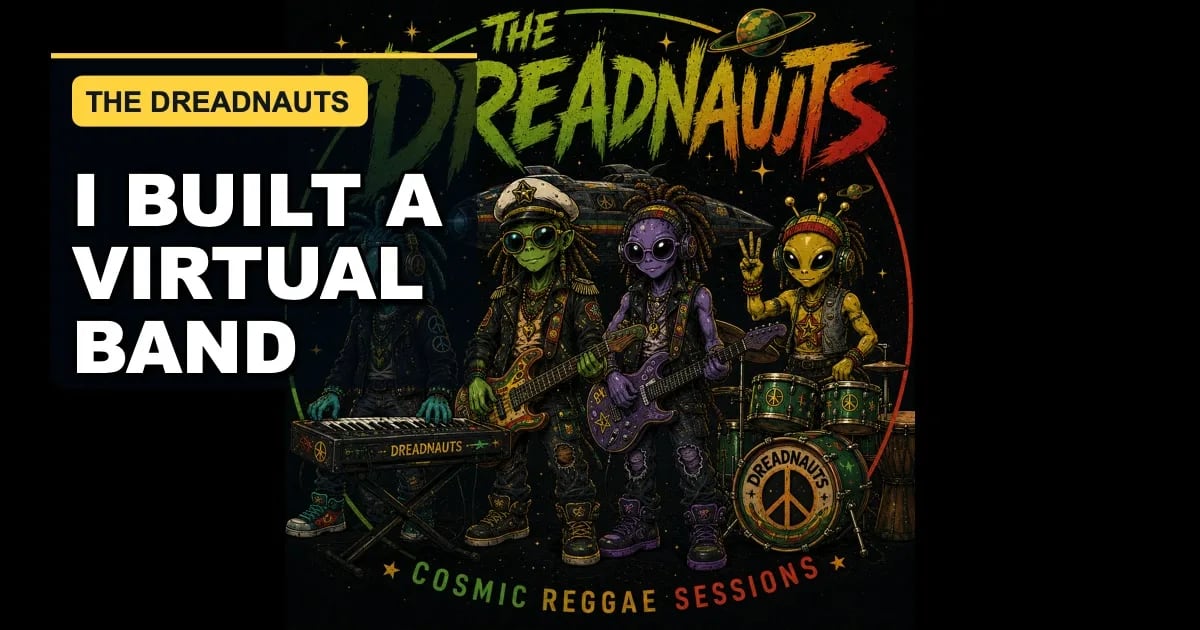
The Dreadnauts did not begin with a song. They began with a name.
I was playing with the Jamaican word “dreads,” the idea of astronauts, and a crew of space pirates who travel through the universe carrying reggae, dub, peace, bass, and a little rebellion. Put those ideas together and I had The Dreadnauts.
That one piece of wordplay eventually became four characters, a nine-track album, synchronized lyrics, music videos and visualizers, a public website, merchandise concepts, a shopping-cart and admin system, a browser-based album workspace, and part of the story inside a game.
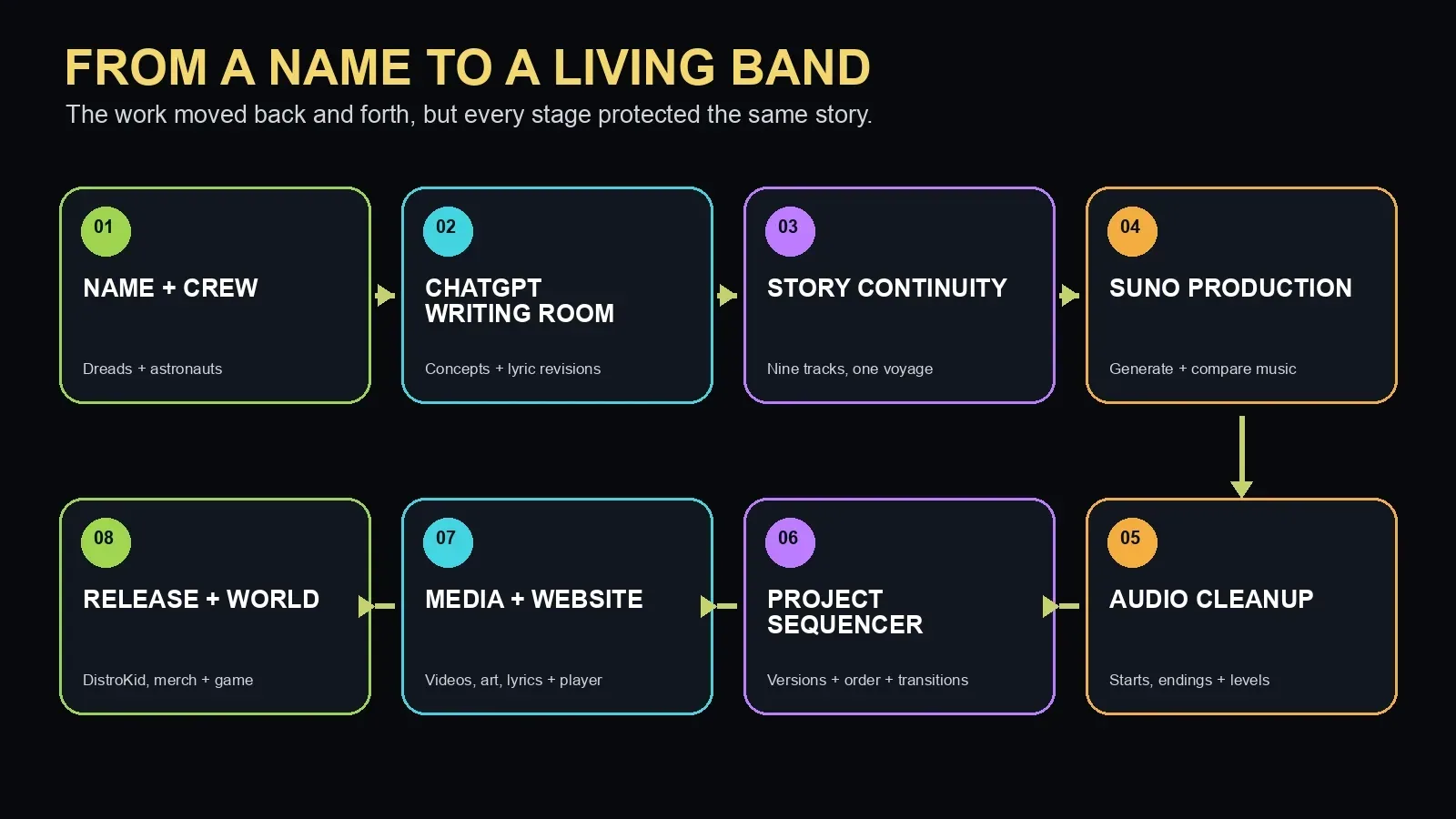
ChatGPT helped me explore the concepts, develop the story, and revise the lyrics. Suno helped produce the music. I still had to choose the direction, reject what did not fit, rewrite what sounded wrong, clean and organize the audio, protect the continuity, build the software, and decide when each part was ready to represent the band.
This is the behind-the-scenes version of how I brought a virtual band to life.
You can listen to the full album and follow the synchronized lyrics on the official Dreadnauts site, or open the verified DistroKid HyperFollow page to choose a streaming service.
It Started With the Name
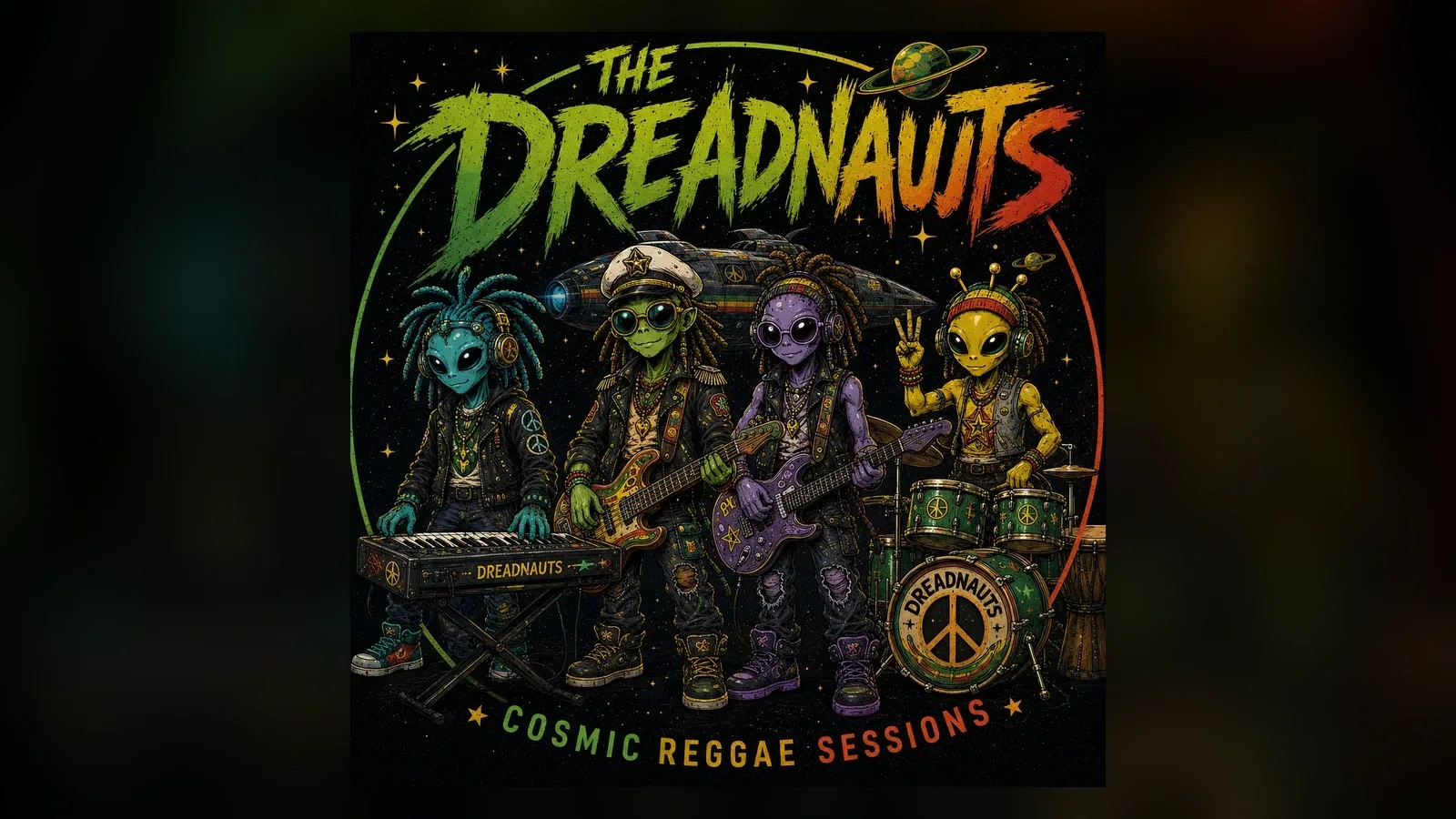
“The Dreadnauts” made me smile because it sounded like a band name and a job description at the same time.
The first half came from Jamaican dreads and the reggae world. The second half came from astronauts, starship crews, and old pirates crossing an ocean with no idea what waited beyond the horizon. These pirates just happened to have a much larger ocean.
The name was playful, but I did not want the entire project to be a one-line joke. If the band was going to feel real, the members needed identities. If the album was going to hold together, the songs needed to sound like chapters from the same voyage.
That meant answering questions that had nothing to do with a music-generation button.
Who is steering the ship? Who keeps the signal alive when everything starts failing? Who plays the melody that makes the crew remember why they left? Who holds the rhythm together when the rest of the universe is trying to pull them apart?
Those questions gave me the band.
Four Frequencies, One Crew
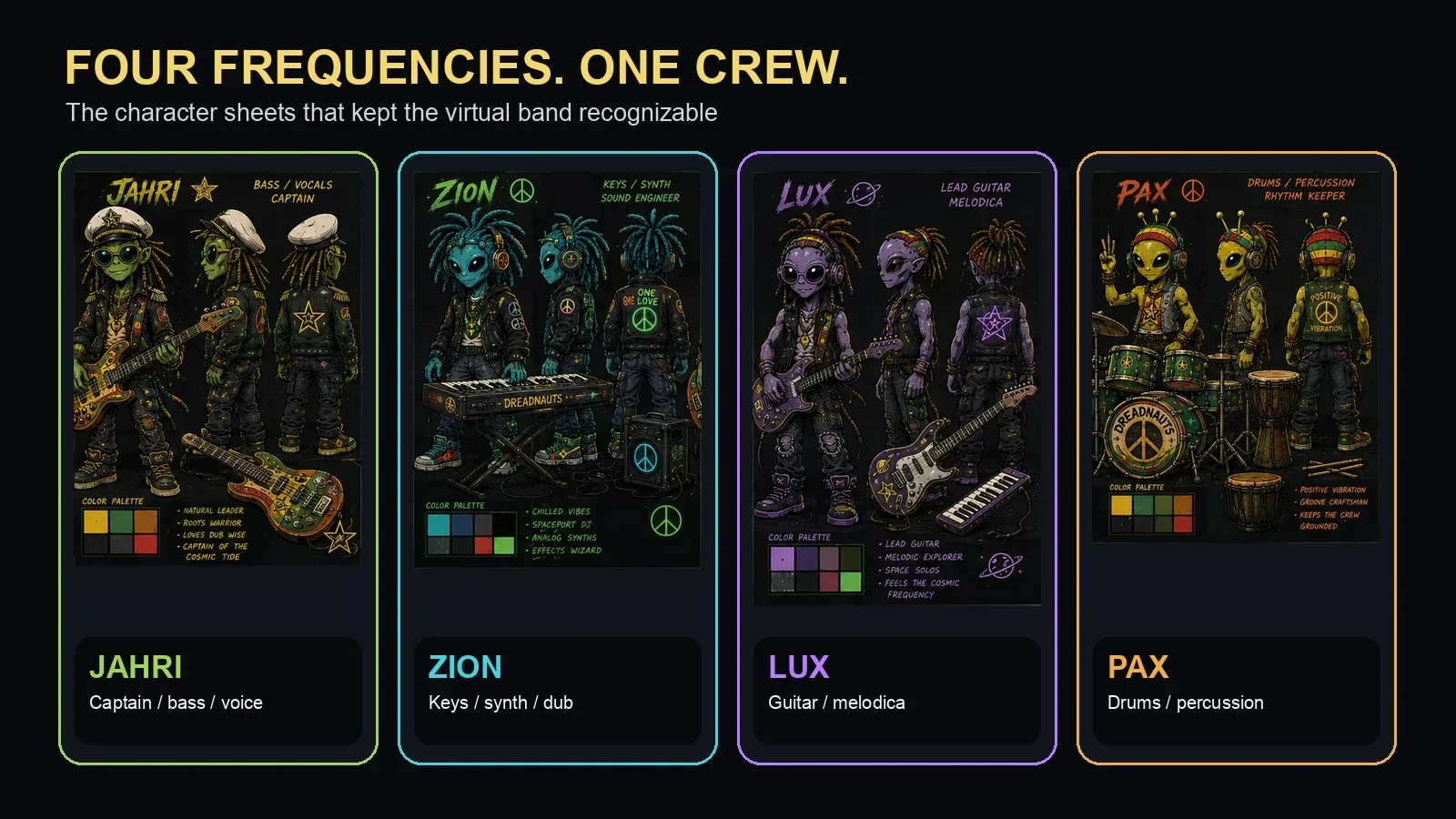
The Dreadnauts became four distinct characters:
- Jahri is the captain, bass player, and lead voice. Jahri gives the band weight and direction.
- Zion handles keys, synths, samples, dub effects, and the technical side of the signal.
- Lux plays lead guitar and melodica, carrying the searching, melodic side of the group.
- Pax handles drums and percussion, keeping the crew moving on one shared pulse.
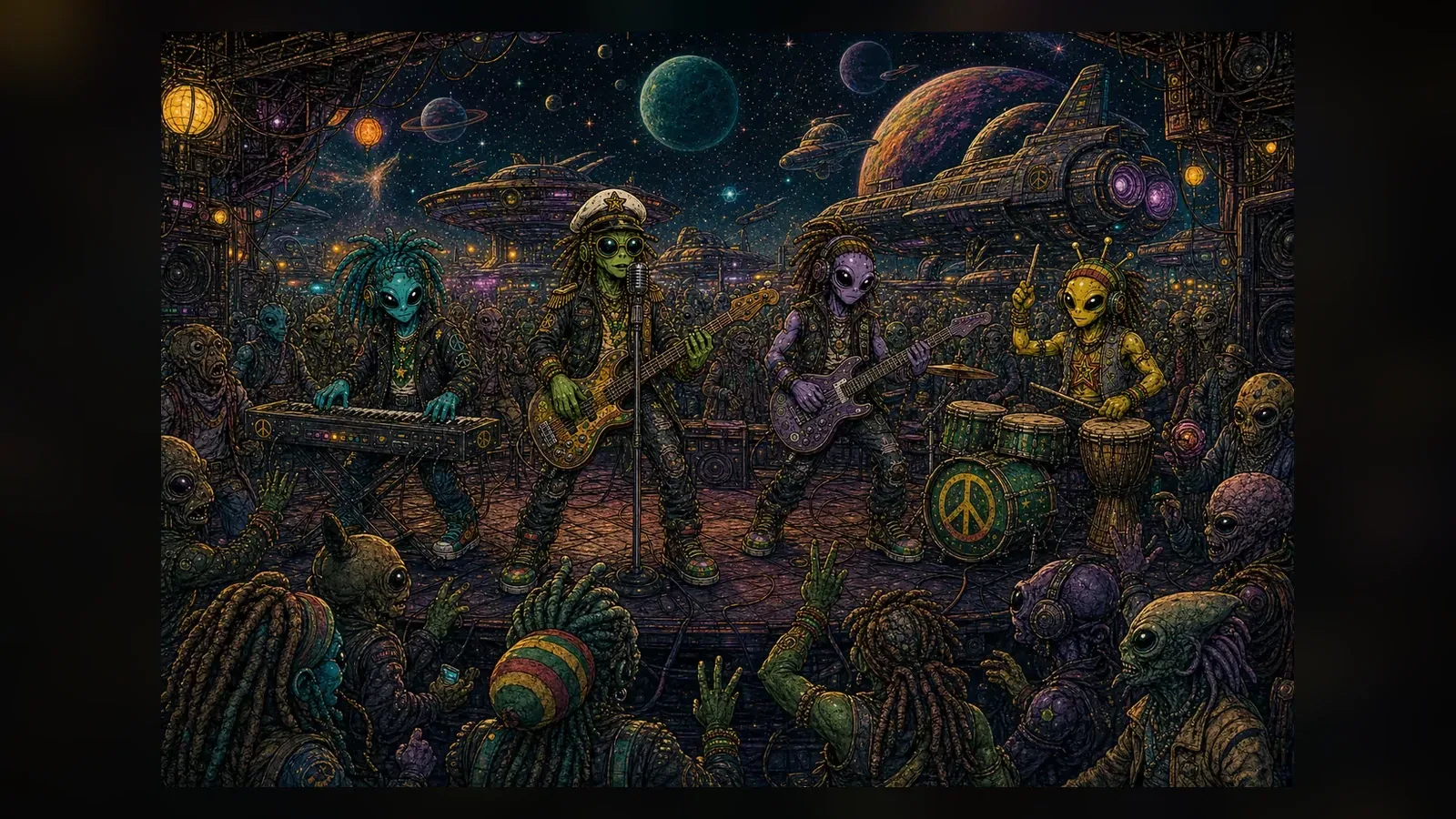
They also needed recognizable visual identities. The colors, instruments, silhouettes, clothing, and personality cues had to remain consistent from an album cover to a character sheet, a music video, a website, or a product mockup.
That consistency matters more than it seems. A virtual band stops feeling like a band when the guitarist changes color, the drummer gets the wrong instrument, or the captain looks like a completely different character in every image.
ChatGPT Became the Writing Room
I used ChatGPT like a writing room, a continuity desk, and occasionally the person at the table who says, “You already used that image three songs ago.”
We worked through the larger concepts first. What did this band believe? What kind of universe were they traveling through? What would make one song feel hopeful and another feel dangerous without abandoning the same reggae and dub foundation?
Then we worked on the album as a sequence, not just nine separate prompts.
Each song needed a purpose. Funky Space Reggae Vibes opens the door like a crowded spaceport party. Intergalactic Mind Traveler turns inward. Captain of the Cosmic Tide introduces the weight of leadership. Nebula Meditation creates room to breathe. Solar Wind Surfer starts moving again. SpaceRock turns up the pressure. Black Hole Dub pulls everything into the deepest part of the voyage. One Love Across the Universe brings the message back into focus. Return to Earth closes the loop.
Chat could suggest a line, a rhyme, a scene, or a different way to connect two ideas. I could then ask whether it sounded like Jahri, whether it moved the story, whether it repeated something we had already said, or whether it simply looked clever on a screen and would be awkward in a song.
That last part happened plenty.
The useful work was the back-and-forth. I kept fine-tuning the concepts and lyrics until they fit the characters and the album narrative. ChatGPT accelerated exploration, but it did not make the final decisions for me.
Suno Turned the Writing Into Music
Once a concept and lyric sheet were strong enough, I used Suno to produce the music.
This was not one prompt followed by a dramatic movie montage where the album was suddenly done.
A generated result could have the right groove and the wrong vocal delivery. It could nail the chorus and lose the character in a verse. It could have a fantastic instrumental section followed by an ending that felt as though someone unplugged the spaceship.
I listened, compared, revised, and tried again. Sometimes the concept needed work. Sometimes the lyrics needed fewer words so the music had room to breathe. Sometimes a song needed a different balance between roots reggae, dub space, guitar energy, and science-fiction atmosphere.
Suno did the music-generation work, but I still had to be the producer and editor of the larger project: decide what belonged, what needed another pass, and what moved the album forward.
I also had to be honest about what this is. The Dreadnauts are a fictional virtual band, and AI-generated audio is part of the production. I am not pretending four alien musicians walked into a studio and played the record live—although that would be an excellent documentary.
The Audio Still Needed Cleanup and an Album Plan
Getting a track I liked was not the same thing as finishing an album.
The audio needed review and cleanup. Starts and endings had to make sense. Levels and transitions needed attention. Files needed useful names. Lyrics, artwork, versions, and approval decisions had to stay attached to the right song.
That practical problem became another project: Project Sequencer.
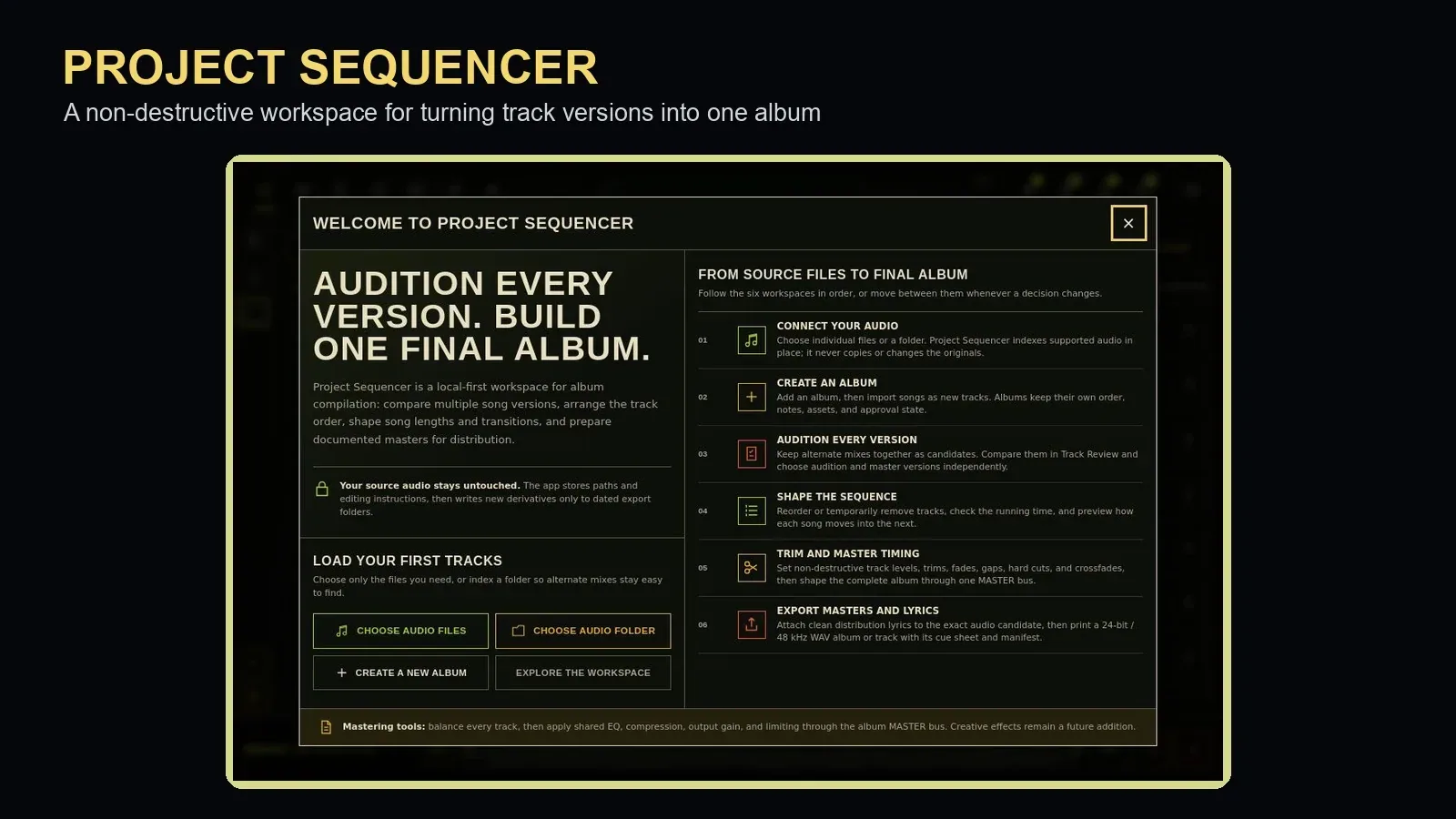
Project Sequencer is my non-destructive workspace for comparing song versions, arranging the album, planning transitions, attaching lyrics and artwork, tracking approvals, and documenting how the final sequence should be delivered. It helps me change my mind without losing the decision that came before it.
The current public lab is seeded with all nine Cosmic Reggae Sessions tracks. It shows the sequence, mastering instructions, track review, album decisions, assets, audio library, and settings as separate parts of the same album workflow.
The goal was not to build a magic mastering button. The goal was to keep the album organized and bring it to listeners the way it was meant to be heard.
Then Every Song Wanted a Visual World
Once the characters and songs existed, audio was only part of the job.
The band needed album art, character portraits, video scenes, visualizers, thumbnails, website images, banners, release graphics, and social material. The same four characters had to survive every format without losing their identities.
That led to a repeatable visual pipeline:
- Start with the track's role in the album story.
- Choose the scene, character focus, mood, and color language.
- Generate or assemble the artwork and shots.
- Compare the results with the approved character designs.
- Reject the images that changed a face, color, instrument, or story detail.
- Build the video or visualizer, then create the thumbnail and website derivatives from the approved material.
The pipeline mattered because generating images is easy. Maintaining a recognizable band across dozens of images is the actual job.
The official channel now has music videos, visualizers, and shorter experiments tied to the project. The contact sheet below includes six of the public releases, from the psychedelic pull of Black Hole Dub to the return journey in Return to Earth.
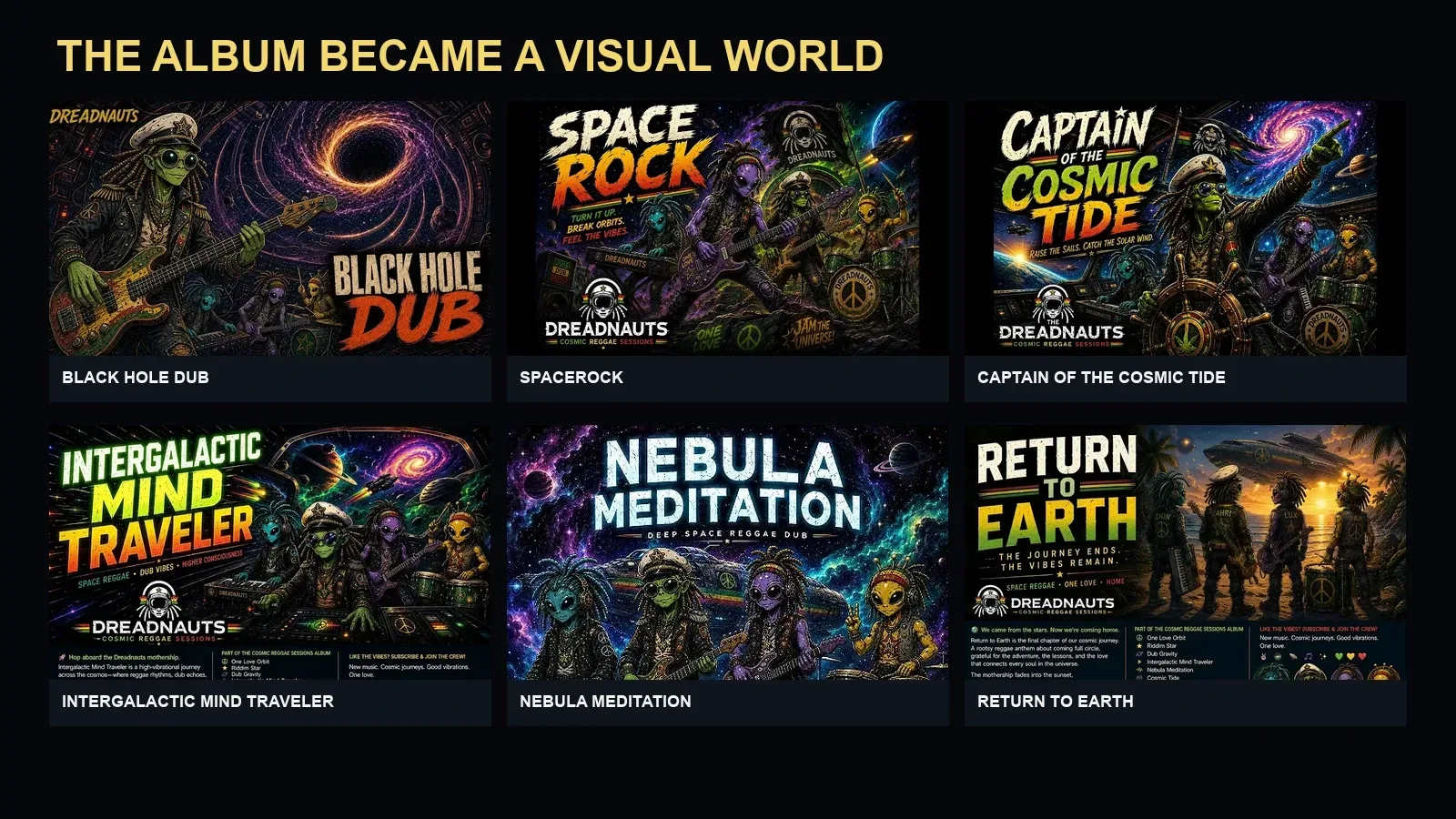
You can watch them here:
- The Dreadnauts — Black Hole Dub (Official Music Video)
- Dreadnauts | SpaceRock
- The Dreadnauts — Captain of the Cosmic Tide
- Intergalactic Mind Traveler — Dreadnauts
- Dreadnauts — Nebula Meditation (Official Visualizer)
- Return To Earth — Dreadnauts
Or browse the official Dreadnauts YouTube channel.
The Album Needed a Home of Its Own
I did not want the Dreadnauts to exist only as scattered links on other platforms.
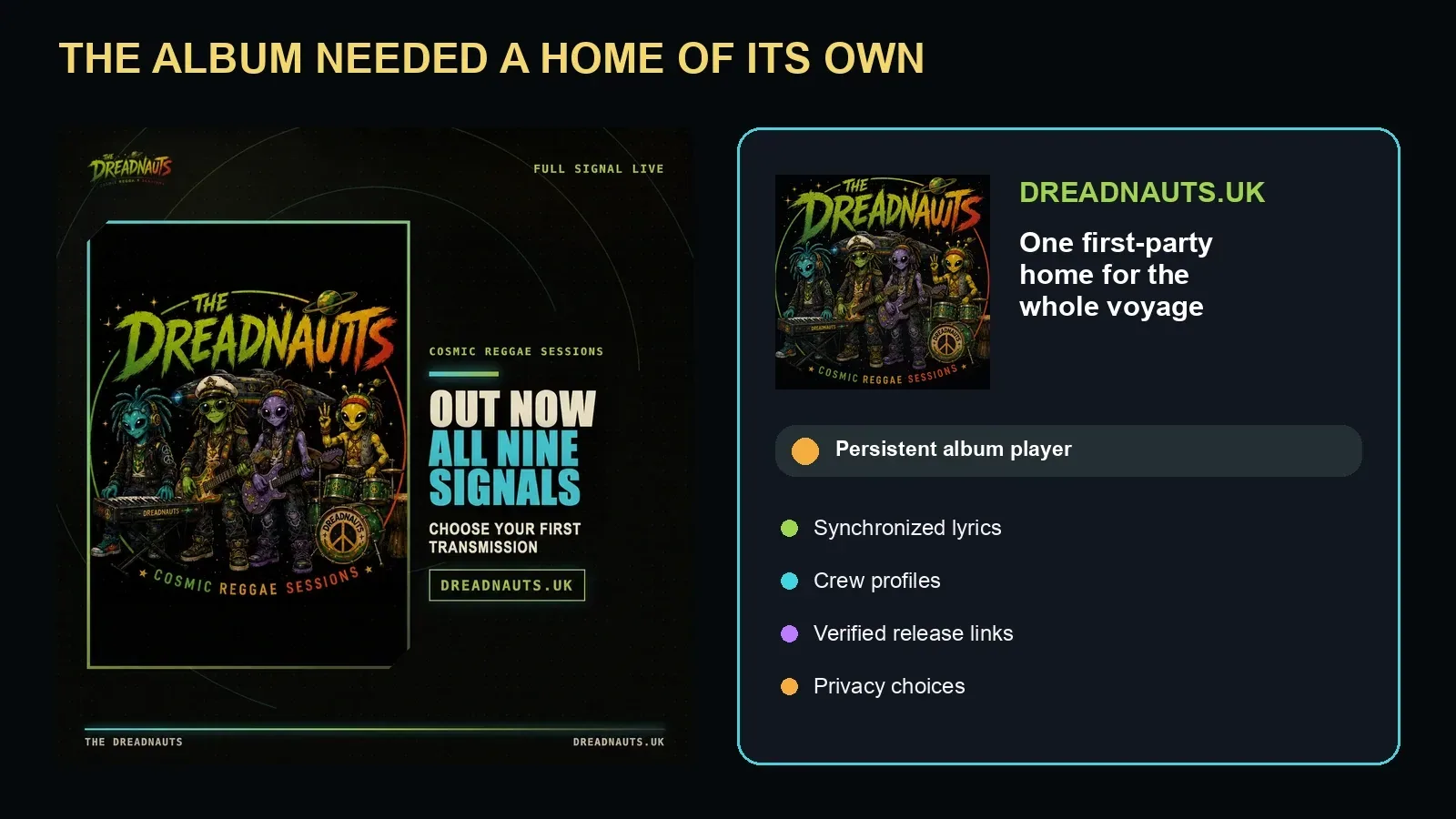
I built dreadnauts.uk as the band's first-party home. It brings the album sequence, persistent player, synchronized lyrics, crew profiles, artwork, release links, story material, and privacy choices into one place.
The site can play the album while someone moves between pages. The lyrics can follow the track. Each band member has a distinct profile. Verified links point listeners to Spotify, Apple Music, Amazon Music, iTunes, DistroKid, and other destinations without making them hunt through a search result full of similarly named projects.
The website also forced a different kind of creative discipline. An album cover can be dense and detailed. A mobile header cannot. A video image may work for four minutes but fail as a tiny card. The site needed faster versions, different crops, useful alt text, and a visual system that still felt like the same universe.
Building the Merch System Without Giving Up Control
Then the project wandered into merchandise.
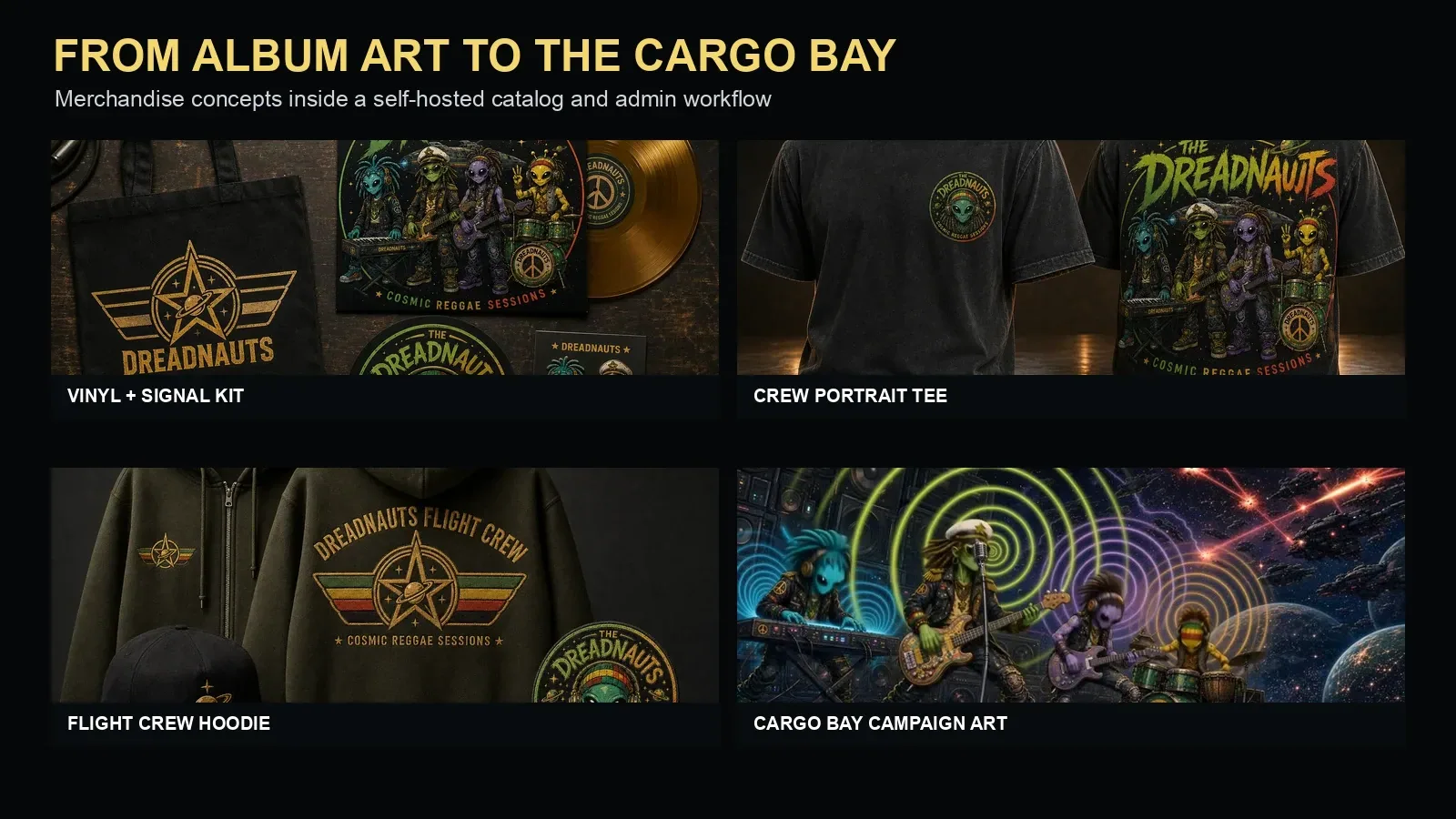
That started with the fun part: tees, caps, vinyl concepts, sticker packs, crew portraits, signal patches, and enough fictional tour gear to make the cargo hold look suspiciously well stocked.
But I also wanted control over the system behind those products. I built the catalog, shopping-cart experience, product media, options and variants, and a private admin area so I could manage the merchandise directly instead of making the whole project depend on a hosted storefront I did not control.
The important current boundary is that the public merch area is still a concept catalog. It shows real product records, images, variants, prices, and Add to Cargo controls, but it does not currently accept orders, collect payment, or request customer details. The infrastructure is there for me to keep developing; the checkout switch is not on.
That may sound like a strange amount of work for a virtual band. It is. It is also exactly how side projects happen.
You start by writing a song. A few weeks later you are designing database fields for a space-pirate hoodie.
The Side Projects Became Part of the Story
The Dreadnauts also found their way into Plunderverse: First Haul.
Jahri is the captain, the other band members are separated, and the current story lead is simple: Reassemble the Dreadnauts.
That connection helped me see the band differently. A song could be more than a track on an album. It could become a transmission, a mission signal, a memory, a location, or the emotional payoff for bringing a crew member home.
Project Sequencer came from the need to finish and organize the record. The video and graphic pipelines came from the need to make the band visible. The website came from the need to give everything one official home. The cart and admin came from the need to control the merchandise. Plunderverse came from the desire to let people enter the world rather than only listen to it.
None of those were in the first name idea. They grew because each finished piece suggested the next useful thing to build.
What the Tools Did, and What I Did
I think the cleanest way to explain the project is to separate assistance from authorship.
- ChatGPT helped me explore concepts, test story directions, revise lyrics, check continuity, and generate alternatives.
- Suno produced the musical material and performances I shaped into the album.
- The media pipelines helped generate, assemble, and export the many visual formats the band needed.
- Project Sequencer keeps the album decisions, versions, sequence, transitions, lyrics, artwork, and delivery notes connected.
- The website and commerce tools make the public experience and merchandise catalog something I can operate and control.
- I decided what The Dreadnauts are, what the album is trying to say, which ideas survived, what needed another pass, how the songs connect, what the band should look like, what the software should do, and what was ready to go public.
AI made this project possible at a scale I could not have reached alone. It did not remove the need for taste, patience, editing, software work, or responsibility. If anything, it created more decisions because suddenly almost every direction was possible.
The work was choosing which direction actually belonged to The Dreadnauts.
Listen to Cosmic Reggae Sessions
Cosmic Reggae Sessions was released on August 1, 2026. The nine-track album runs about 47 minutes.
- Play the album and read the synchronized lyrics on dreadnauts.uk
- Choose a service through DistroKid HyperFollow
- Listen on Spotify
- Listen on Apple Music
- Listen on Amazon Music
- Buy the download on iTunes
If you want a small tour of the whole project, pick one song and follow it through the album page, the lyrics, one of the videos, and its place in the sequence. That is where the virtual band starts feeling less like a collection of generated files and more like a connected world.
Final Thought
The Dreadnauts started with a pun. They came to life through a long chain of choices.
ChatGPT helped me write and refine the world. Suno helped me hear it. The cleanup and sequencing work helped me turn separate songs into an album. The media pipelines gave the band faces and places to perform. The website gave them a home. The store system gave me control over where the visual identity could go next. The game gave the crew a larger mission.
The lesson for me is not that AI can make a virtual band.
It is that a good idea becomes convincing when every piece keeps making the same promise. The name, characters, lyrics, music, artwork, videos, software, and website all have to feel as though they belong to the same signal.
That is how The Dreadnauts went from two words to a band I can actually introduce to people.
Listen to Cosmic Reggae Sessions · Open the DistroKid album page · Watch The Dreadnauts on YouTube