Trust & transparency
Evidence & disclosures
Evidence basis: First-person field notes. The article is based on Colin's own project, flight, recovery experience, media, or documented workflow.
A first-person weekly update on valve-surgery recovery, infection treatment, blood work, and PICC-line pain; it is not medical advice.
Sources checked: Aug 20, 2026
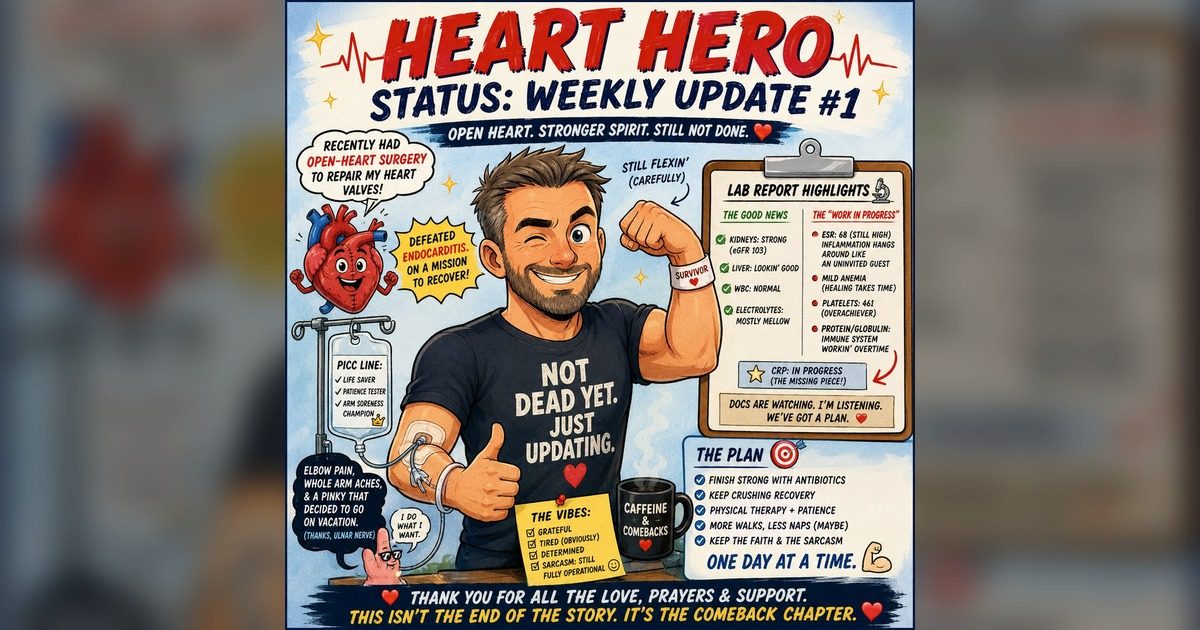
This is my first weekly recovery update after open-heart surgery, valve repair/replacement, and treatment for endocarditis. I am still on antibiotics, still being watched closely for infection, and still learning that recovery is not a straight line.
The best way I can describe this week is: my body is recovering, but it is not exactly relaxing. The labs show progress in some areas, inflammation in others, and a few reminders that healing after something this serious takes time.
I went in for valve issues and came out with a new valve, a crash course in endocarditis, and apparently a PhD in blood work.
Recovery humor, because sometimes you have to laugh at the absurdity of it all.
What Is Endocarditis?
In simple terms, endocarditis is an infection inside the heart, usually involving the heart valves. Bacteria can get into the bloodstream, attach to a valve, and build up infected clumps called vegetations.
That sounds dramatic because it is. Heart valves are supposed to open and close smoothly all day long. When bacteria stick to them, they can damage the valve, cause leaking, and spread infection through the bloodstream. That is why endocarditis is treated aggressively with long-term IV antibiotics and, in some cases, surgery.
The Lab Results: The Good News
- Kidney function looked strong: creatinine was 0.92 and eGFR was 103.
- Liver numbers looked good: AST, ALT, and bilirubin were all in range.
- White blood cell count was normal at 8.1, which is reassuring because it does not scream uncontrolled infection.
- Potassium was normal at 4.3, which is good news while recovering and being monitored closely.
The Lab Results: Things Still Needing Attention
- ESR was high at 68, meaning my body still has a lot of inflammation going on.
- Hemoglobin and hematocrit were low, which points toward mild anemia after major surgery, infection, and recovery.
- Platelets were high at 461, which can happen after surgery or inflammation as the body works to heal.
- Total protein and globulin were high, while the albumin/globulin ratio was low, which fits with an immune system that has been working overtime.
- Sodium and chloride were slightly low, which may be related to hydration, medications, appetite, or recovery changes.
- CRP was still in progress at the time, and that result matters because CRP often gives a more current snapshot of inflammation than ESR.
The overall lab picture did not look like everything was perfect, but it also did not look like a total disaster. It looked more like what you might expect from someone recovering from major infection, major surgery, and a body that is still trying to calm down.
Arm Drama: The Sequel
One of the bigger things I have been dealing with is pain around the PICC line area, arm discomfort, and numbness in my left pinky finger. The pinky numbness sounds a lot like ulnar nerve irritation, which can happen from elbow compression, surgical positioning, swelling, IV/PICC irritation, or shoulder and neck problems.
The cold fingers are something I am not ignoring either. Cold fingers can come from nerve irritation, medication effects, anemia, or circulation issues. With a PICC line and recent heart infection history, it is worth telling the medical team because they may want to rule out a clot or circulation problem.
Questions for the Medical Dream Team
- What do my blood cultures show?
- How is my CRP trending?
- Is this ESR level expected after surgery and infection?
- Is there any concern for lingering infection around the valve?
- Are the anemia and platelet count expected during recovery?
- Should the PICC arm pain, pinky numbness, and cold fingers be checked with an ultrasound or nerve evaluation?
The Main Takeaway
This week’s update is not “all clear,” but it is not “panic mode” either. It is more like: recovering, still inflamed, still being monitored, and still needing patience.
Recovery status: healing, not relaxing.
One week at a time.
I have been through the storm: infection, open-heart surgery, antibiotics, weird nerve symptoms, and blood work that now feels like its own college course. But I am still here, still healing, and still trying to turn this experience into something useful for someone else.
This is not medical advice. It is just my recovery story, shared honestly, with a little humor, because sometimes the only way through the hard stuff is to keep going and laugh where you can.
