Trust & transparency
Evidence & disclosures
Not yet classified. This article has not yet been classified under the current editorial standard. It may predate the policy; do not assume a product was owned, tested, supplied, or independently verified unless the article says so.
Linked references: 21 explicit sources in the article.
Get Paid to Read This Post
TLDR
No, I am not mailing you a check for reading this post.
What I can give you is a researched starting point: five real ways to earn or save a little money online, what each one asks from you, and the catches that usually get buried under the exciting part.
None of these is guaranteed income. One is really cash back, two depend on being matched with studies or tests, one requires passing an AI-work assessment, and one asks you to sell an actual skill to actual clients. That is less exciting than “make $500 before lunch,” but it is also much closer to the truth.
There are no referral links in this post. If you try one of these, start small, use the official website, track your time, and never pay someone for the promise of a job.
So How Does Reading This Pay Me?
The title is clicky. I know it is clicky. That is part of the fun.
But I do not want the article to play a trick on you. Knowledge is not the same thing as cash in a bank account. The honest promise is that fifteen minutes here could help you find one reasonable experiment, avoid one bad opportunity, or notice that you already have a skill someone might pay for.
This is for the person between jobs, a stay-at-home parent trying to help with groceries, a retired person who wants something useful to do, or anybody who would like a little breathing room without being sold a fantasy.
You probably will not quit your job tomorrow because of one website. You might make twenty dollars, learn how online research works, get better at explaining what you see, or discover that a small freelance service is worth building. That still counts.
My Colin Trust Meter
I gave each option a Colin Trust Meter score from 0 to 100.
- 0-20: Low concern. Still read the rules.
- 21-40: Reasonable experiment with real tradeoffs.
- 41-60: Proceed carefully and do not depend on the income.
- 61-80: Too many unknowns for me.
- 81-100: Walk away.
The score is not a legal ruling, a security audit, or a promise that you will have a good experience. It is my practical snapshot as of July 16, 2026, based on five questions:
- Is the company clear about how it works?
- Does it charge you to get work?
- What personal data does it ask for?
- How long might the first dollar take?
- How predictable is the income?
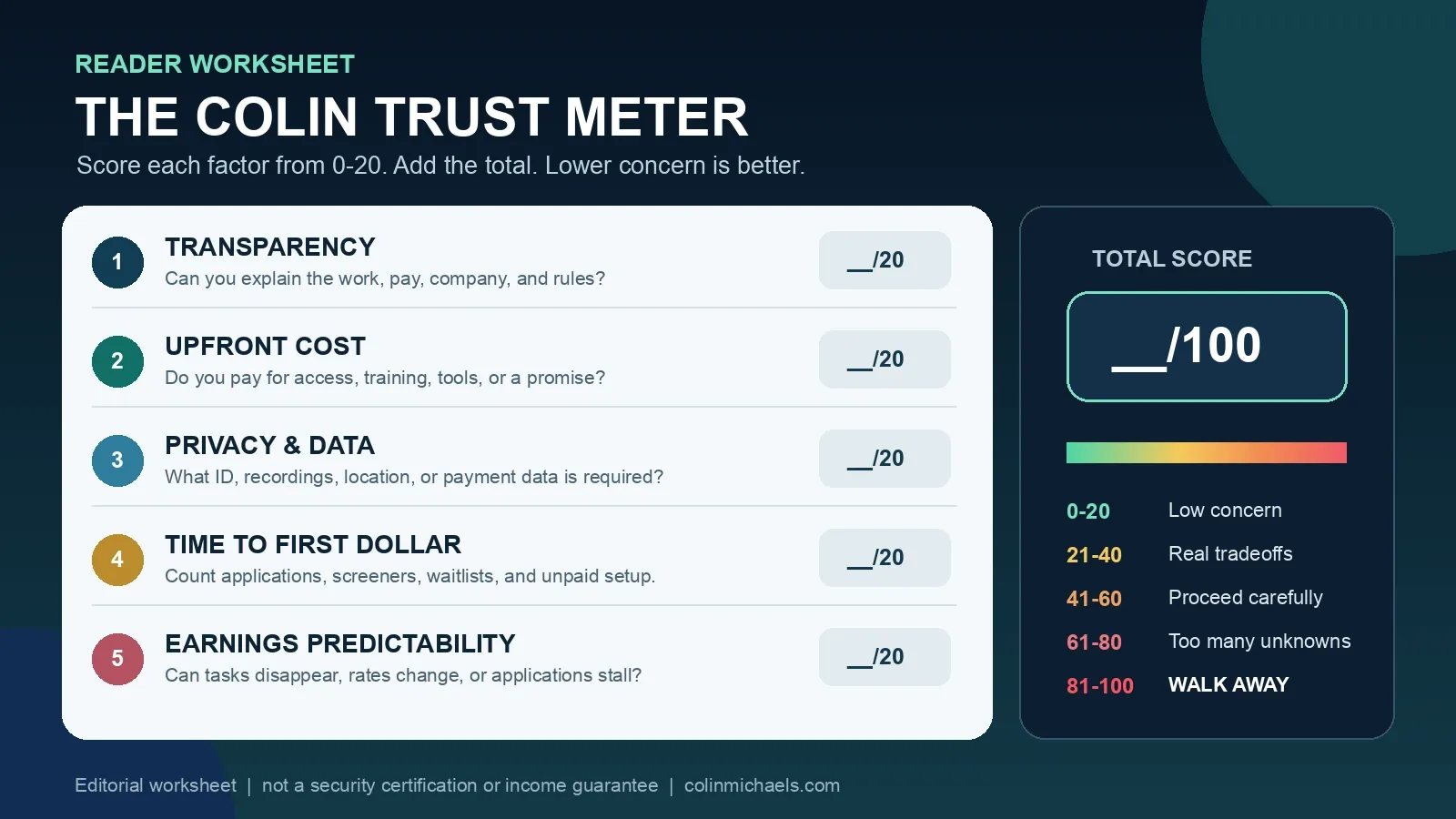
You can use the same worksheet on any opportunity. Give each factor 0 to 20 points, then add them. Lower is better. If a company hides the pay, wants money up front, and sends you a check so you can “buy equipment,” you do not need a calculator. You need the back button.
The Quick Comparison
These are not five copies of the same side hustle. Upside can reduce spending. Prolific and UserTesting pay for participation and feedback. DataAnnotation pays qualified contractors for judgment that helps train AI. Upwork is a marketplace where you build a tiny service business.
That difference matters because the best choice is not automatically the one with the largest number next to it. The best choice is the one that matches your time, privacy comfort, patience, and skills.
1. Upside: Cash Back on Purchases You Were Already Making
One of the things that put this article in my head was getting roughly twenty dollars back on gas after a few fill-ups. That is not retirement money, but twenty dollars is still twenty dollars.
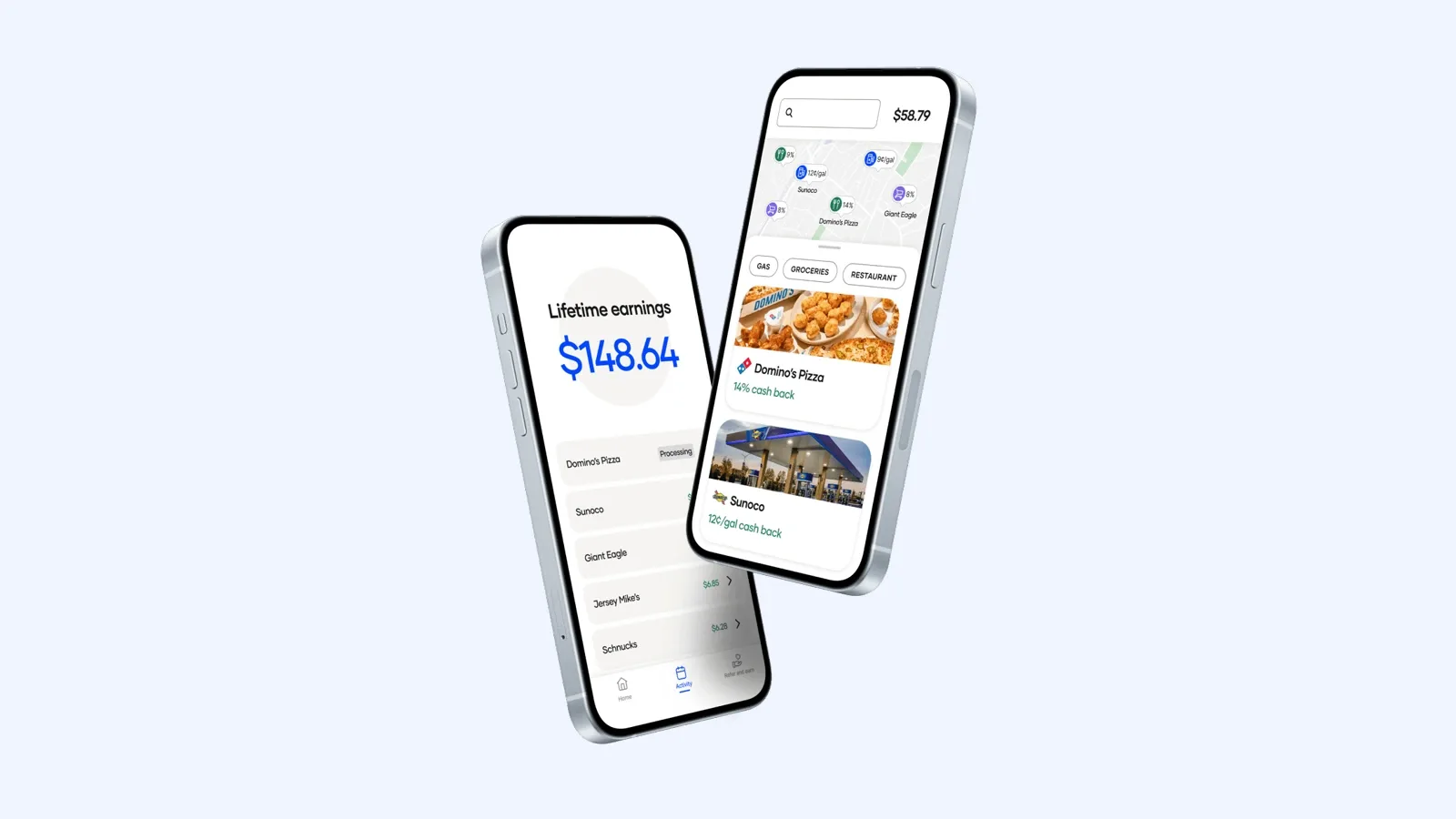
Upside is a free cash-back app for participating gas stations, grocery stores, and restaurants. You find a nearby offer, claim it before the purchase, use an eligible payment method, and wait for the cash back to process.
What the money looks like
Cash back varies by location and offer. I would not count it as income. I would count it as a discount that becomes useful only when it fits a purchase I was already going to make.
The easiest way to lose the benefit is to drive farther, buy something unnecessary, or choose a more expensive location just because an app showed a bright number.
What you are trading
You are trading some purchase information, payment-card matching, location-specific shopping behavior, and a few minutes of attention. Upside says you should claim the offer before buying, use the correct payment method, and keep the receipt until the transaction processes.
Colin Trust Meter: 18/100
The service is easy to understand, free to join, and tied to purchases at real businesses. The score is not zero because offers vary, transactions can be denied, and the app needs enough purchase information to verify a claim.
My getting-started checklist
- Download the app from the link on the official Upside website.
- Compare the final price, not just the cash-back number.
- Claim the offer before buying.
- Use the payment method shown in the app and keep the receipt.
- Try it on one purchase already in your routine.
Would I recommend it to my parents? Yes, if they are comfortable linking the needed payment information and will not change where they shop just to chase an offer.
Would I still recommend it in a year? I would recheck the current privacy policy, cash-out rules, and nearby offers first. That should be the rule for every app in this article.
Official research: What is Upside?, How to use Upside, and Why cash back may not appear.
2. Prolific: Get Paid to Participate in Research
Prolific connects participants with academic, product, and AI-related research studies.
This is closer to “get paid to answer thoughtful questions” than the survey sites that pay three pennies and a point toward a gift card you will forget exists.

What the money looks like
Prolific currently requires researchers to pay at least $8 per hour and recommends $12 per hour or more. That is a platform rule, not a promise that you will receive a full hour of work. A study might pay a few dollars for a short task, and your dashboard may be empty when nothing matches your profile.
The biggest catch is getting in. Prolific uses a demographic-based waitlist. Some people may receive an invitation quickly; others may wait months or longer.
What you are trading
You are giving researchers time, opinions, demographic details, and sometimes more sensitive study responses. Prolific also requires identity verification after an invitation, including an accepted photo ID and a short selfie video through its verification provider.
That does not automatically make it unsafe. It does mean “free to join” is not the same as “no personal information required.” Read each study consent form and skip anything that makes you uncomfortable.
Colin Trust Meter: 27/100
Prolific gets credit for a published minimum reward rate, real-money payments, clear study details, and a formal support process. The waitlist, identity verification, and unpredictable flow of eligible studies add risk and friction.
My getting-started checklist
- Join the waitlist through the official participant page.
- Use accurate information and expect identity verification.
- Read the time estimate, reward, and consent details before reserving a study.
- Track actual minutes so you know your real hourly rate.
- Never use a third-party auto-accept tool or unsupported extension.
Would I recommend it to my parents? Yes, if they understand the ID-verification requirement and are comfortable using PayPal. I would sit with them for the first study so nobody mistakes a research question for a requirement to reveal more than the study actually needs.
Would I still recommend it in a year? Probably as an experiment, but I would recheck the minimum rate, verification vendor, waitlist rules, and cash-out process.
Official research: Prolific participants, current minimum reward guidance, the signup waitlist, and cash-out rules.
3. UserTesting: Talk Through Websites and Apps
UserTesting pays contributors to share feedback on websites, apps, products, and experiences.
Some opportunities are simple surveys. Others ask you to record your screen and voice while you complete tasks and explain what you are thinking. Live conversations may involve a scheduled video call.
What the money looks like
UserTesting says the payment amount varies by test type, length, and demand. The important part is that the amount appears before you accept the test. Payments usually go to a verified PayPal account about fourteen days after a completed test.
You will not qualify for every invitation. Screeners take time, demand changes, and a rushed or incomplete recording can be rejected.
What you are trading
You are trading time, attention, your spoken opinions, and—depending on the test—screen, voice, or video recordings. Close private tabs, silence personal notifications, and never reveal account numbers, passwords, health records, customer data, or anything else that does not belong in a research recording.
Colin Trust Meter: 31/100
The platform explains its test types, shows the pay before acceptance, and documents its payment process. The score rises because invitations are inconsistent, screeners do not always lead to paid work, and recordings create a bigger privacy decision than clicking through a normal survey.
My getting-started checklist
- Apply through the official participant page.
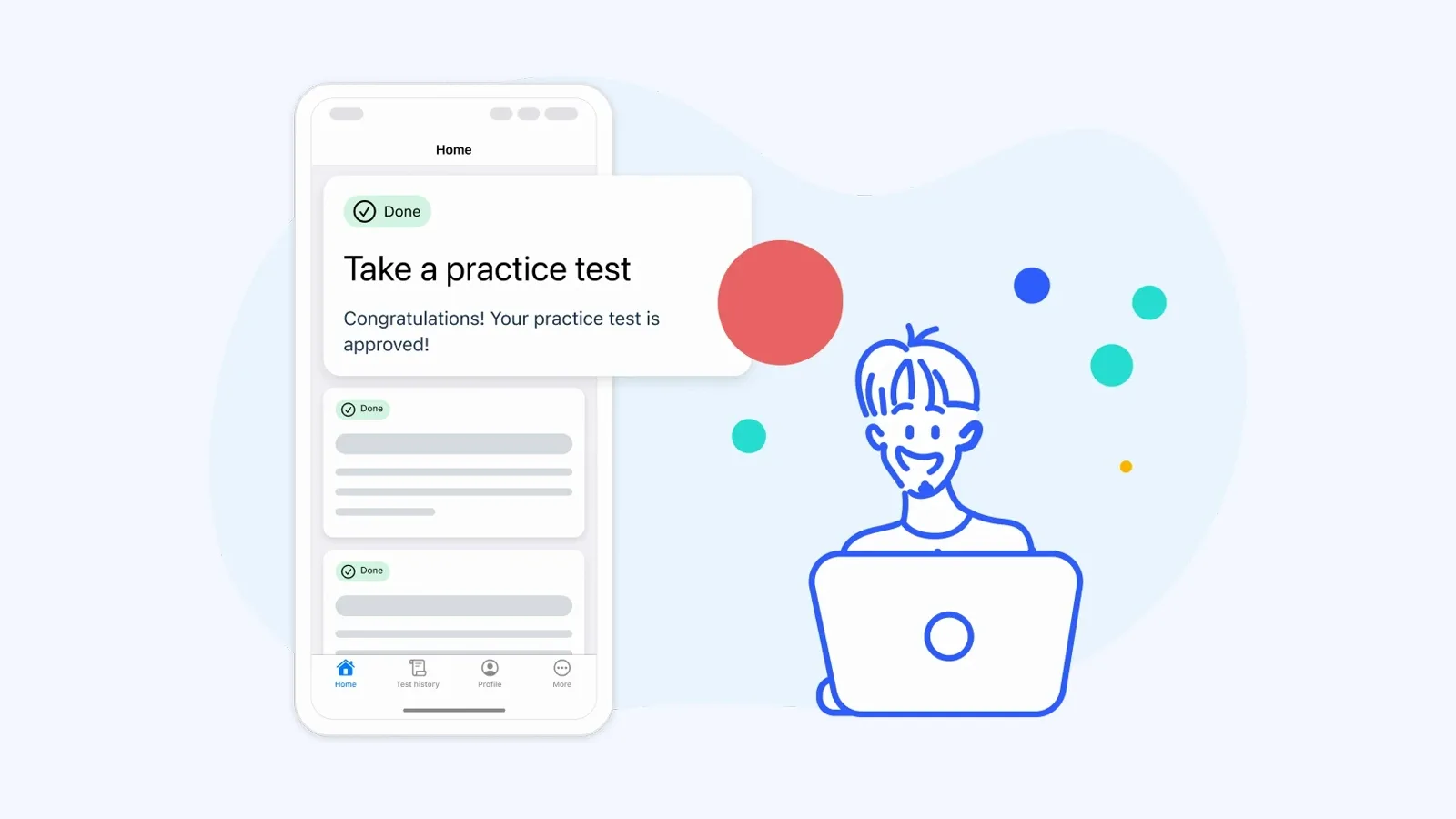
- Complete the unpaid practice test carefully.
- Set up a verified PayPal account in your own name.
- Read the pay, recording type, expected time, and requirements before starting.
- Prepare a clean browser profile with no personal notifications or saved private tabs.
Would I recommend it to my parents? Yes for somebody comfortable speaking their thoughts aloud and managing recording privacy. No for somebody who feels pressured to reveal personal information just because a test is running.
Would I still recommend it in a year? I would recheck device requirements, payout timing, and recording terms, then try one paid test before committing more time.
Official research: Get paid to test, application process, and payment FAQ.
4. DataAnnotation: Use Human Judgment to Help Train AI
DataAnnotation advertises remote contract projects where people evaluate AI responses, identify factual or logical problems, write prompts, compare outputs, review images, or work on coding and specialist tasks.
This is not mindless button clicking. Strong writing, research, fact-checking, and critical thinking are part of the job.

What the money looks like
As of this research, DataAnnotation advertises generalist projects starting around $25-$30 per hour, multilingual work starting around $20 per hour, and higher rates for coding or specialist work.
Those are advertised project rates, not guaranteed personal earnings. Applicants take an assessment, not everyone qualifies, and project access can depend on skills, performance, location, and customer demand.
I would treat this as a potentially valuable application—not as money that belongs in next month’s budget before the work exists.
What you are trading
You are trading concentrated thinking time, written judgment, and sometimes specialist expertise. You may also complete identity verification and work as an independent contractor without the stability or benefits of a normal job.
The most important rule is intellectual honesty. If a task tests your writing or judgment, do not quietly hand the work to another AI unless the project explicitly allows it. The whole point may be measuring the human signal.
Colin Trust Meter: 44/100
The official site now publishes clearer descriptions and advertised rates, and it does not present the work as a guaranteed full-time job. The score stays higher because qualification, project supply, account decisions, and long-term income are less predictable than the headline hourly rate.
My getting-started checklist
- Confirm the domain is exactly dataannotation.tech or its official app domain.
- Read the current FAQ and project description before applying.
- Set aside focused time for the assessment and answer in your own words.
- Do not buy a course, “guaranteed account,” or application shortcut.
- If accepted, track unpaid reading and qualification time along with paid task time.
Would I recommend it to my parents? Only if they enjoy careful reading, writing, and fact-checking and understand that passing the assessment and receiving steady work are not guaranteed.
Would I still recommend it in a year? I would research it again from scratch. AI contract work changes quickly, and a good rate today does not guarantee the same projects, terms, or availability next year.
Official research: generalist AI training work and current FAQ.
5. Upwork: Package a Skill and Find a Client
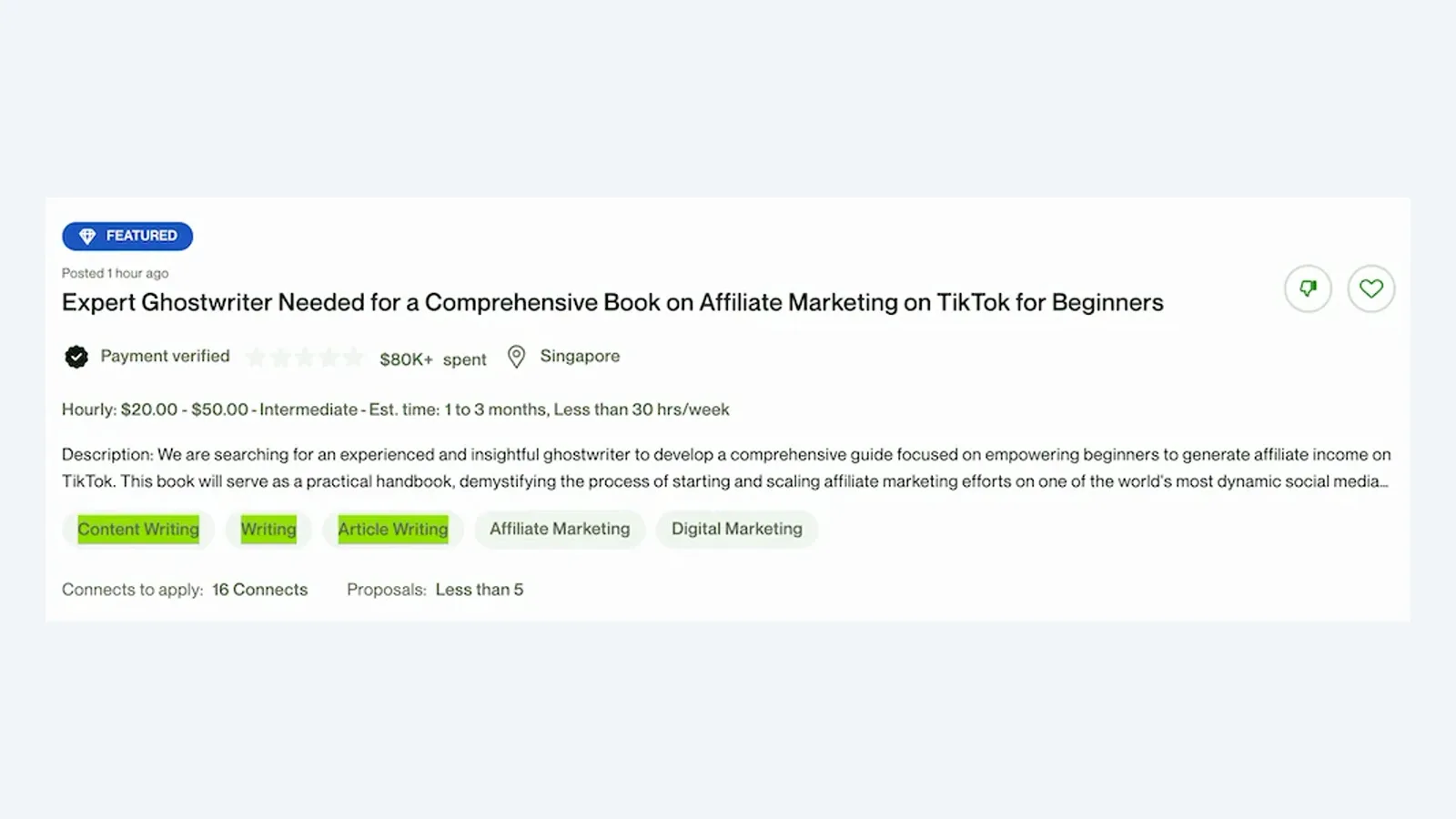
Upwork is different from the other four options because the platform is not handing you a standard task. You create a profile, decide what service you can provide, find a client problem you understand, submit a proposal, and deliver the work if hired.
What the money looks like
The pay is whatever you and the client agree to for an hourly or fixed-price contract. Upwork currently says its freelancer service fee can range from 0% to 15% per contract. Submitting proposals also uses Connects, the platform’s application tokens.
That means you can spend time—and sometimes money—before landing the first client.
The upside is that a real freelance skill can grow. A small job can become a portfolio example, a review, a repeat client, and eventually a service that pays more than the one-off task platforms.
What you are trading
You are trading business-development time, proposal effort, platform fees, client communication, and the responsibility to deliver what you promised.
Start with a small service you can explain in one sentence: clean up a spreadsheet, edit a short video, format a résumé, fix a basic website problem, organize a research summary, or turn rough notes into a readable document.
AI can help you draft a proposal or organize a workflow. It cannot make you honest-to-goodness qualified for work you do not understand.
Colin Trust Meter: 36/100
Upwork is an established marketplace with contracts, documented fees, and payment-protection systems. The score rises because the first client can take time, proposals cost Connects, and scammers still try to move beginners off-platform or send fake checks.
My getting-started checklist
- Pick one service you can already perform or practice safely.
- Create one honest sample that shows the finished result.
- Build a focused profile instead of listing every skill you have ever touched.
- Send a few thoughtful proposals, not fifty generic messages.
- Keep communication and payment on Upwork until a contract is in place.
Would I recommend it to my parents? Yes if they have a clear skill and patience. I would help them recognize fake job messages and avoid moving a conversation to Telegram, WhatsApp, or email before a contract.
Would I still recommend it in a year? As a place to test a small service, yes—but only after checking the current fee, Connects, communication, and payment-protection rules.
Official research: Upwork’s beginner guide, freelancer service fees, and getting started as a freelancer.
Use AI to Research an Opportunity—Not to Talk Yourself Into It
One reason this article feels more possible now is that we have better tools for investigating an opportunity before handing it our time or personal information.
You can ask an AI research tool:
Research [platform name] using official sources first. List the startup cost, payment method, payout timing, identity-verification requirements, data collected, availability limits, contractor status, fees, and appeal process. Then compare the offer with current FTC job-scam guidance. Cite every claim and clearly label anything you could not verify.
That is a useful first pass. It is not the final decision.
Open the official links yourself. Confirm the domain. Read recent terms. Search the company name with words such as review, complaint, and scam. Look for patterns, not one angry post or one glowing referral video.
Do not paste your Social Security number, driver’s license, bank information, tax forms, private client work, or identity-verification photos into a general-purpose chatbot so it can “check” them. Research the process without giving the research tool the data the process is supposed to protect.
My 60-Second Scam Check
The Federal Trade Commission’s advice is wonderfully plain: honest employers pay you. They do not charge you for the promise of a job.
I would close the page or message if any of these happen:
- You must pay for training, certification, equipment, or access before you can work.
- A stranger sends you a check, tells you to deposit it, and asks you to send money back.
- You are told to buy gift cards, cryptocurrency, or equipment from a specific “vendor.”
- The recruiter refuses to explain the task, pay, hours, or legal business name in writing.
- The message promises huge income for almost no effort.
- The domain is misspelled or the recruiter only uses a free email account and encrypted chat app.
- You are pressured to act immediately or keep the offer secret.
- Someone wants remote access to your computer or asks for a password or one-time security code.
If an offer survives that first minute, keep researching. Passing a scam check does not make it a good use of your time. It only earns the opportunity a second look.
The FTC has current guidance on job scams and fake-check scams. If you lost money or exposed personal information, use the FTC’s what to do if you were scammed guide.
Do Not Forget Taxes and Records
Small payments still count.
The IRS says gig-economy income is generally taxable even when it is part-time, temporary, paid in cash, or not reported to you on an information form. That does not mean every twenty-dollar payment creates a giant tax bill. It means you should keep records instead of letting a year of little deposits turn into a January mystery.
Track the date, platform, gross amount, fees, payment method, and any legitimate business expenses. The IRS Gig Economy Tax Center is the place to start, and a tax professional can help if the work becomes meaningful income.
The One-Hour Experiment I Would Try
Do not sign up for all five services tonight.
Pick one lane and give it one focused hour:
- Spend fifteen minutes reading the official rules.
- Spend fifteen minutes completing the trust-meter worksheet.
- Spend twenty minutes creating the account, joining the waitlist, or writing one service sample.
- Spend ten minutes recording what you gave the platform: time, personal data, payment information, and expectations.
Then stop and ask one question: Would I do the next hour if nobody on social media knew about it?
If the answer is yes, continue carefully. If the answer is no, you learned something before wasting a week.
Teach a Person to Fish, but Also Check the Pond
I could keep adding websites until this became a giant list of tabs nobody opens.
The more useful lesson is how to judge the next opportunity yourself.
Look for a clear business model. Find the official payment rules. Count the unpaid time. Decide what personal information you are willing to trade. Test one small task before building your budget around it. Walk away the second somebody asks you to pay for a job or move money for them.
That is the real way this post can pay you. Maybe you earn a few dollars. Maybe you save twenty on things you already buy. Maybe you discover a skill worth developing. Maybe the biggest return is avoiding a scam that would have cost far more.
I cannot promise which one it will be.
I can promise this: a realistic first step is worth more than a fantasy with a referral code.
Sources and Freshness Note
This guide was researched from official platform help pages, current program pages, FTC consumer guidance, and the IRS Gig Economy Tax Center on July 16, 2026. Rates, fees, eligibility, identity-verification vendors, waitlists, and payout rules can change. Recheck the official source before signing up or publishing an update.
No referral or affiliate links are used in this draft. The trust scores are Colin’s editorial framework, not independent security ratings or guarantees.
Do you want to see more posts like this?
- YES
- NO!
- MAYBE?