Trust & transparency
Evidence & disclosures
Not yet classified. This article has not yet been classified under the current editorial standard. It may predate the policy; do not assume a product was owned, tested, supplied, or independently verified unless the article says so.
Linked references: 22 explicit sources in the article.
A few years ago, every “flying car” story seemed to end the same way: a beautiful render, a giant preorder number, and a delivery date that quietly moved farther into the future.
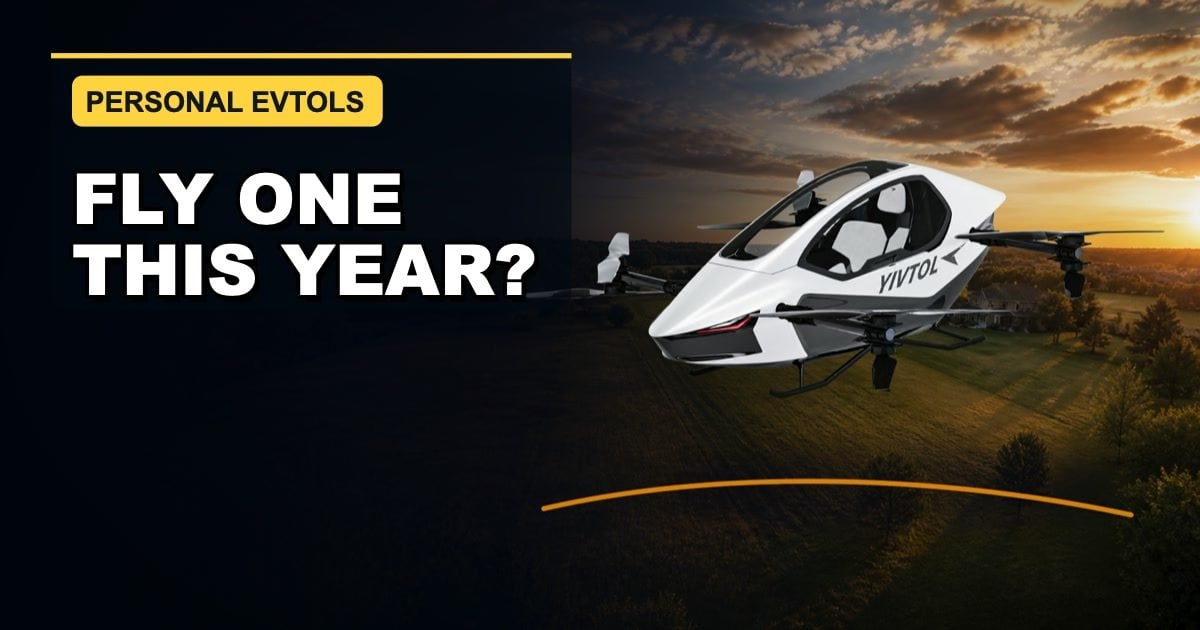
YIVTOL caught my attention because its story is different. The company is not showing a four-seat robotaxi that still needs years of certification. It is selling a one-seat electric aircraft called the S-ZERO, lists U.S. showrooms, says the first batch reached American customers in July 2026, and says initial pilot training is included.
That sounds like the future arriving early. It is also where the fine print becomes more important than the propellers.
These machines are not road cars that happen to fly. They are human-carrying multicopters or personal eVTOL aircraft. In the United States, the versions an ordinary person can fly without a pilot certificate depend on a narrow 1982 rule called Part 103. That rule can make a legal recreational flight possible. It does not make the aircraft FAA-certified, turn a subdivision into an airport, or give the operator permission to buzz over the neighbors.
I researched YIVTOL, Pivotal, Jetson, LIFT Aircraft, current FAA rules, present ordering pages, published specifications, training programs, and delivery evidence. I did not fly, inspect, purchase, or receive any of these aircraft. Product specifications and safety features are manufacturer claims unless I identify an independent source.
Disclosure
TLDR
- Yes, a person in the United States can fly a qualifying single-seat electric ultralight without an FAA pilot certificate, aircraft registration, or medical certificate.
- No, that does not mean “anything goes.” Part 103 is recreational only, generally daylight-only, prohibits flight over congested areas, requires the operator to see and avoid other aircraft, and requires prior air traffic control authorization in specified controlled airspace.
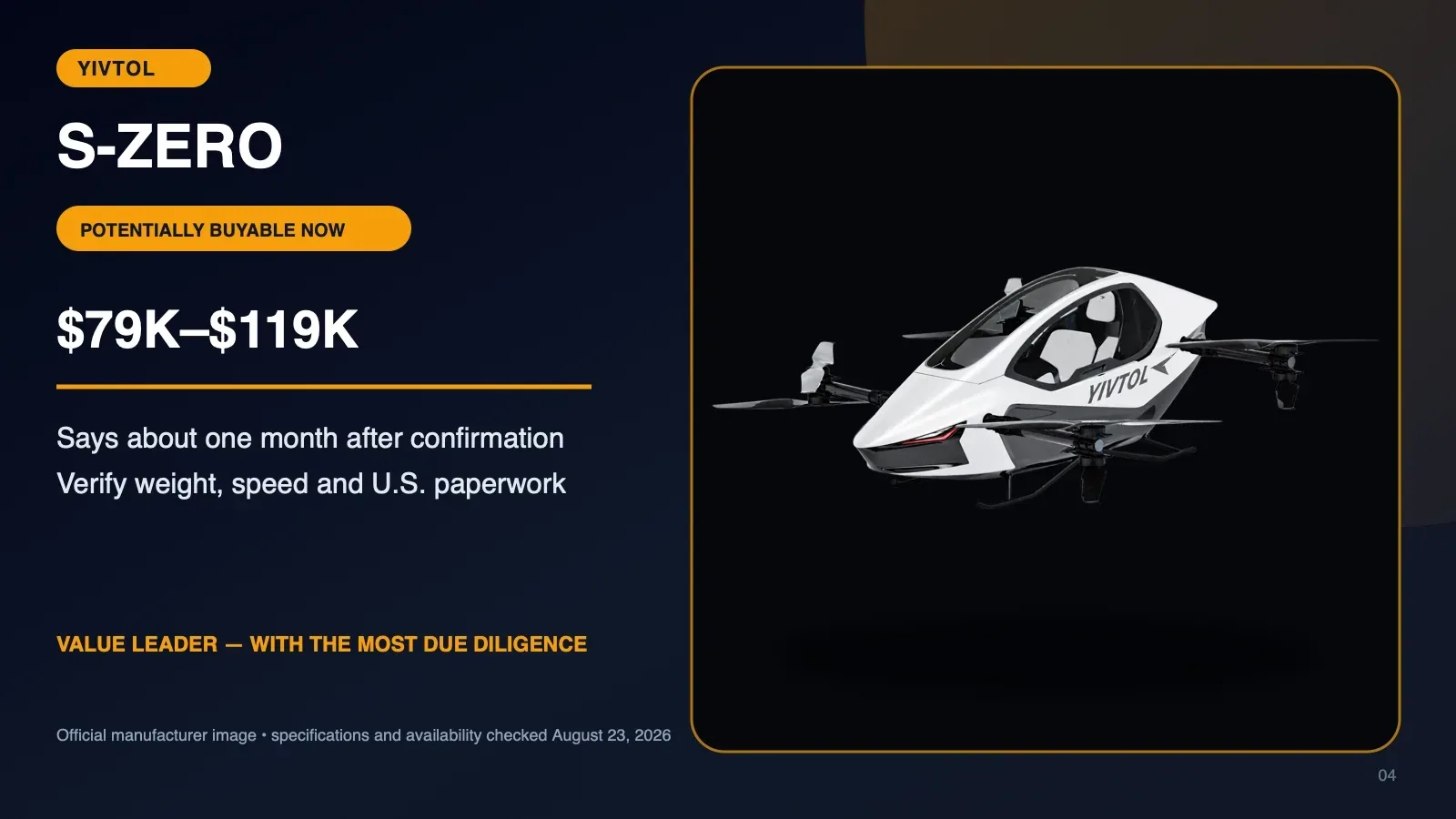
- YIVTOL lists the S-ZERO Plus at $79,000, Lite at $99,000, and Max at $119,000. Its FAQ says delivery is approximately one month after confirmation, and the company says U.S. deliveries and training are underway. Those are manufacturer claims; I found much less independent evidence about U.S. customer operations than I found for Pivotal.
- Pivotal Helix is the strongest current U.S. ownership case I found: $190,000 starting price, a refundable $9,000 reservation, a claimed 2026 position, mandatory training, and independent reporting on owners flying its BlackFly predecessor.
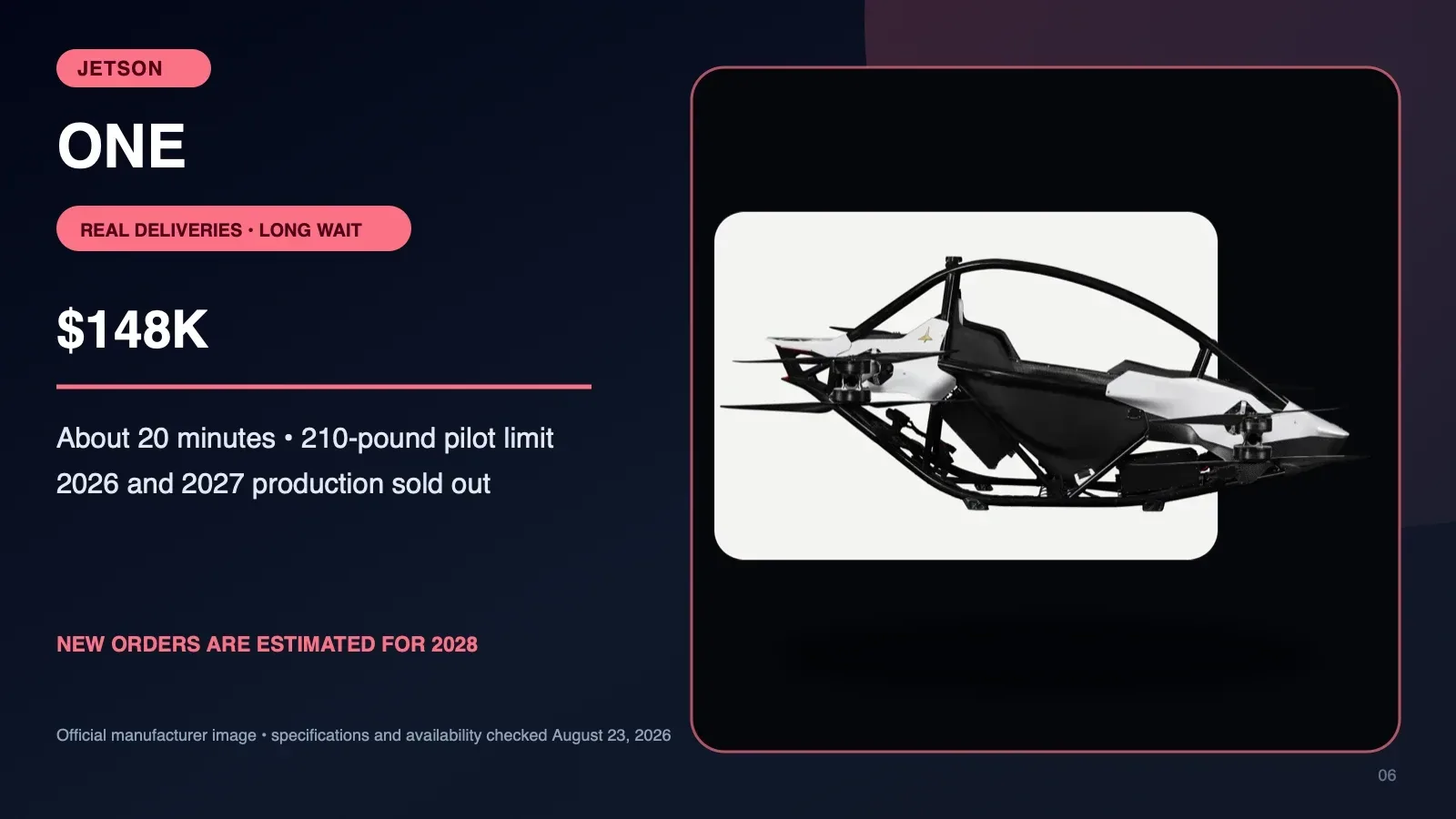
- Jetson ONE is the most visible design and its order page now marks multiple chassis as delivered. The catch is availability: the current price is $148,000, and new orders are estimated for 2028 because 2026 and 2027 production are sold out.
- LIFT HEXA is the easiest one to experience today. The company offers managed public flights with training, but it does not sell HEXA to the general public.
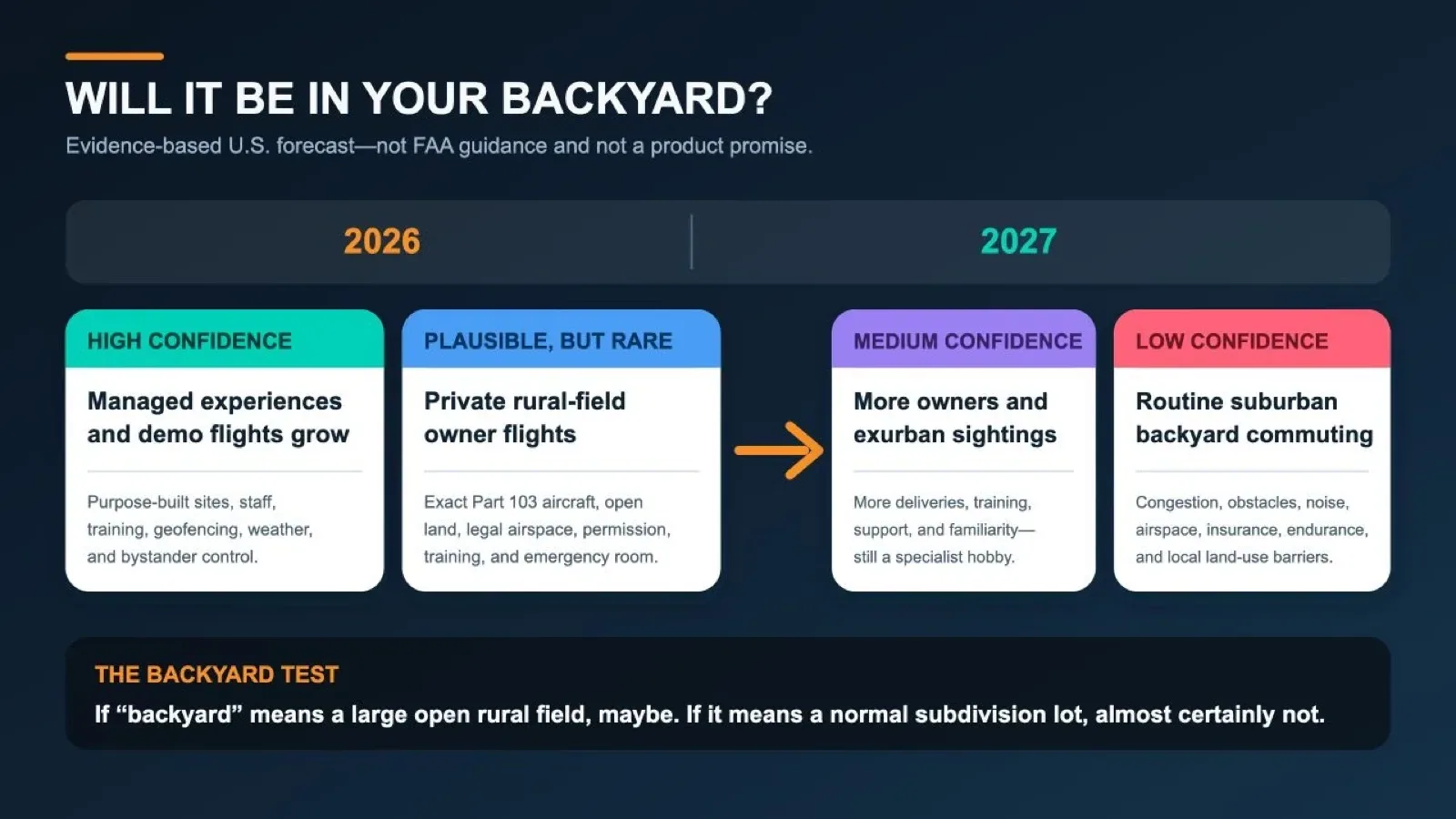
- A rare flight from a large rural or exurban property is feasible in 2026 if the exact aircraft qualifies, the landowner agrees, the airspace is legal, and the operator is properly trained. Routine suburban backyard commuting this year or next year is extremely unlikely.
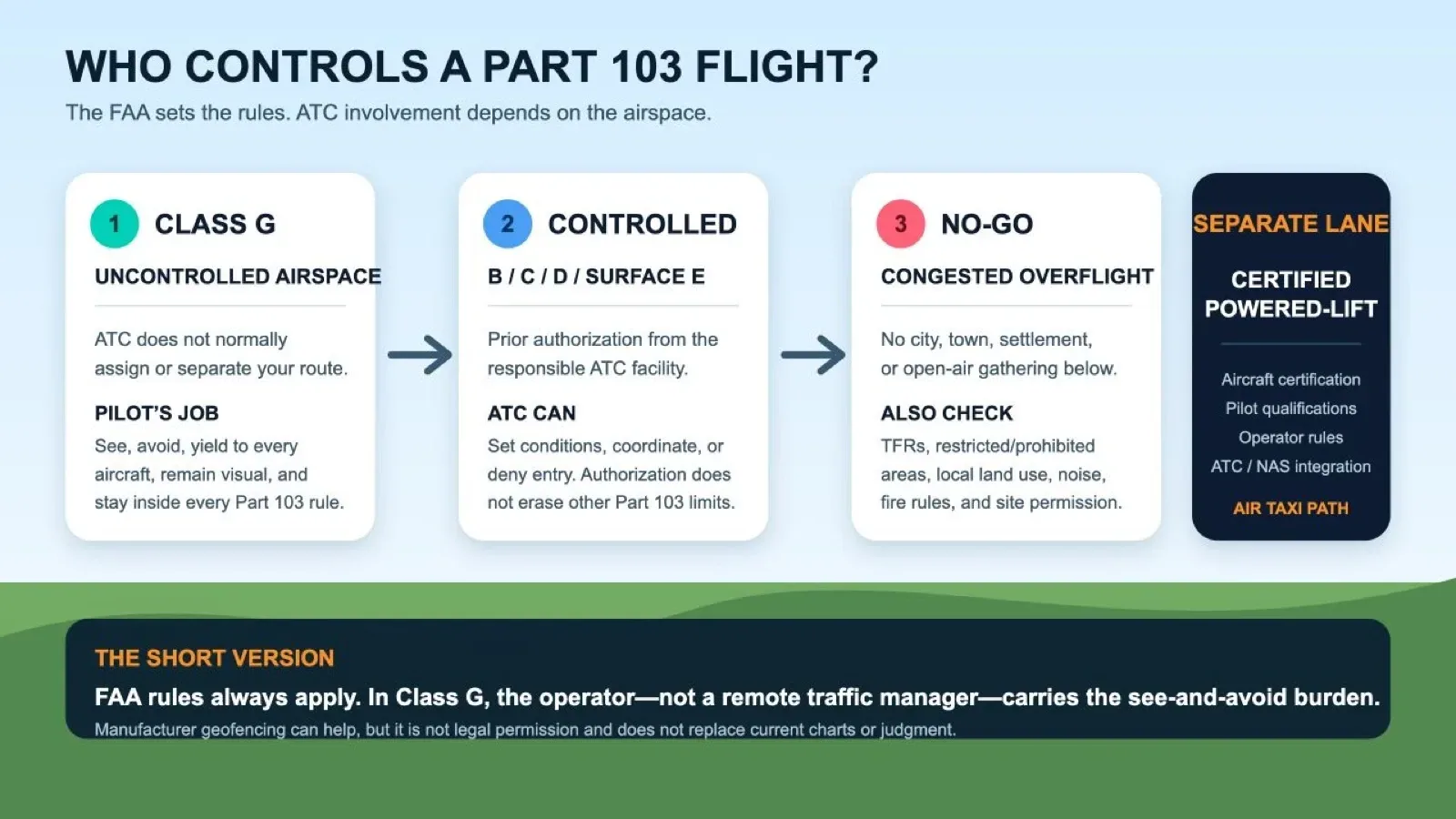
- The FAA controls the rules and the national airspace. In uncontrolled Class G airspace, however, air traffic control does not normally assign or separate a Part 103 ultralight’s route. The person in the seat is responsible for seeing, avoiding, and yielding to every other aircraft.
First, Stop Calling Them Cars
The name “flying car” is useful because everyone immediately understands the dream. It is misleading because none of the four machines in this article replaces your car.
They do not drive on public roads. They usually carry one person and little or no luggage. Their useful flight time is measured in minutes, not hours. You must move or trailer most of them to an appropriate operating area, charge several high-energy battery packs, check the weather and airspace, inspect the aircraft, and keep a generous emergency reserve.
The more accurate description is personal electric ultralight aircraft. Think “a very large stabilized drone with a seat” for YIVTOL, Jetson, and LIFT. Pivotal is different: it tilts its entire winged aircraft between vertical lift and forward flight.
That distinction matters because “car” invites you to imagine a trip from one driveway to another. Part 103 often makes the legal version look more like taking an expensive recreational aircraft to an open field.
What “Ready Today” Actually Means
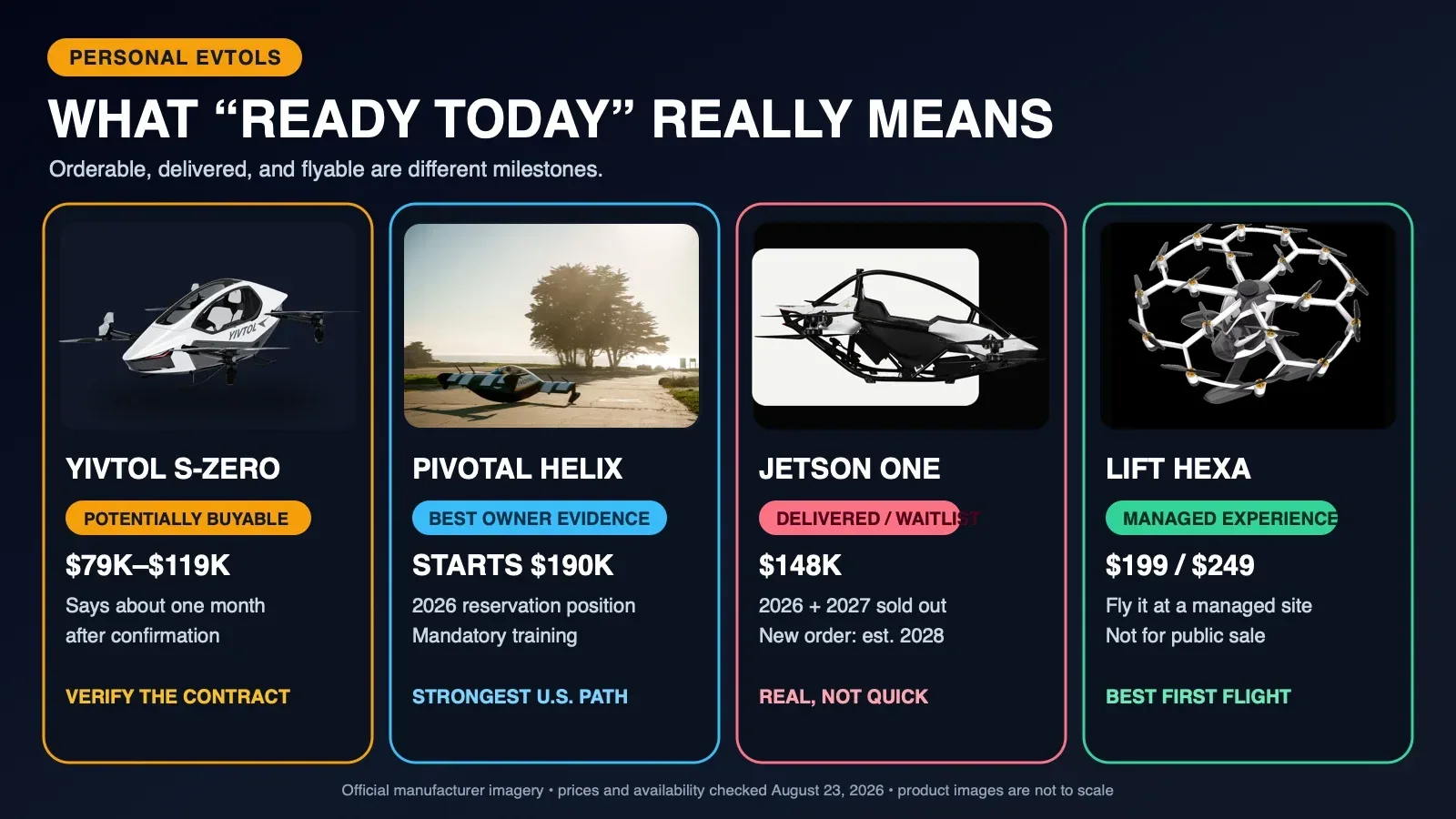
Prices and availability can change. This table reflects pages checked on August 23, 2026. It also deliberately separates orderable, delivered, flyable, and legally usable from your property. Those are four different tests.
YIVTOL S-ZERO: The Most Tempting Price and the Most Questions
YIVTOL’s S-ZERO is a foldable, eight-propeller single-seat multicopter. The company’s current U.S.-facing catalog shows three priced versions: the $79,000 Plus, $99,000 Lite, and $119,000 Max. Its FAQ also describes a lighter Basic version, although I did not find a current Basic price on the official catalog page.
The standard story is attractive. The company describes 30-minute Plus and Max Lite versions, a 50-minute Max, removable batteries, GPS-stabilized and advanced attitude modes, joystick or ground-station control, optional parachute and airbag equipment, and initial training included with the aircraft. Its shipping example adds approximately $5,000 for the aircraft and $2,000 for the battery from China to the United States, before tax and the final quotation.
YIVTOL also lists two U.S. locations: Rise Vertical UAV in Ottawa, Illinois, and Cloud Rider Aviation in Athens, Tennessee. Its July 11 announcement says a first batch was delivered in Tennessee and Illinois, including activity in Chicago, while customer training started.
That is more concrete than a preorder animation. It still is not the same thing as an FAA type certificate or a large body of independent owner evidence.
The Part 103 Compliance Question I Would Not Skip
YIVTOL’s pages contain specifications that do not line up neatly.
An Aviation Week report and a YIVTOL repost described an S-ZERO with a 43 mph top speed, 30-minute flight time, 22-mile range, roughly 220-pound payload, and total weight near 242.5 pounds. Those numbers look deliberately aimed at U.S.-style ultralight limits.
The current S-ZERO Lite product page, however, advertises 65 mph, 50 minutes, a 30-mile range, and a 265-pound maximum load. Sixty-five miles per hour is about 56.5 knots—slightly above Part 103’s maximum of 55 knots calibrated airspeed at full power in level flight.
That does not automatically prove the aircraft is illegal. The U.S. configuration could be software-limited, the page could combine specifications from different versions, or the advertised figure may not be calibrated airspeed. It does prove that a buyer should not rely on the phrase “Part 103” alone.
I would require a model-and-serial-specific compliance packet showing:
- Empty weight with every propulsion battery installed. The FAA says electric batteries count toward the 254-pound empty-weight limit.
- The exact weight claimed as floats and deployable emergency-safety allowances.
- Maximum calibrated airspeed at full power in level flight.
- How the power-off stall-speed requirement is addressed for a multicopter.
- The software version, speed limiter, and whether the owner can change it.
- The test organization, method, date, and signed evidence the manufacturer expects the operator to show an FAA inspector.
Part 103 does not give these vehicles an FAA airworthiness certificate. It puts the burden on the operator to be able to demonstrate that the vehicle qualifies.
The Chicago Claim Needs Context
YIVTOL’s own news page says the S-ZERO made a “historic urban debut over downtown Chicago.” A normal Part 103 operation may not fly over a congested area of a city, town, or settlement. Entry into specified controlled airspace also requires prior air traffic control authorization.
I did not locate a matching public FAA authorization or waiver that explained the conditions of that demonstration. It may have been authorized, tethered, remotely operated, conducted over a controlled site, performed under a different legal category, or described too broadly in the news release. Until the paperwork is visible, it should not be treated as evidence that a buyer can legally fly over downtown Chicago—or over an ordinary neighborhood.
There is another important clue in YIVTOL’s language. The company says it plans to work with the FAA toward certification for commercial and urban operations. That is effectively an admission that the recreational Part 103 path is not an urban air-taxi approval.
My verdict: the S-ZERO could be the value leader if its U.S. configuration and support are exactly as represented. It is also the aircraft for which I would do the most pre-deposit due diligence.
Pivotal Helix: The Strongest Ownership Evidence
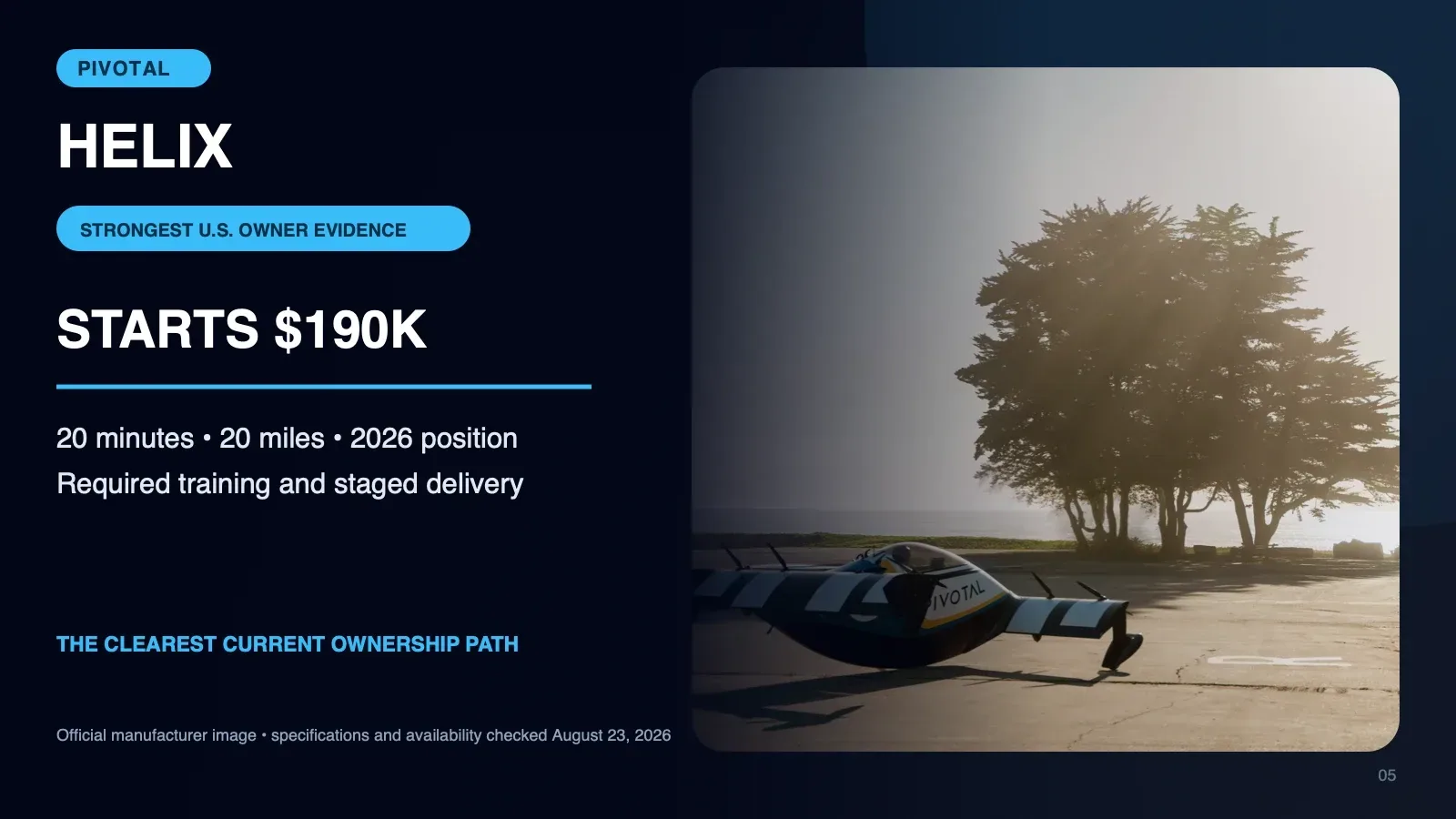
Pivotal has been flying this architecture for years under the BlackFly name. Its current Helix is a one-seat electric tilt aircraft with eight motors, a carbon-fiber airframe, vertical takeoff and landing, a single control stick, automated landing, emergency floats, redundant control systems, and an aircraft parachute.
The official numbers are 20 minutes of maximum endurance, 20 miles of maximum range, a 55-knot cruise, a 220-pound payload, a 568-pound maximum gross takeoff weight, a 14-by-14-foot assembled footprint, and about 75 minutes to charge on 240 volts.
The headline weight can be confusing. AOPA lists Helix at 348 pounds empty, which is above Part 103’s basic 254-pound figure. Pivotal explains that the total includes FAA-permitted allowances associated with floats and deployable emergency-safety equipment. That is why asking only for the scale weight does not settle Part 103 qualification; the compliance breakdown matters.
Pivotal’s current purchase sequence is unusually clear:
- Place a fully refundable $9,000 reservation to lock pricing and a 2026 position.
- Place a $50,000 production deposit when the aircraft moves into production.
- Pay the balance before delivery.
- Complete Pivotal’s required training and take delivery or arrange transport.
The starting price is $190,000 before taxes, delivery, and options. Higher packages have included trailers, additional chargers, ADS-B equipment, radios, lighting, cameras, and added training.
Independent AOPA reporting is the biggest reason I rank Pivotal first for evidence. AOPA documented BlackFly owners flying their aircraft, charging between short hops, completing extensive ground and simulator training, and operating from open areas. That does not prove the final Helix has airline-level safety. It does prove there is more here than a production promise.
My verdict: if I wanted the best-supported path to owning a personal eVTOL in the United States and could accept the price, training, range, and operating limits, Pivotal would be my first serious call.
Jetson ONE: Delivered, Spectacular, and Sold Out for Two Years
Jetson ONE is the aircraft most people picture when they hear “giant drone you can sit in.” It has an aluminum spaceframe, eight motors and propellers, redundant battery propulsion, a radar-assisted auto-landing function, hands-free hover, and a ballistic parachute.
The company lists a mass including batteries of 253 pounds, approximately 20 minutes of flight time, a 210-pound maximum pilot weight, a 1,500-foot-above-ground service ceiling, and a top level-flight speed software-limited to 63 mph.
The current order page is better evidence than a press release because it identifies chassis positions and marks multiple aircraft as delivered. It also exposes the availability problem: the entire 2026 and 2027 production is sold out. A new $148,000 order with an $8,000 non-refundable down payment is estimated for 2028.
Jetson says its flight computer can make someone feel comfortable with the controls in minutes. That is a control-learning claim, not a complete training standard. Knowing how to move a joystick is only a small part of safely operating a manned aircraft. Airspace, weather, emergency planning, battery reserves, preflight inspection, forced-landing options, and judgment still belong to the person in the seat.
My verdict: Jetson has crossed the important line into marked deliveries, but it is not a quick 2026 purchase for a new customer. Buying an existing position or used aircraft would create its own contract, warranty, training, and support questions.
LIFT HEXA: The One You Can Actually Try
LIFT takes a different approach. Instead of asking every curious person to buy an aircraft, it runs managed experiences.
HEXA is an 18-motor multicopter with a carbon-fiber frame, five floats, a triply redundant autopilot computer, joystick and touchscreen controls, geofenced operating boundaries, a ballistic parachute, and a ground-support system. LIFT says it can remain controllable with as many as six motors disabled; that remains a manufacturer safety claim, not a fleet-level accident statistic.
Public flyers receive an orientation, safety video, and virtual-reality simulator session. LIFT’s current FAQ lists a $199 introductory experience with 3–5 minutes in the aircraft and a $249 beginner flight with 8–15 minutes. Beginner speed is limited to about 45 mph.
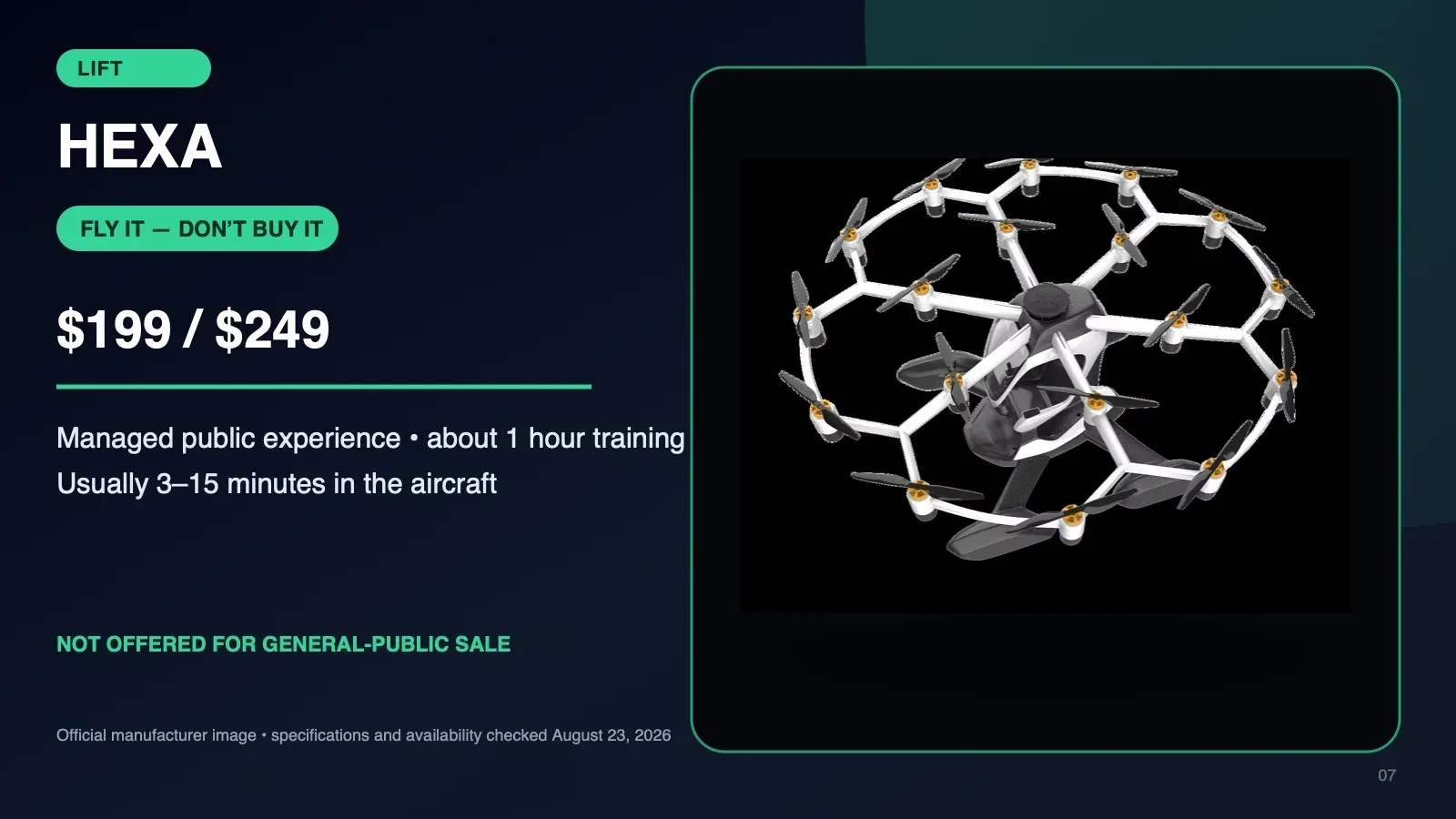
The important limitation is simple: LIFT does not currently sell HEXA to the general public. It has offered a small number to public agencies under a different public-aircraft operating framework.
My verdict: if your real question is “Do I want to sit in one of these?” rather than “Can I own one next month?”, LIFT is the most sensible first step. A controlled experience is much cheaper than learning after delivery that the noise, exposure, controls, or operating limits are not for you.
What the FAA Rule Actually Says
Part 103 is short enough that every prospective operator should read it before reading another brochure.
A powered ultralight must be:
- flown by one person;
- used only for recreation or sport;
- operated without a U.S. or foreign airworthiness certificate;
- under 254 pounds empty, excluding specified floats and deployable emergency-safety devices;
- incapable of more than 55 knots calibrated airspeed at full power in level flight; and
- within the rule’s power-off stall-speed limit.
If it qualifies, federal rules do not require an aircraft registration, tail number, airworthiness certificate, pilot certificate, or medical certificate. That regulatory freedom is the selling point.
It is also the tradeoff. The FAA has not certified the design to the same standard as a Cessna, helicopter, or commercial powered-lift aircraft. There is no FAA-approved aircraft flight manual in the certified-aircraft sense, no required annual inspection by an aviation mechanic, and no federal knowledge or practical test before the first legal flight.
“No license required” means the government does not force you to prove competence first. It does not mean competence is optional.
Can You Take Off From Your Backyard?
Possibly—but the word backyard hides nearly every problem.
A large rural property with an open field, no nearby houses, a clear emergency landing area, legal airspace, landowner permission, and a considerate noise plan can be workable. A fenced suburban lot between roofs, trees, power lines, pets, people, roads, and a nearby airport is a very different environment.
The federal rule does not simply ban all takeoffs and landings on private land. FAA guidance says operations from an open area are not prohibited if the route does not go over congested areas. You still need permission from the landowner, must understand the terrain and obstacles, and may need to satisfy state or local aviation, zoning, building, fire, and noise rules.
Repeated operations can also change the character of a property. A personal field used occasionally is not automatically the same as an established flight park. FAA Part 157 notice, state airport licensing, zoning, or local permits may become relevant when a site is established or changed for regular aircraft use.
The most important Part 103 operating rules are:
- Daylight only, with a narrow twilight exception for an operating anti-collision light in uncontrolled airspace.
- No hazardous operation or dropping objects in a way that creates a hazard.
- Maintain vigilance, see and avoid other aircraft, and yield to all aircraft.
- Never fly over a congested city, town, settlement, or open-air assembly of people.
- Obtain prior authorization before entering Class A, B, C, or D airspace or the surface area of Class E airspace designated for an airport.
- Obtain permission for prohibited or restricted areas and comply with temporary flight restrictions.
- Keep visual reference with the surface and meet the applicable visibility and cloud-clearance requirements.
Who Controls the Flight Path—the FAA, ATC, or the Manufacturer?
All three can affect a flight, but they do different jobs.
The FAA Writes and Enforces the Rules
The FAA governs the national airspace, defines Part 103, investigates violations, issues waivers, publishes restrictions, and regulates airports and certified aircraft. State and local governments can still regulate land use, fire safety, site licensing, and noise in ways that matter before you leave the ground.
Air Traffic Control Does Not Normally Route a Part 103 Flight in Class G
In uncontrolled Class G airspace, an ultralight operator generally does not file a route and receive radar separation like an airline flight. The operator chooses the legal path, remains in visual conditions, sees and avoids traffic, and yields to every aircraft.
That means the sky is not a free highway managed by a hidden computer. A qualifying ultralight may not even be registered, and ADS-B equipment is not automatically required just because it has a seat. Some aircraft or packages include traffic equipment, but the operator cannot assume every airplane sees the ultralight—or that the ultralight sees every airplane.
Controlled Airspace Requires Advance Coordination
Near many airports and cities, the airspace may be Class B, C, D, or airport-surface Class E. A Part 103 operator needs prior authorization from the air traffic control facility with jurisdiction. FAA guidance treats this as advance coordination, not a casual last-second radio request while approaching the boundary.
ATC can attach conditions or say no. Even with authorization, the operator still must follow Part 103’s ban on congested-area overflight unless a separate waiver applies.
Manufacturer Geofencing Is a Guardrail, Not Legal Permission
LIFT says it programs controlled-airspace boundaries into HEXA. Other aircraft may use GPS zones, altitude limits, or return-to-home logic. Those features can reduce mistakes. They do not replace current charts, restrictions, weather judgment, land permission, or the operator’s legal responsibility.
What Training and Licensing Do You Need?
For a true Part 103 ultralight in the United States, the federal answer is startling: no pilot certificate, medical certificate, minimum age, formal knowledge test, or required number of training hours.
The practical answer should be much stricter.
At minimum, I would want training that covers:
- Aircraft assembly, battery handling, charging, storage, and fire response.
- Preflight inspection and maintenance limits.
- Normal takeoff, hover, forward flight, approach, and landing.
- Simulator practice for motor, sensor, GPS, display, and battery failures.
- Weather, wind, density altitude, visibility, and personal minimums.
- Reading sectional charts and identifying controlled, restricted, prohibited, and temporary restricted airspace.
- Airport traffic patterns and right-of-way rules.
- Emergency landing-site selection and the real deployment envelope of the parachute.
- Ground-person communication, bystander control, and post-flight inspection.
- A supervised solo sign-off in the exact aircraft and software version.
Pivotal requires its own training. YIVTOL says all operators must complete professional training involving theory, flight principles, simulation, supervised flight, and safety procedures. LIFT uses a managed one-hour training path for public experiences. Jetson has described simulator and flight-school training.
I would treat manufacturer training as the beginning, not the ceiling. The United States Ultralight Association and Experimental Aircraft Association have long supported ultralight education. A local flight instructor who understands ultralights, weather, radio procedures, and the specific area can teach judgment that an automated joystick cannot.
If the aircraft has two seats, exceeds the Part 103 limits, is used for business, carries a passenger, or becomes a certified powered-lift aircraft, the no-license shortcut disappears. The applicable experimental, light-sport, private, commercial, public-aircraft, or powered-lift rules can require aircraft certification, registration, operating limitations, and pilot ratings.
Will We See Them in Our Backyards This Year?
Here is my best evidence-based forecast for the United States.
2026: Rare Rural Sightings Are Plausible
We will probably see a few more personal eVTOLs operating from private fields, large rural properties, flight parks, events, and manufacturer-controlled sites this year. Pivotal offers 2026 reservation positions. YIVTOL says U.S. deliveries have started. Jetson’s page marks delivered aircraft. LIFT is already putting first-time flyers in HEXA under supervision.
That makes a rare, legal, trained flight from the right property plausible now.
It does not make a typical backyard launch plausible. Most residential lots fail on space, obstacles, emergency options, congestion, airspace, noise, or local permission before battery range even matters.
2027: More Owners, Not a New Commuting System
Next year should bring more owner training, more delivered aircraft, better charging and support, and more public familiarity. We may see occasional operations around big exurban properties and purpose-built experience sites.
I do not expect routine neighborhood commuting in 2027. Part 103 still prohibits congested-area overflight and commercial use. Twenty or thirty minutes of advertised endurance becomes less after reserve, wind, temperature, pilot weight, takeoff, landing, and a safe return plan. Noise, insurance, battery replacement, maintenance, bystander control, and neighbor acceptance remain real constraints.
My confidence levels:
- High confidence: More demonstrations, managed experiences, and flights from rural/private fields in 2026–2027.
- Medium confidence: A small but visible group of trained private owners operating personal eVTOL ultralights by the end of 2027.
- Low confidence: Routine launches from normal suburban backyards next year.
- Very low confidence: Legal point-to-point commuting over dense neighborhoods under ordinary Part 103 rules.
Certified Air Taxis Are a Separate Future
Joby, Archer, and other larger eVTOL developers are working in the FAA’s powered-lift and advanced-air-mobility system. Those aircraft are intended for passengers or commercial service, so the FAA evaluates design, production, airworthiness, operator certification, pilot qualifications, routes, airport or vertiport use, noise, and integration with the National Airspace System.
The FAA says initial advanced-air-mobility vehicles are expected to use existing infrastructure, routes, and air traffic control services where possible. A powered-lift pilot needs the appropriate pilot certificate and aircraft-specific qualifications. That is much closer to regular aviation than Part 103.
Progress in that system is encouraging, but it does not turn a one-seat recreational ultralight into an air taxi. It also does not create automatic rights to use a residential parcel as a vertiport.
My Before-Deposit Checklist
If I were seriously considering one of these aircraft, I would not send a deposit until I had written answers to all of these:
- Which exact U.S. model, configuration, battery, software version, and serial range am I buying?
- Where is the complete Part 103 compliance report, including battery weight and every allowance?
- Who produced the report, what tests were performed, and will the company stand behind it if the FAA questions the aircraft?
- Which aircraft have reached independent U.S. owners, and can I speak to one?
- What portion of the deposit is refundable, when does it become non-refundable, and what happens if delivery or U.S. compliance fails?
- What do shipping, import duty, tax, assembly, options, training travel, trailer, charging, replacement batteries, and insurance add to the advertised price?
- What written training syllabus, simulator time, supervised flights, and solo sign-off are included?
- What wind, temperature, pilot-weight, battery-reserve, and landing-site limits apply?
- What happens after a motor, battery pack, flight computer, GPS, sensor, display, or radio failure?
- At what altitude and airspeed can the parachute actually save the pilot?
- Which parts are stocked in the United States, who can repair the aircraft, and how long can it be grounded waiting for a battery or controller?
- Will an insurer cover the aircraft, property damage, the pilot, passengers on the ground, transport, and battery fire?
- What federal airspace, state aviation, local zoning, fire, noise, and landing-site rules apply to the exact property?
- Does the route remain clear of congested areas and open-air gatherings from takeoff to landing?
- What is the safe forced-landing option at every point in the flight?
If a seller answers those questions with a slogan, the aircraft is not ready for my money.
Videos Worth Watching
These links are useful because they show different levels of maturity. They are not substitutes for training or independent safety data.
- YIVTOL official YouTube channel — current manufacturer demonstrations and event footage.
- Pivotal BlackFly official flight video — shows the predecessor architecture in real flight; it is not a promise that every Helix flight or location is equivalent.
- Pivotal flight experience — a closer look at the aircraft and operating experience.
- Pivotal Helix and training interview — useful context on the current product and training path.
- Jetson ONE official launch video — the most recognizable Jetson flight footage.
- Jetson ONE 2025 Air Games — a good demonstration of agility, not a model for backyard operation.
- LIFT HEXA training and flight — shows how a managed first-time flight differs from unsupervised ownership.
- A first-time HEXA flight report — independent presenter, hosted and controlled by LIFT.
Sources and Further Reading
I used current official rules and product pages as the foundation, then looked for independent aviation reporting where it was available. Manufacturer pages remain first-party claims rather than hands-on verification.
- 14 CFR Part 103 — Ultralight Vehicles — the controlling federal rule for vehicle limits, certificates, operating restrictions, right-of-way, controlled airspace, and visibility.
- FAA Advisory Circular 103-6 — FAA guidance on airports, open operating areas, advance ATC authorization, weather, congestion, and local considerations.
- FAA legal interpretation on electric batteries — confirms that propulsion batteries count toward a powered ultralight's empty weight.
- FAA Advanced Air Mobility and air-taxi overview — explains the separate certification, pilot, operator, infrastructure, and airspace path for commercial powered-lift aircraft.
- YIVTOL S-ZERO catalog, official FAQ, and U.S. delivery announcement — current prices, training, shipping, delivery, and manufacturer specification claims.
- Aviation Week's YIVTOL permit report — independent reporting on the aircraft's China flight permit and a lower-speed specification set.
- Pivotal Helix product and reservation page and AOPA's BlackFly owner report — current ordering terms paired with independent reporting on predecessor-aircraft owners and training.
- Jetson ONE specifications and current order page — aircraft claims, price, marked deliveries, sold-out production years, and estimated timing for a new order.
- LIFT HEXA aircraft page and public-flight FAQ — aircraft claims, training, experience prices, flight limits, geofencing, and the no-general-sale boundary.
Final Thought
The surprising answer is that personal flying drones are already real enough to buy, reserve, or fly in a managed experience. The disappointing answer is that physics, airspace, training, and neighborhoods did not disappear when the joystick became easy.
Part 103 has opened a clever side door into personal electric flight. It lets a qualifying one-seat aircraft fly without the certification system built for passenger airplanes and commercial air taxis. That is why these machines can reach customers now. It is also why the buyer must do more homework, accept more personal responsibility, and stay inside a much smaller legal box.
So will one lift out of somebody’s “backyard” this year? If that backyard is really a large open rural field, probably. If it is forty feet of grass behind a subdivision house, I would keep watching the videos.
The future is here. It just needs more room than the advertisement shows.
Research checked August 23, 2026. This is a source-backed pre-buy and regulatory explainer, not legal advice or a hands-on review. Regulations, airspace, products, prices, software, and delivery schedules can change. Confirm the exact aircraft and operation with the manufacturer, the FAA or responsible air traffic facility, your local Flight Standards District Office, and state/local authorities before purchasing or flying.