
Trust & transparency
Evidence & disclosures
Not yet classified. This article has not yet been classified under the current editorial standard. It may predate the policy; do not assume a product was owned, tested, supplied, or independently verified unless the article says so.
Linked references: 14 explicit sources in the article.
The easiest way to explain the Gravity Jet Suit is that somebody built Iron Man without the iron.
There is no armored shell, glowing chest reactor, or artificial intelligence politely warning you about incoming missiles. There is a backpack full of fuel and turbines, two more jet engines attached to your arms, and a very real human being using their body to stay in the air.
That last part is what makes it so fascinating. Gravity did not hide the pilot inside a little aircraft. The pilot is part of the control system.
I have not worn or flown a Gravity Jet Suit, and I have not tested any of the personal aircraft in this comparison. This is a researched look at what the companies currently show, claim, sell, or allow the public to try as of August 23, 2026. Performance figures are manufacturer figures unless I say otherwise.
TLDR
- Gravity’s current Mk4 suit uses micro jet engines on the arms plus three turbines on the back. The pilot steers by moving the arm units and shifting their body.
- Gravity’s professional page currently lists about three minutes of flight time and a 60 mph top speed. Its innovation page says development flights have exceeded 80 mph.
- The most realistic public entry point is not buying a suit. Gravity offers tethered flight experiences in the UK and California starting at £1,500 or $1,950 before applicable tax.
- JetPack Aviation’s JB11 is the closest traditional jetpack comparison: six backpack-mounted turbojets, a claimed ten-minute endurance, and a claimed speed above 120 mph. Its current FAQ says the jetpacks are not for sale or public trial.
- Zapata’s Flyboard Air puts the turbines under the pilot’s feet. It is a spectacular prototype and show machine, not a normal consumer product.
- Jetson ONE is not wearable and does not use jets, but it may be the closest thing here to a personal aircraft a regular buyer can actually order: $148,000, electric propulsion, roughly 20 minutes of flight, and an estimated 2028 delivery for new orders.
- My verdict: Gravity is the closest to the Iron Man feeling. Jetson is closer to something an owner might practically operate. Neither is replacing the family car.
This Looks Fake. It Is Not.
Gravity Industries says its latest Mk4 Jet Suit uses two arm-mounted micro jet engines and three additional turbines in the backpack. That creates a human-controlled arrangement of thrust points instead of one large engine trying to balance everything from behind the pilot.
The arms are the clever part. Move them and you change where the thrust points. Change the thrust and you change the direction of travel. The pilot’s legs and torso help manage balance, but the hands are busy doing the job that control surfaces, rotors, and a flight computer would handle in a more conventional aircraft.
It looks natural when an expert does it because the controls are attached to the body. That does not mean it is easy. It means an experienced pilot has learned to make something extremely difficult look like a human movement.
Gravity’s current professional material lists a startup time under 20 seconds, about three minutes of flight, a three-second suit egress time, and a 60 mph top speed. The company’s innovation page separately says Mk4 development flights have exceeded 80 mph. I would treat 60 mph as the more useful operating comparison and “over 80 mph” as an achieved development claim, not a promise that a first-time flyer will streak across the horizon.
Why Flying With Your Arms Changes Everything
Most personal flying machines try to make the aircraft stable and let the pilot give simple commands. Gravity goes the other direction: it gives the pilot direct physical influence over the thrust.
That has three big consequences.
- It feels unusually close to unassisted human flight because the pilot’s movements visibly control the machine.
- It demands strength, coordination, practice, and constant attention. Your arms are flight controls, not passengers.
- It keeps the system compact, but it also means there is no casual “take my hands off the controls for a second” moment.
This is the bit the superhero comparison hides. Iron Man can use his hands for repulsor blasts, catching people, and dramatic pointing because the fictional suit handles the rest. A Gravity pilot needs those arm jets to stay stable. It is Iron Man with a much busier upper-body workout.
The Personal Flight Comparison
- Gravity Mk4 Jet Suit: worn on the body; arm-vectoring microjets plus three back turbines; about three minutes and 60 mph on the current professional page; public tethered experiences are bookable.
- JetPack Aviation JB11: a backpack with six turbojets and pilot-vectored engine assemblies; claimed ten-minute endurance and speed above 120 mph; current FAQ says not for sale or public trial.
- Zapata Flyboard Air: a stabilized jet board under the pilot; official show page claims six minutes and 190 km/h; currently a prototype and show platform.
- Jetson ONE: a seated electric aircraft with eight motors and joystick control; about 20 minutes and a software-limited 102 km/h; current order price is $148,000 with estimated 2028 delivery.
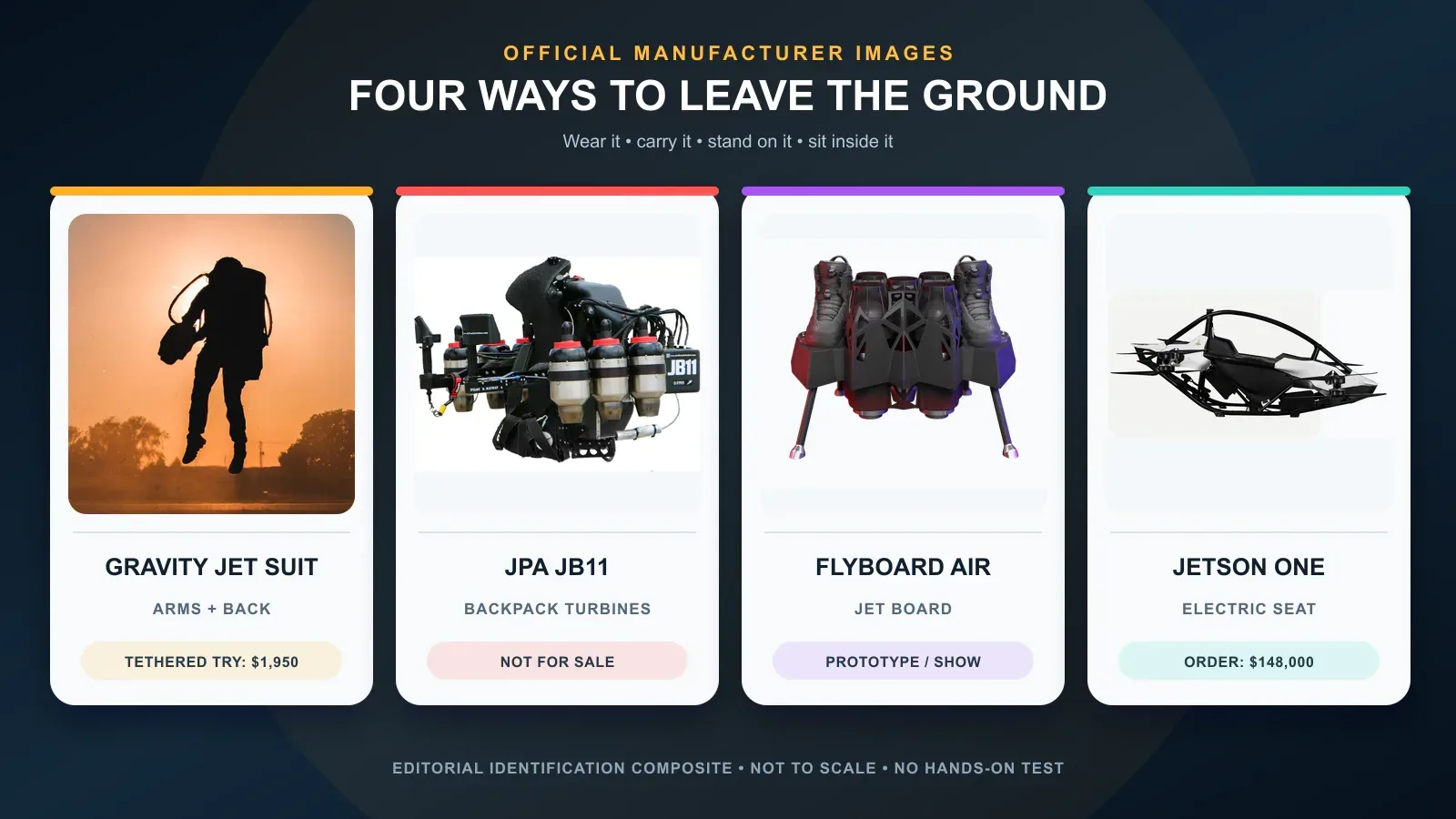
The numbers look like a normal specification contest until you notice that these machines barely belong in the same category. One is worn across the body. One is a backpack. One is a board under your boots. One is a small electric aircraft with a seat.
That is the real story. Personal flight is not waiting for one company to invent the jetpack. Several companies have made humans fly. They disagree about what the human should be attached to.
Gravity Industries: The Closest to Iron Man
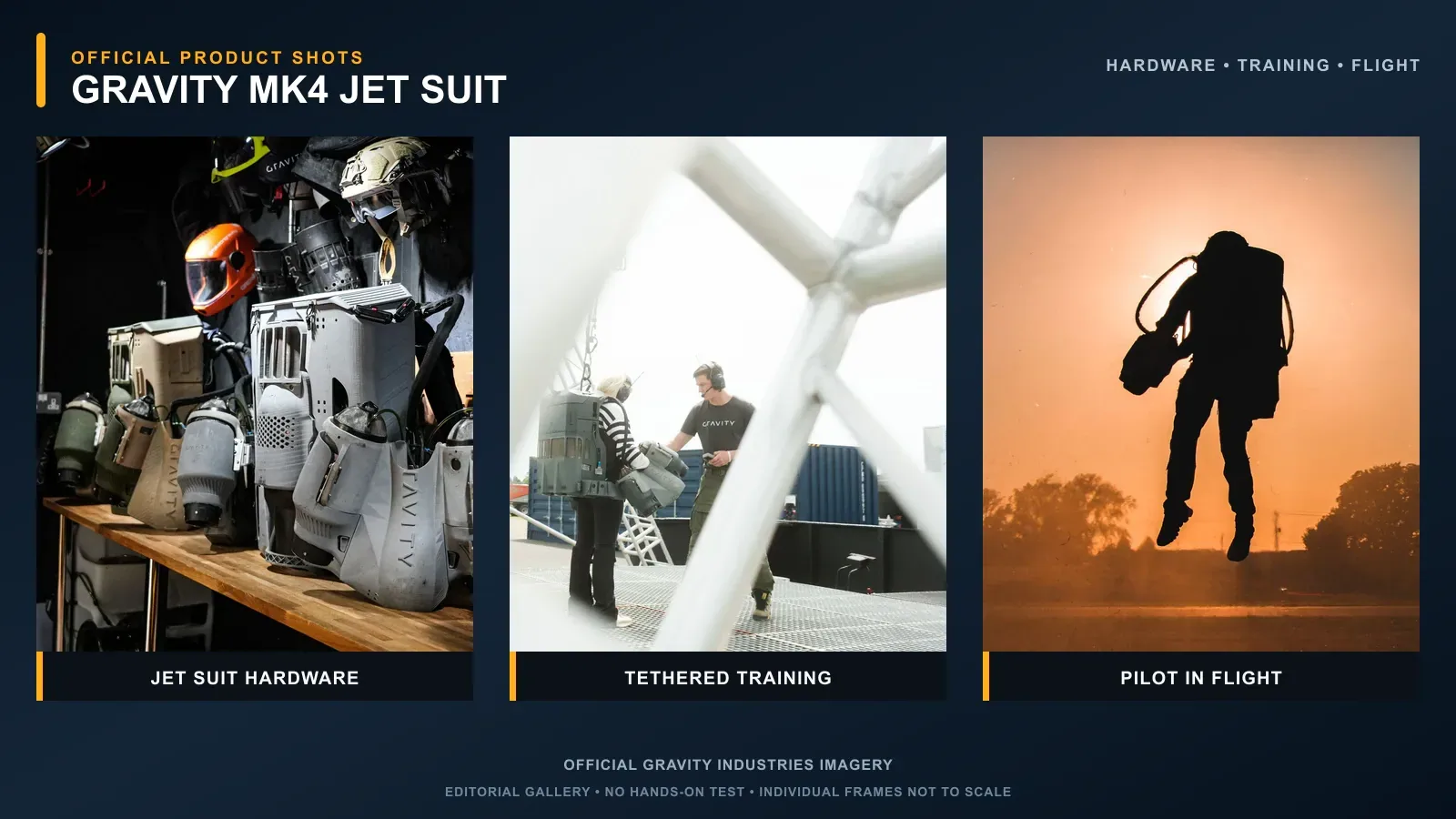
Gravity wins the visual argument immediately. The arm engines make every turn look like the pilot is pushing against the air with their hands. Even without red-and-gold armor, the silhouette is unmistakably superhero-shaped.
The company has also moved beyond one inventor performing demonstrations. Gravity says it has completed more than 300 flight events, runs public experience and training facilities in the UK and California, and develops professional uses for defense, maritime boarding, emergency access, and medical response.
That does not make the suit a commuter vehicle. A current professional flight-time figure of roughly three minutes is enough to cross a gap, reach a rooftop, board a ship, or put on an unforgettable demonstration. It is not enough to remove traffic from your morning drive.
The public experience makes Gravity more accessible than the photos suggest. Its current Rookie package includes a three-hour introduction and two powered runs on a tethered training rig for £1,500 in the UK or $1,950 in California, excluding applicable tax. A full-day package lists at £6,600 or $8,500 and includes at least eight powered runs. Gravity says most full-day participants reach a controlled basic hover with the tether visibly slack.
That wording matters. You are not paying $1,950 to fly to lunch. You are paying for supervised powered runs on a safety rig and a demonstration by an experienced pilot. Honestly, that is still one of the wildest experiences currently available to the public.
JetPack Aviation: The Traditional Jetpack Turned Up to Eleven
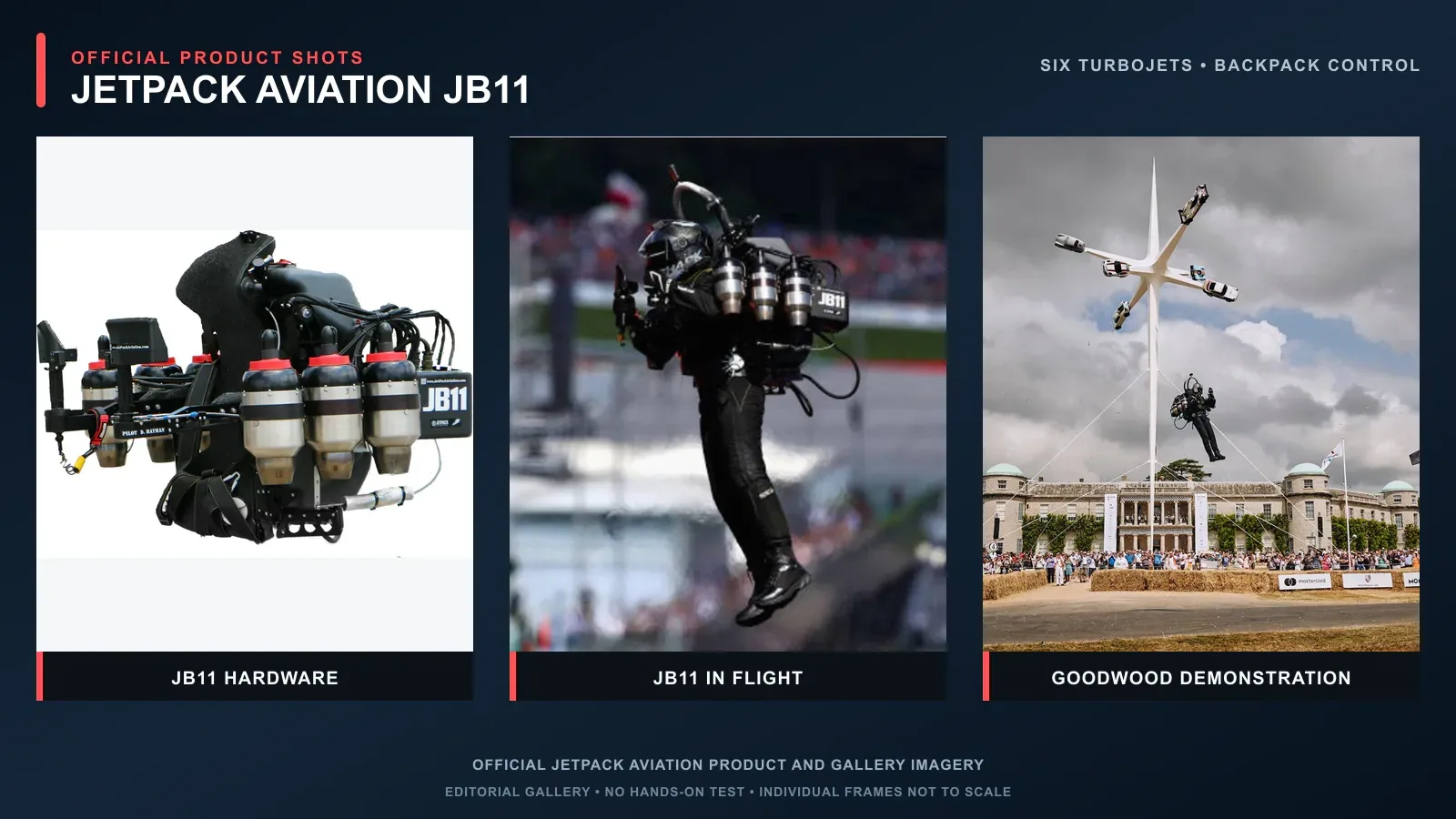
JetPack Aviation’s JB11 looks more like the jetpack people imagined before the movies gave us armored suits. The thrust hardware sits behind the pilot, with control arms extending forward. The company says the pilot steers by vectoring the entire engine assemblies.
On paper, the JB11 is the performance monster in this group. JetPack Aviation lists six turbojet engines, 115 pounds of empty weight, 530 pounds of maximum thrust, more than 120 mph of maximum speed, and about ten minutes of endurance depending on pilot weight and air density.
The catch is availability. The model page still shows “price upon private request,” but the company’s current FAQ is much clearer: the jetpacks are not for sale, the public cannot book a trial, and all performance specifications remain preliminary until flight testing is complete.
The company also points visitors toward Mayman Aerospace, where the current focus is autonomous high-speed VTOL utility aircraft rather than a personal jetpack you can put in the garage. That tells us something about the market. Once the engineering works, defense, cargo, and autonomous missions may be easier businesses than selling a 120 mph turbine backpack to enthusiastic civilians.
Zapata Flyboard Air: Put the Jets Under Your Feet
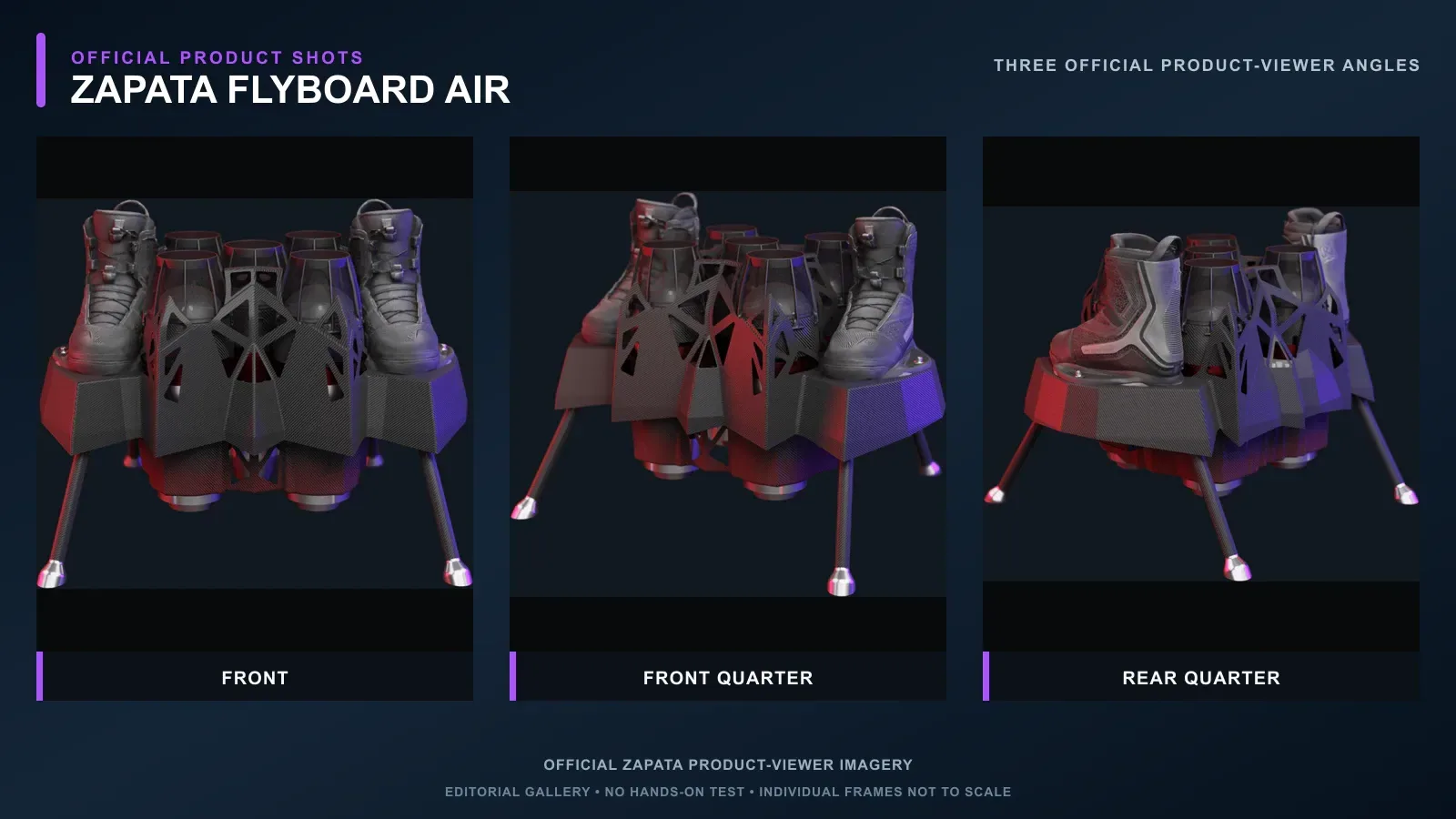
Franky Zapata’s Flyboard Air takes the opposite approach from Gravity. Instead of using the arms as the main visible thrust controls, the pilot stands on a compact jet-powered platform while fuel is carried in a backpack.
Zapata’s current product page calls it a five-engine aircraft with advanced stabilization and redundant critical systems. It also says the Flyboard Air remains physically demanding and requires a high level of skill and fitness. An official Zapata show page lists a six-minute flight time, 190 km/h maximum speed, 22 liters of kerosene, hands-free control, and embedded stabilization.
Those are company figures from a prototype and performance platform, not a consumer product specification sheet. The current page literally ends with “Stay tuned,” which is a charmingly short way of saying there is no Add to Cart button.
Flyboard Air may be the most outrageous machine here because the pilot appears to be standing on nothing more than a small carbon platform and several jet engines. It is less Iron Man and more Silver Surfer after a visit to an aircraft turbine shop.
Jetson ONE: Not a Jetpack, Probably the Most Buyable
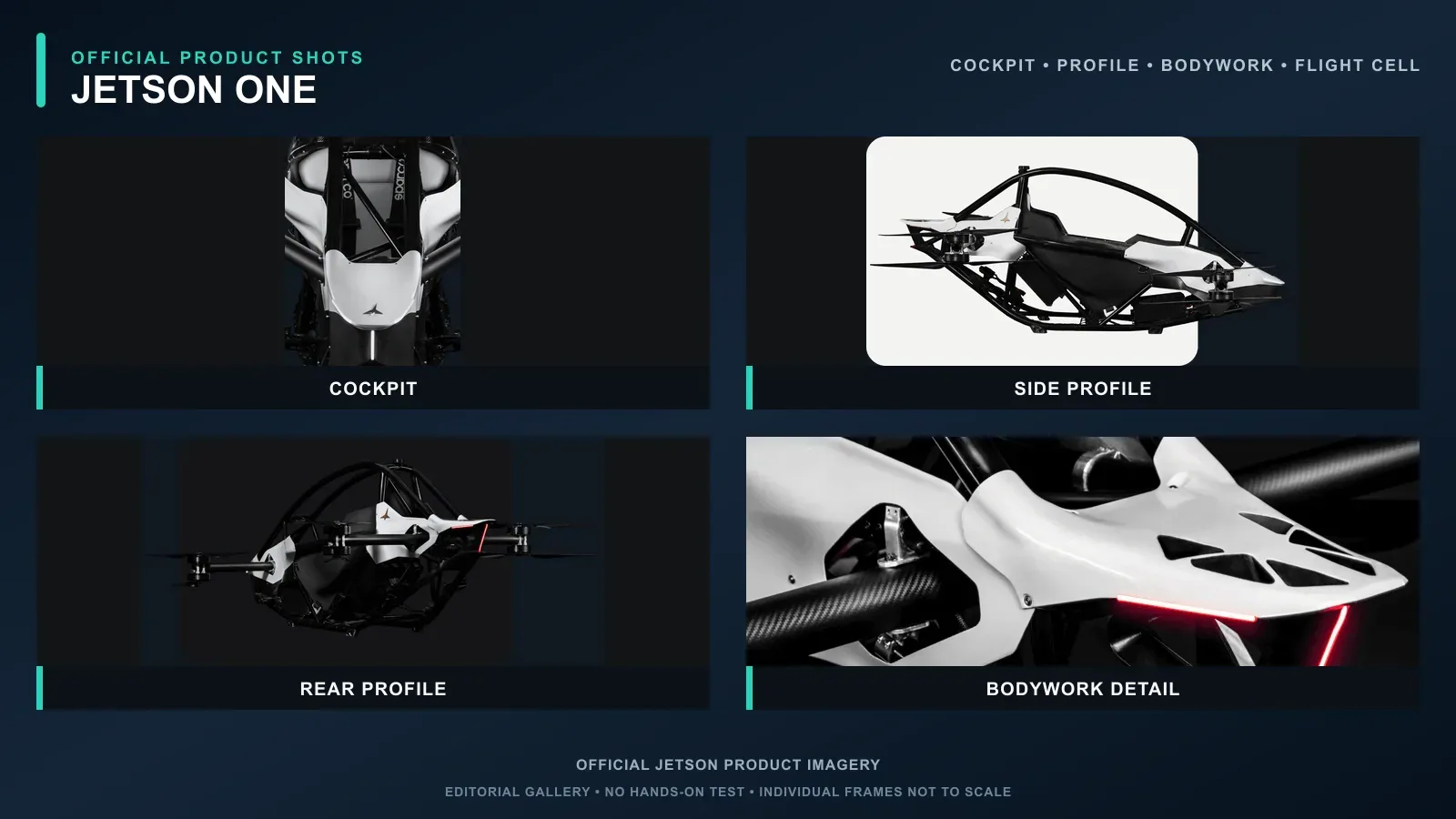
Jetson ONE is the deliberate outsider in this comparison. It is not wearable, it does not have jet engines, and nobody would confuse it with armor. It is an open, single-seat electric VTOL aircraft with eight propellers, a protective frame, a joystick, and a flight computer.
That separation from the body is exactly why it looks more practical. Jetson lists hands-free hover, an auto-land function, redundant battery propulsion, the ability to continue flying after the loss of one motor, a radar-assisted landing system, and a ballistic parachute.
The company currently claims about 20 minutes of flight, a software-limited top speed of 102 km/h or 63 mph, and a maximum pilot weight of 95 kilograms or 210 pounds. The aircraft weighs 115 kilograms or 253 pounds with batteries.
It is also the only machine in this comparison with a clear public order page. As of August 23, 2026, Jetson lists a $148,000 price before taxes and fees, an $8,000 non-refundable down payment, and an estimated 2028 delivery because 2026 and 2027 production is sold out.
That is not affordable in normal-person terms. It is, however, a real price attached to a production queue. In this category, that counts as progress.
Can You Really Fly One Without a Pilot License?
Several companies point to the U.S. ultralight category. The FAA says a pilot certificate is not required to operate a vehicle that truly qualifies under Part 103. That sentence is not permission to buy any small flying machine and launch from the driveway.
Part 103 comes with definitions and operating rules covering weight, fuel, speed, single occupancy, daylight use, congested areas, and controlled airspace. A machine or configuration that does not fit the category may need aircraft registration, certification, and a qualified pilot. Local land-use rules and permission to launch still matter too.
The practical rule for a reader is simple: “no pilot license required” is a regulatory category claim, not a safety guarantee and not a substitute for training. JetPack Aviation says even its ultralight version requires the company’s training. Gravity’s public experiences start tethered. Zapata describes Flyboard Air as demanding. Jetson says its flight computer makes control easy, but easy controls do not make airspace, weather, maintenance, or emergency judgment disappear.
The Six-Minute Problem
The biggest limit is not imagination. It is energy.
Small turbines produce an astonishing amount of thrust for their size, but they burn fuel quickly. Batteries are quieter and easier to control, but they store far less energy per kilogram than jet fuel. Add enough battery for longer flight and the aircraft must lift more battery. Add more fuel to a wearable jet system and the pilot must lift more fuel.
That is why the direct-wear machines live in the neighborhood of a few minutes while the larger electric Jetson aims for roughly 20. The machine becomes more practical when it stops being something you wear.
This also explains why spectacular personal-flight inventions keep drifting toward specialized work. Three minutes can matter enormously when the job is crossing rough terrain, reaching a ship, or putting a medic near a casualty. Three minutes is annoying when the job is getting groceries.
My Four-Part Reality Check
When I see another personal flying machine, I now ask four questions before deciding whether it is transportation or a brilliant demonstration.
- Can someone besides the inventor learn to control it in a structured program?
- Can the machine lose one component and still land in a controlled way?
- Can a normal customer buy, insure, maintain, transport, and legally operate it?
- Is the flight long enough to solve a real problem after takeoff and landing are included?
Gravity has a strong answer to the first question because it runs real training experiences. Jetson has the clearest answer to the third because it lists a public price and delivery queue. JetPack Aviation posts the wildest performance claims but currently closes both the sale and trial doors. Flyboard Air remains a remarkable prototype and show platform.
Nobody wins all four questions yet.
Which One Is Actually Closest to Iron Man?
If the test is appearance and body control, Gravity wins easily. The arm jets are not decorative. They are the reason the pilot can direct thrust with movements that look almost natural.
If the test is speed, JetPack Aviation claims the bigger number.
If the test is “could I place an order and eventually own a personal aircraft?” Jetson ONE has the clearest path, provided your version of normal includes a $148,000 purchase and a long wait.
If the test is pure audacity, Zapata deserves the trophy for putting a person on top of a cluster of turbines and crossing the English Channel.
The funny answer is that none of them is close to the entire Iron Man package. There is no compact, quiet energy source. There is no armor. There is no long endurance. The hands are not free. The noise and heat are real. The safe operating area is not downtown traffic.
But the most unbelievable part of the movie—the human-shaped flight—is already here.
What I Would Try
I would not pretend I am ready to buy or independently fly one of these. I would absolutely try Gravity’s tethered experience.
That is the right first step because it answers the question a video cannot: does directing thrust with your arms feel intuitive, terrifying, exhausting, or somehow all three at once?
I would also want to know how heavy the arm units feel after several powered runs, how much the sound changes the experience, how quickly the instructors intervene, and whether the pilot feels like they are balancing a machine or becoming part of one.
That would make a much better follow-up than another specification comparison. Until then, my job is to keep the excitement and the evidence in separate columns.
Final Thought
Personal flight has been “almost here” for longer than most of us have been alive. The difference now is that people really are leaving the ground on machines small enough to wear, stand on, or park beside a sports car.
Gravity’s arm jets are the closest thing I have seen to the childhood version of flying: point your body, move your arms, and go. The engineering reality is louder, shorter, hotter, more expensive, and far less forgiving than the fantasy.
That does not make it disappointing. It makes it real.
Sources
- Gravity Industries: Innovation — current Mk4 layout, development history, and company flight claims; accessed August 23, 2026.
- Gravity Industries: Defence and Security — current professional startup, flight-time, egress, and speed figures; accessed August 23, 2026.
- Gravity Industries: Flight Experiences — current packages, prices, powered-run counts, and UK/California locations; accessed August 23, 2026.
- Gravity Industries: Professional — current professional training claim; accessed August 23, 2026.
- JetPack Aviation: Jetpacks — official JB10/JB11 layout and preliminary specifications; accessed August 23, 2026.
- JetPack Aviation: FAQ — current sale, trial, training, and licensing statements; accessed August 23, 2026.
- JetPack Aviation: About — company history and current Mayman Aerospace link; accessed August 23, 2026.
- Mayman Aerospace — current autonomous VTOL company focus; accessed August 23, 2026.
- Zapata: Flyboard Air — current product status, engine count, stabilization, and skill boundary; accessed August 23, 2026.
- Flyboard Air Shows by Zapata Team — official show specifications and prototype status; accessed August 23, 2026.
- Jetson ONE — official propulsion, controls, safety features, and technical specifications; accessed August 23, 2026.
- Jetson ONE order page — current price, deposit, sold-out production years, and delivery estimate; accessed August 23, 2026.
- FAA: Do I need a pilot license to fly ultralights? — current FAA answer and Part 103 reminder; accessed August 23, 2026.
- FAA Advisory Circular 103-7 — active FAA guidance on ultralight definitions and operating boundaries; accessed August 23, 2026.