Trust & transparency
Evidence & disclosures
Not yet classified. This article has not yet been classified under the current editorial standard. It may predate the policy; do not assume a product was owned, tested, supplied, or independently verified unless the article says so.
Linked references: 23 explicit sources in the article.
TLDR
- Bodycam is already in Steam Early Access. The thing arriving September 2, 2026 is the huge free v0.8 Locked & Loaded update, not a brand-new standalone game.
- This is bigger than prettier graphics. Reissad Studio is rethinking reloads, body movement, optics, sound, the HUD, weapon handling, and even how a camera should behave when it is physically attached to a person.
- The FPV side is what pulls me in personally: Stabilized and full-manual Acro flight, rates, throttle curves, and flight profiles sound much closer to an actual FPV system than a typical videogame drone.
- The realism is thrilling, but it is also unsettling. When a reload, a scope, and a camera feed all convince the brain at once, the screen starts to feel less like a safe boundary.
- It may become useful for familiarization and practice, but photorealism alone does not make it a validated professional training system.
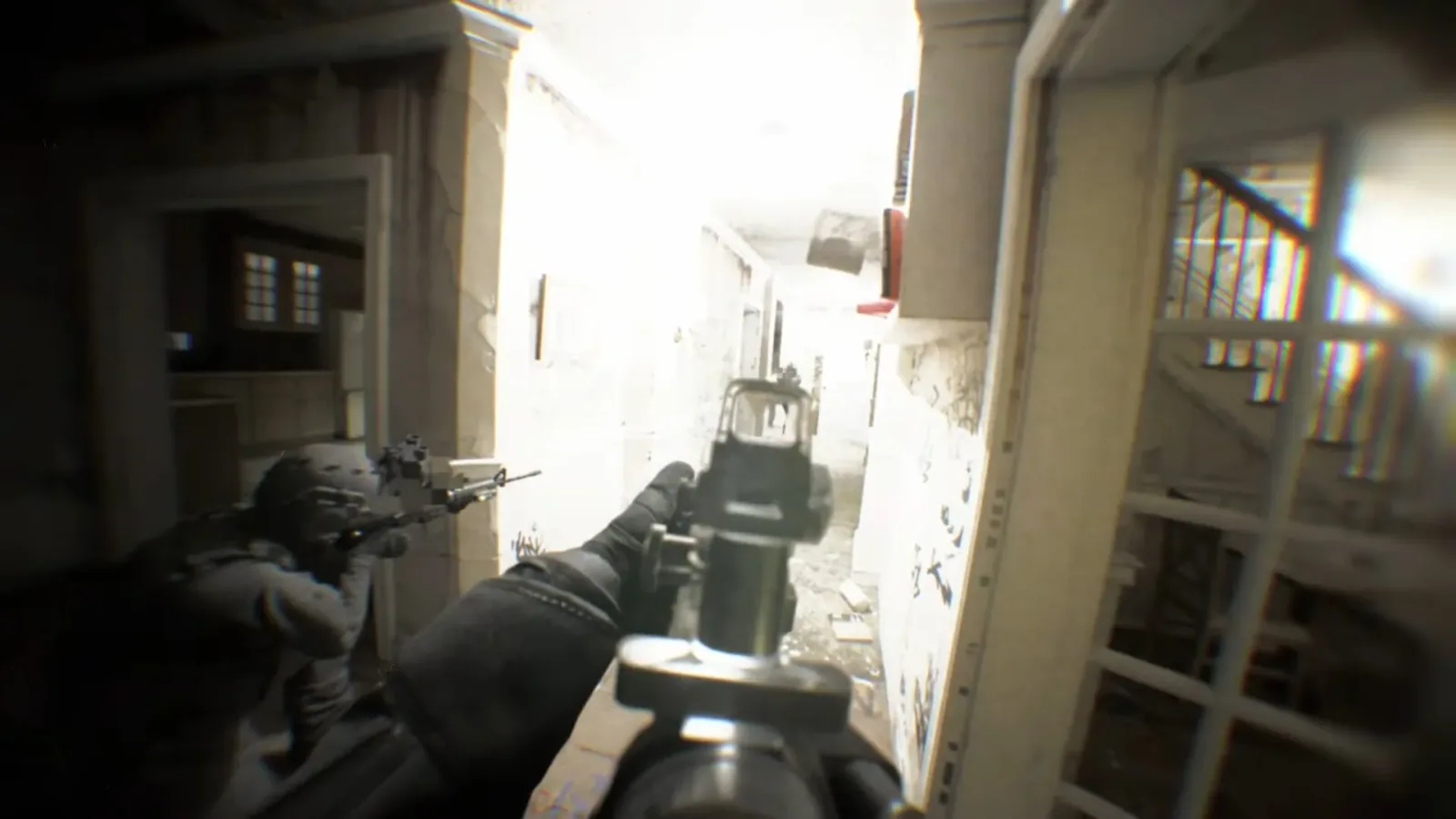
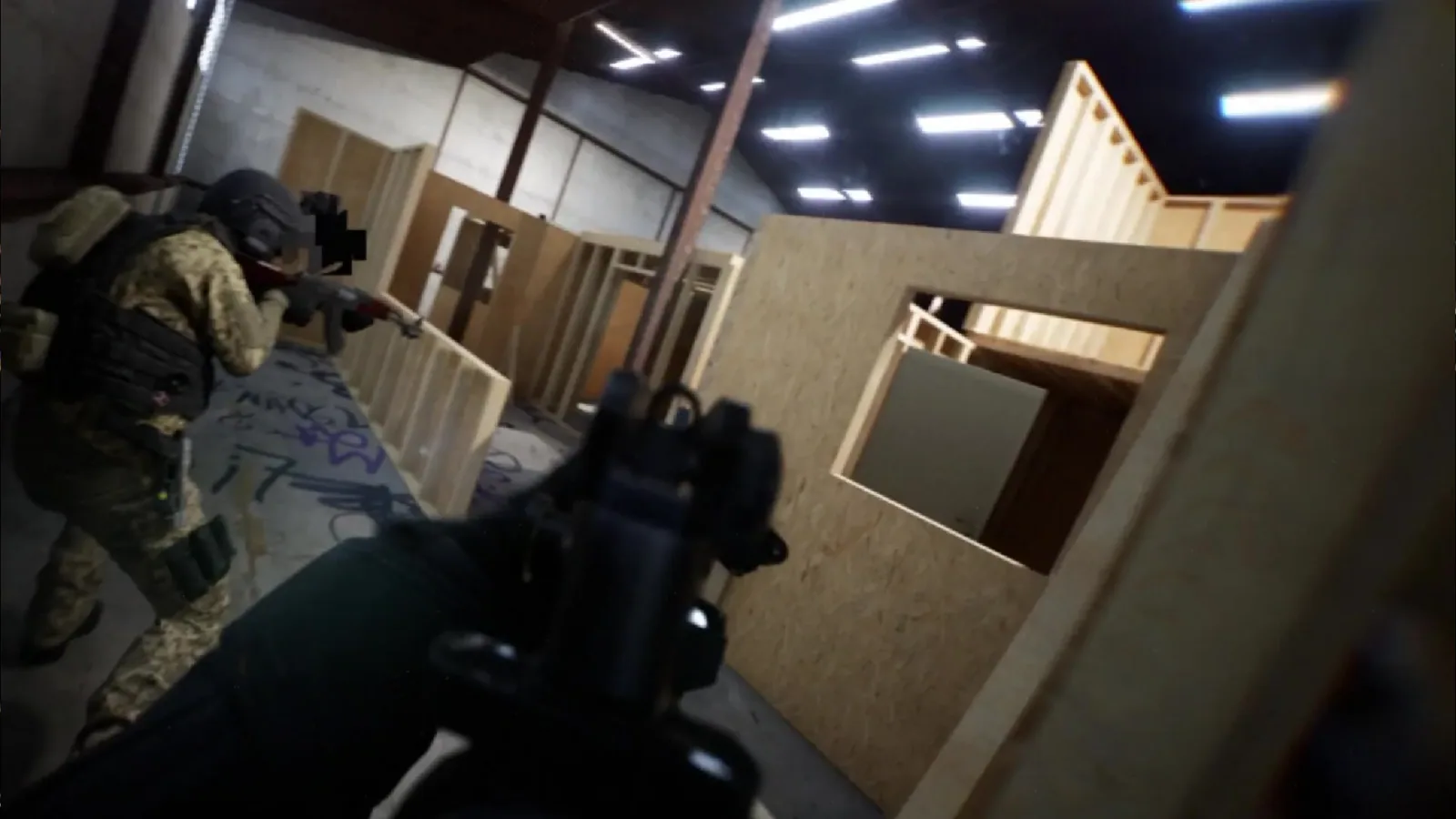
- I have not played this update. This is my reaction to the developer footage and the developer's current descriptions. The official screenshots below are promotional and development images, not my captures.
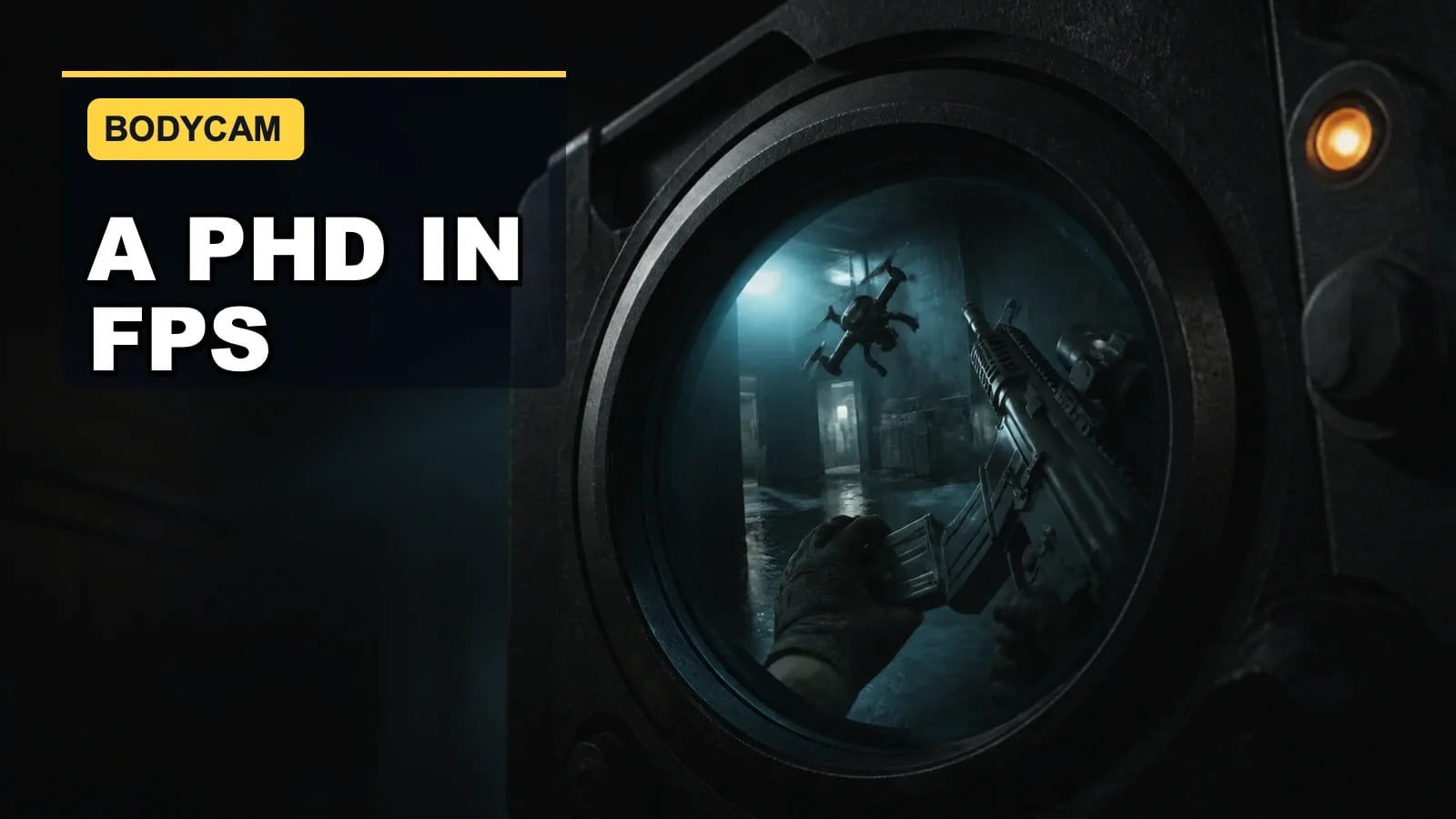
I watched the new Bodycam footage and had one immediate thought: this is no longer just a first-person shooter trying to win a graphics contest.
This is a PhD in FPS.
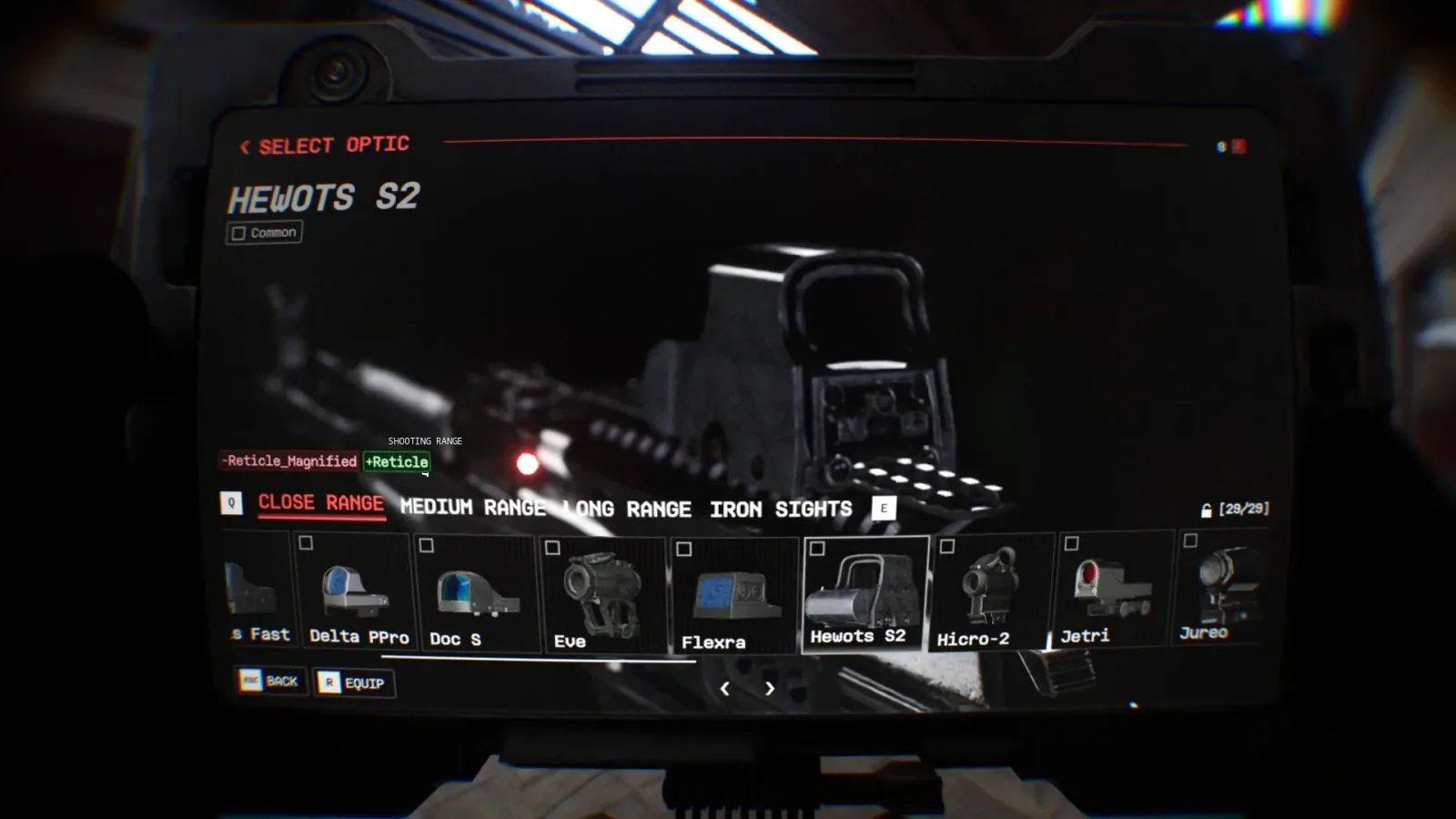
The team is studying things most games trained us not to notice: what a reload looks like from a camera strapped to a moving body, what stress does to a pair of hands, how scope glass catches light, how a weapon pulls against the person holding it, and what happens when the familiar loadout menu becomes a physical tablet that leaves you exposed.
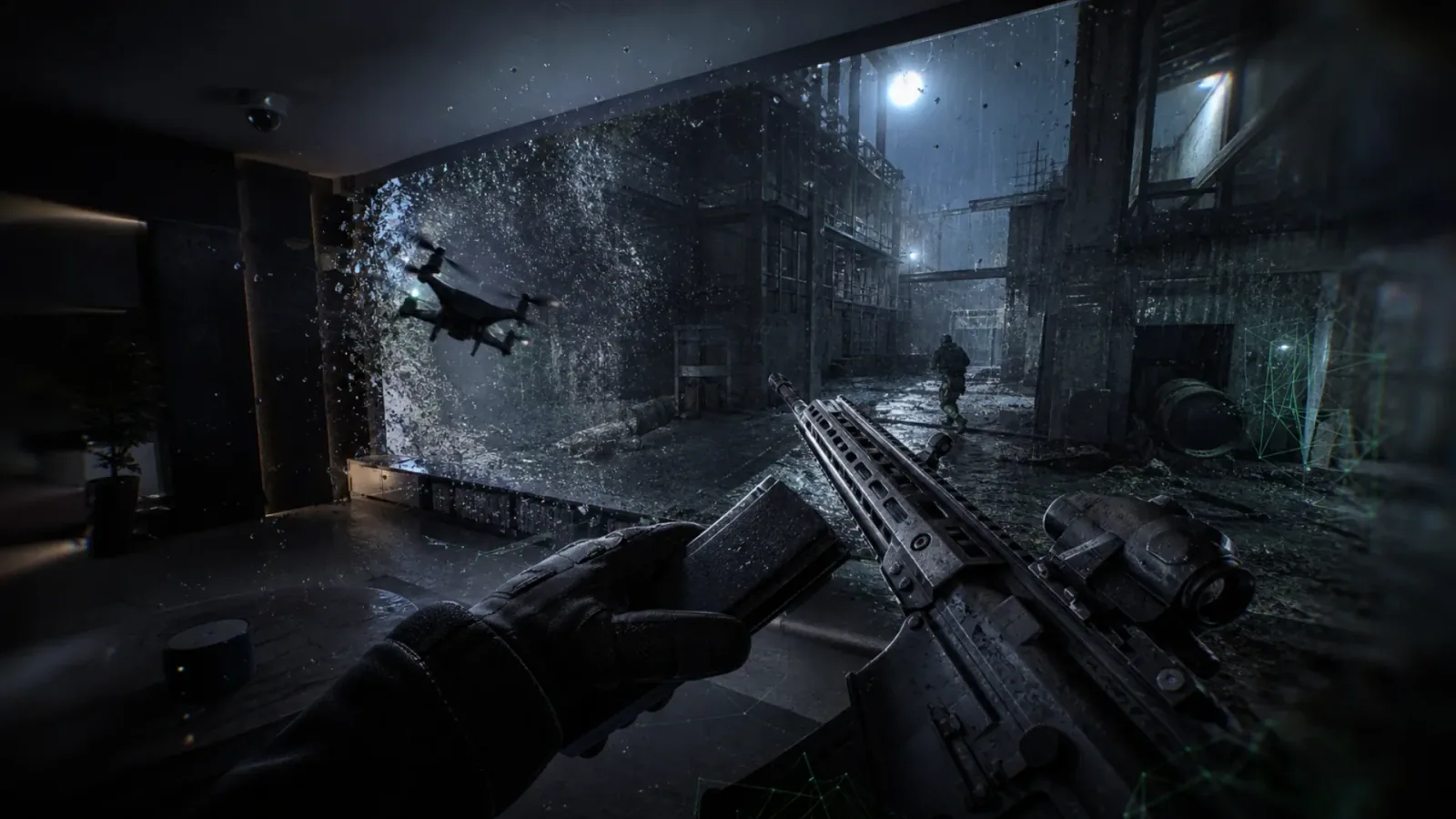
Then they added FPV drones with Acro mode.
That is where this went from technically impressive to personally fascinating for me. I fly FPV. I know the difference between moving a floating camera through space and controlling a machine with momentum, rates, throttle response, and absolutely no interest in rescuing you from a bad input.
And the more I watched, the more the excitement picked up a strange aftertaste. Ready Player One used to feel like a distant fantasy. The Matrix used to feel like a philosophical warning wrapped around an action movie. Bodycam is not either of those worlds—but it is one of those moments when the screen looks back and quietly says, “We are getting closer.”
Watch This Before You Read Another Word
If you want to understand why I am so worked up, start with these:
- Gamology: Bodycam Just Became More Realistic Than Ever
- Reissad Studio: Animation & Loadout Devlog 1 of 4
- Reissad Studio: We Reinvented Gunshots in Video Games—Devlog 2 of 4
- Reissad Studio: The Most Realistic Trench Warfare Ever Made—Devlog 3 of 4
The first three official devlogs form a progression: body and weapon, then sound, then environment. Together they show why “good graphics” is too small a description.
First, This Is an Update—Not a Brand-New Game
Bodycam entered Steam Early Access on June 7, 2024. The new material is showing Locked & Loaded, the major v0.8 update scheduled for September 2, 2026.
That distinction matters. The developer footage includes work in progress, and Bodycam itself remains an Early Access game. The ideas are exciting; they are not a guarantee that every system will arrive perfectly balanced, optimized, or finished on day one.
I am also not writing this as somebody who has tested the update. I am reacting to the videos and published details. I want to be enthusiastic without pretending a trailer is the same thing as hands-on time.
The Reload Is Suddenly the Main Event
Most shooters treat reloading as a timer with a polished animation attached. Press the button, wait the expected number of seconds, and get back to work.
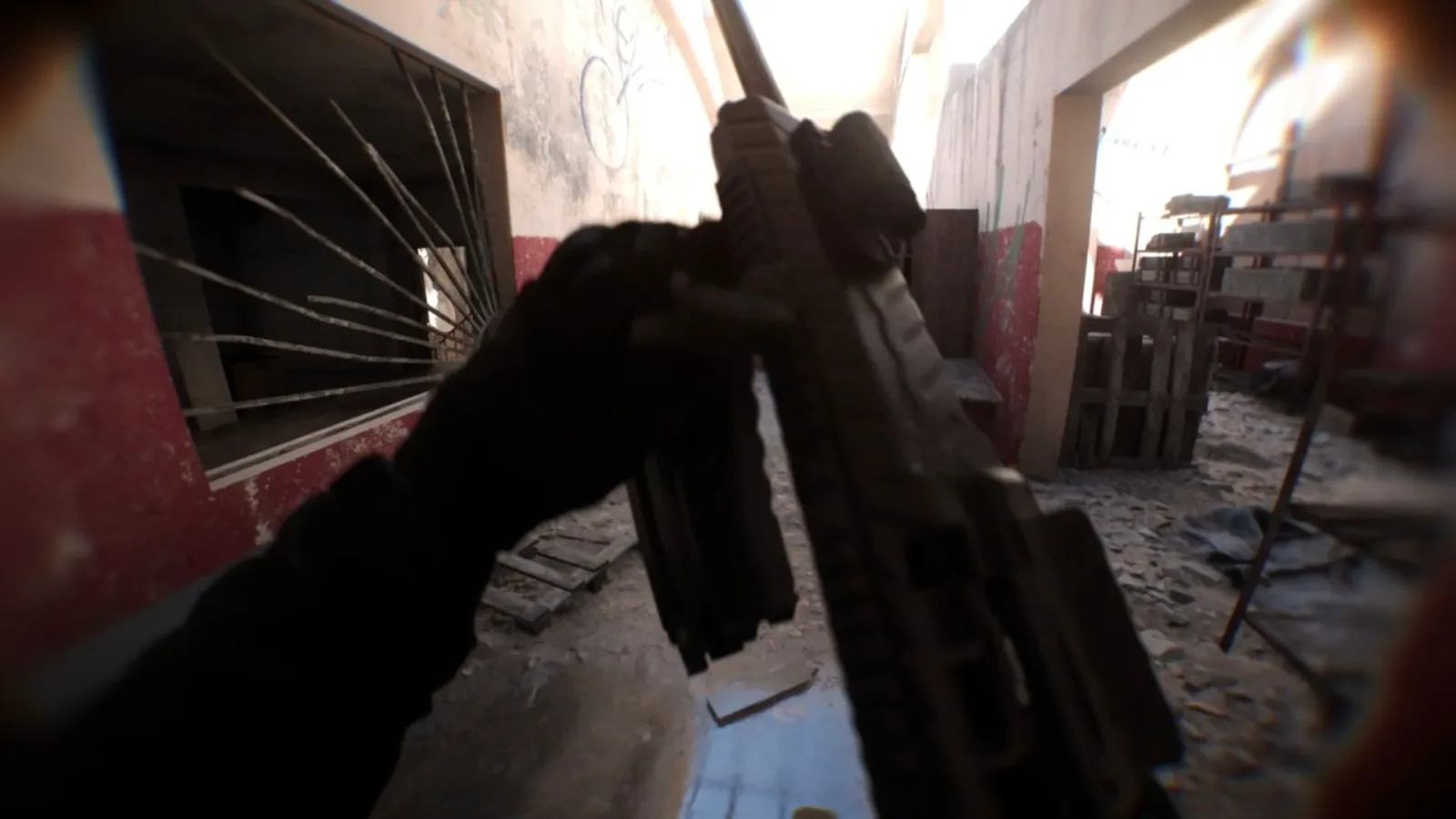
Bodycam is trying to make the reload a human event.
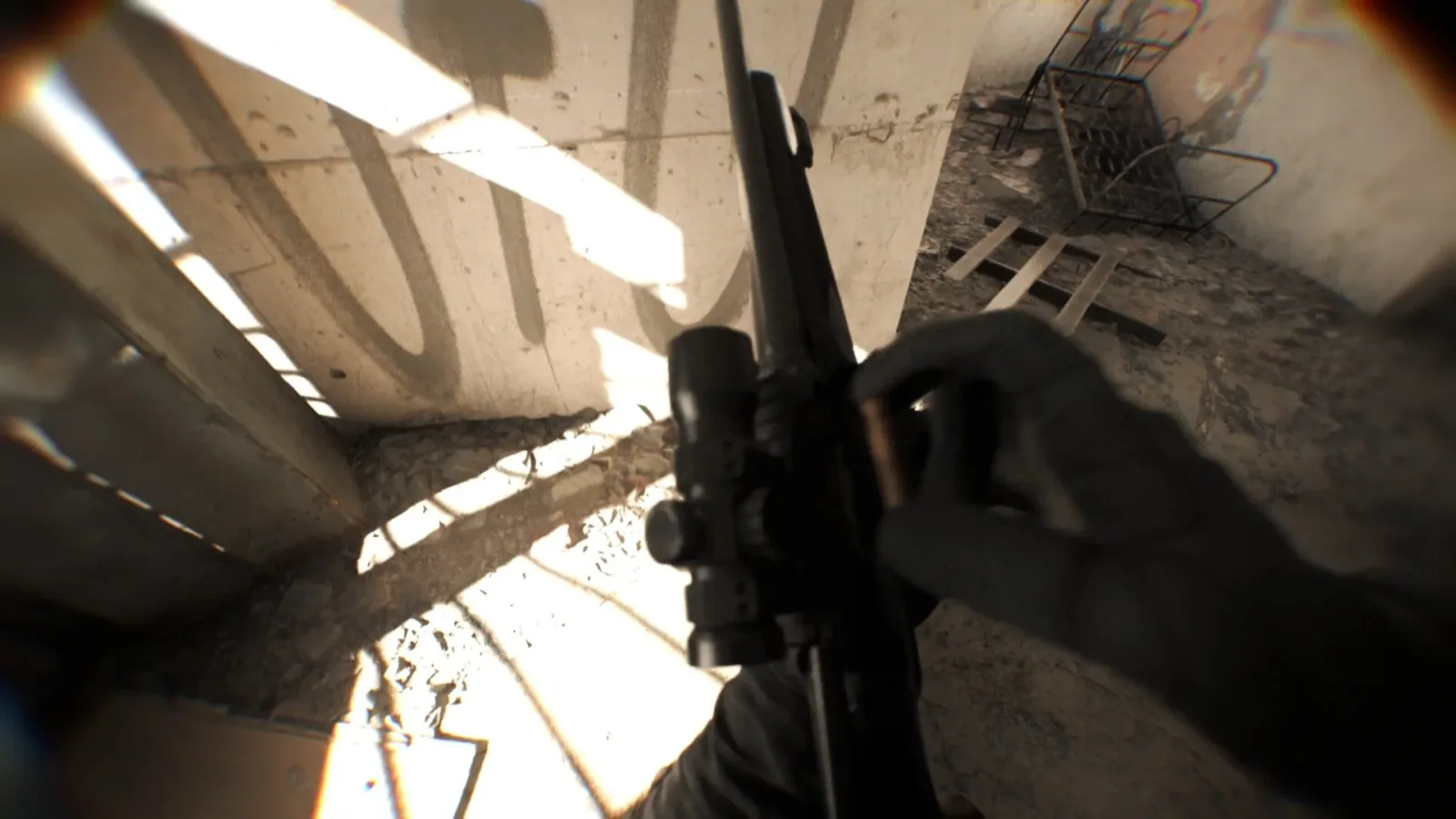
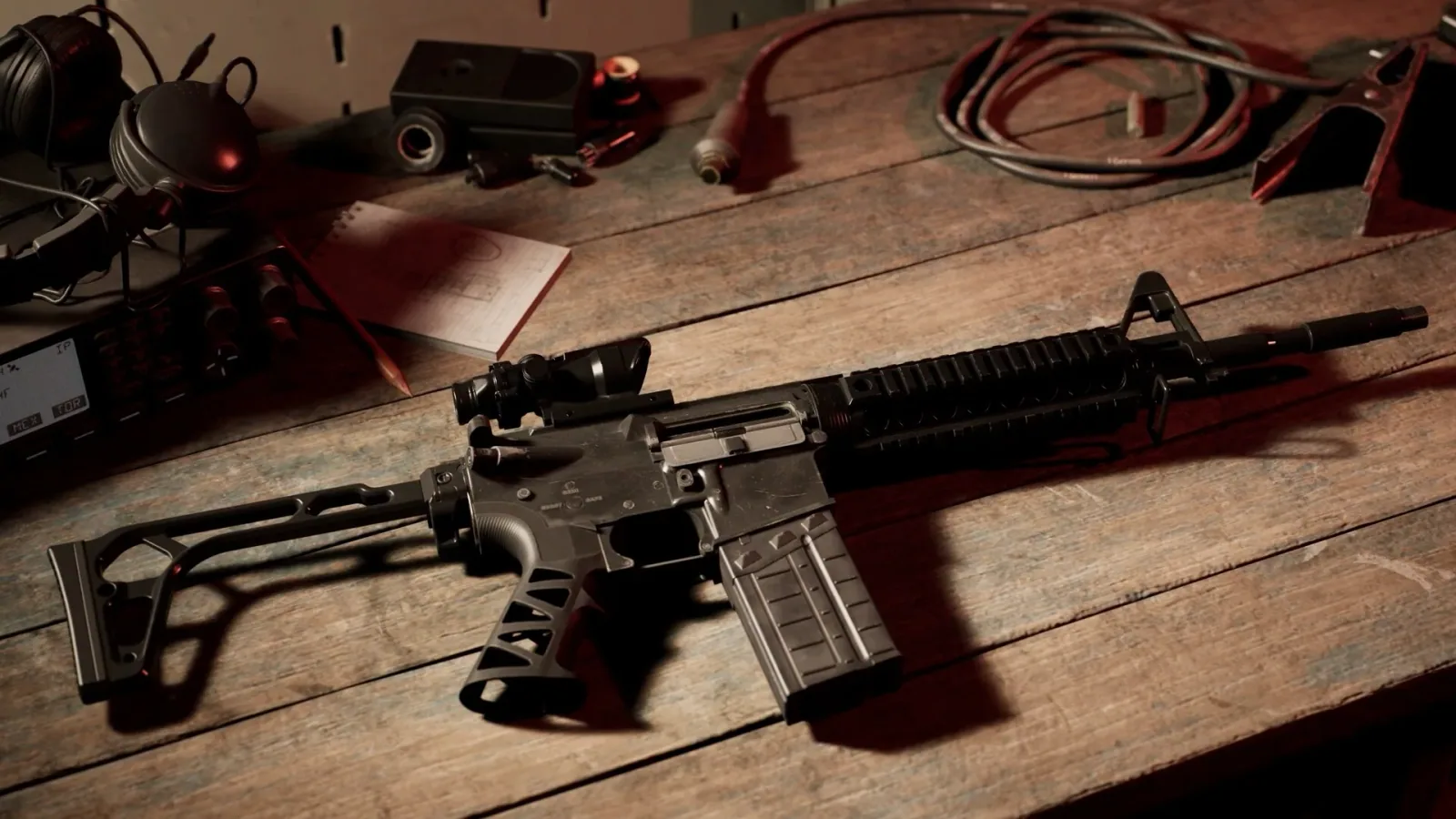
Reissad Studio describes calm and stressed states, multiple variations, rushed movements, and realistic mistakes. Its roadmap says reload behavior can change with the weapon, stance, ammunition, hand alignment, stress, and whether an action succeeds cleanly. The hands should not land in precisely the same position every time.
That is a small detail with a massive effect. A perfect repeated loop looks like software. A hand that hesitates, searches, shifts, or loses its rhythm starts to look like a person.
It also changes what skill means. You are not only learning recoil patterns or memorizing a map. You are managing uncertainty while your on-screen body stops behaving like a perfectly obedient pair of floating gloves.
That is what I mean by a PhD in FPS. The developers are not merely polishing the old formula. They are taking it apart and asking why we accepted so many shortcuts in the first place.
The Camera Is Not Just a Viewport Anymore
Traditional first-person games usually put a camera in space, attach arms and a weapon to it, and build the illusion outward.
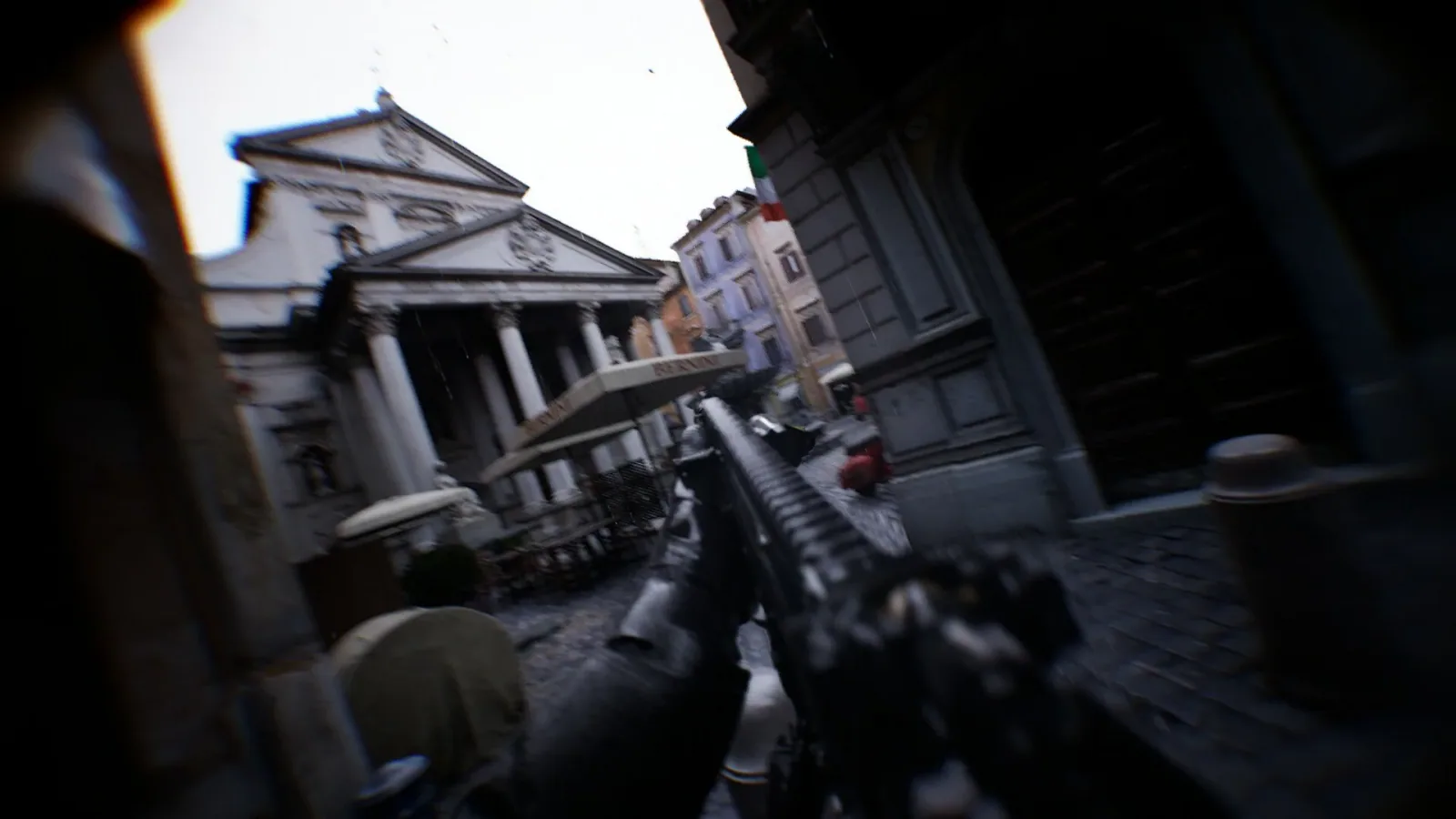
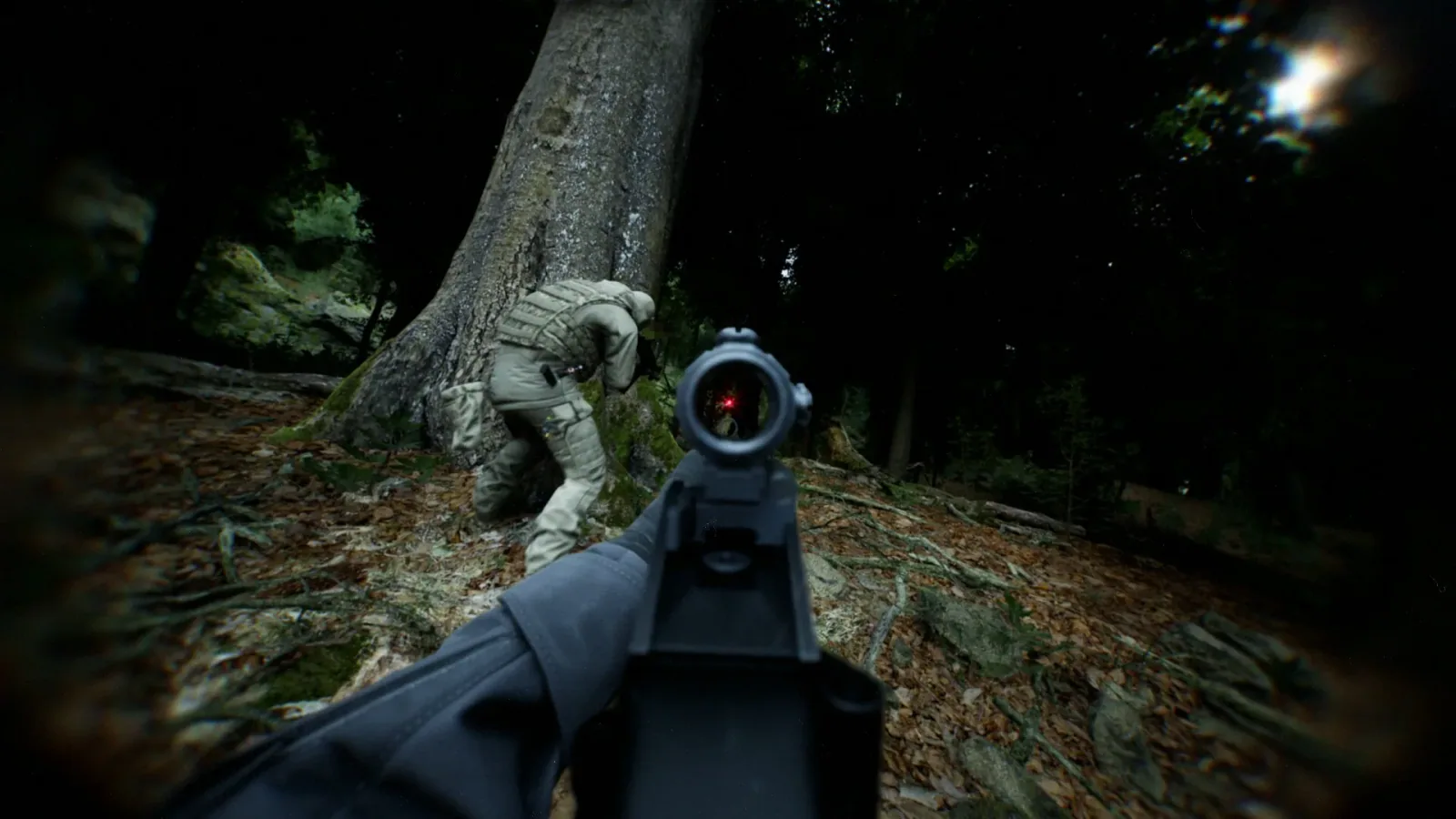
Bodycam reverses that relationship. The developer describes the arms, torso, legs, and weapon as physically connected, with the camera existing as equipment on that body. Move too aggressively and the operator may adjust it. Use the radio and the operator raises a hand. Fire repeatedly and the grip can shift.
The viewpoint is no longer an invisible eyeball gliding through a level. It is a piece of equipment being carried by a body that reacts.
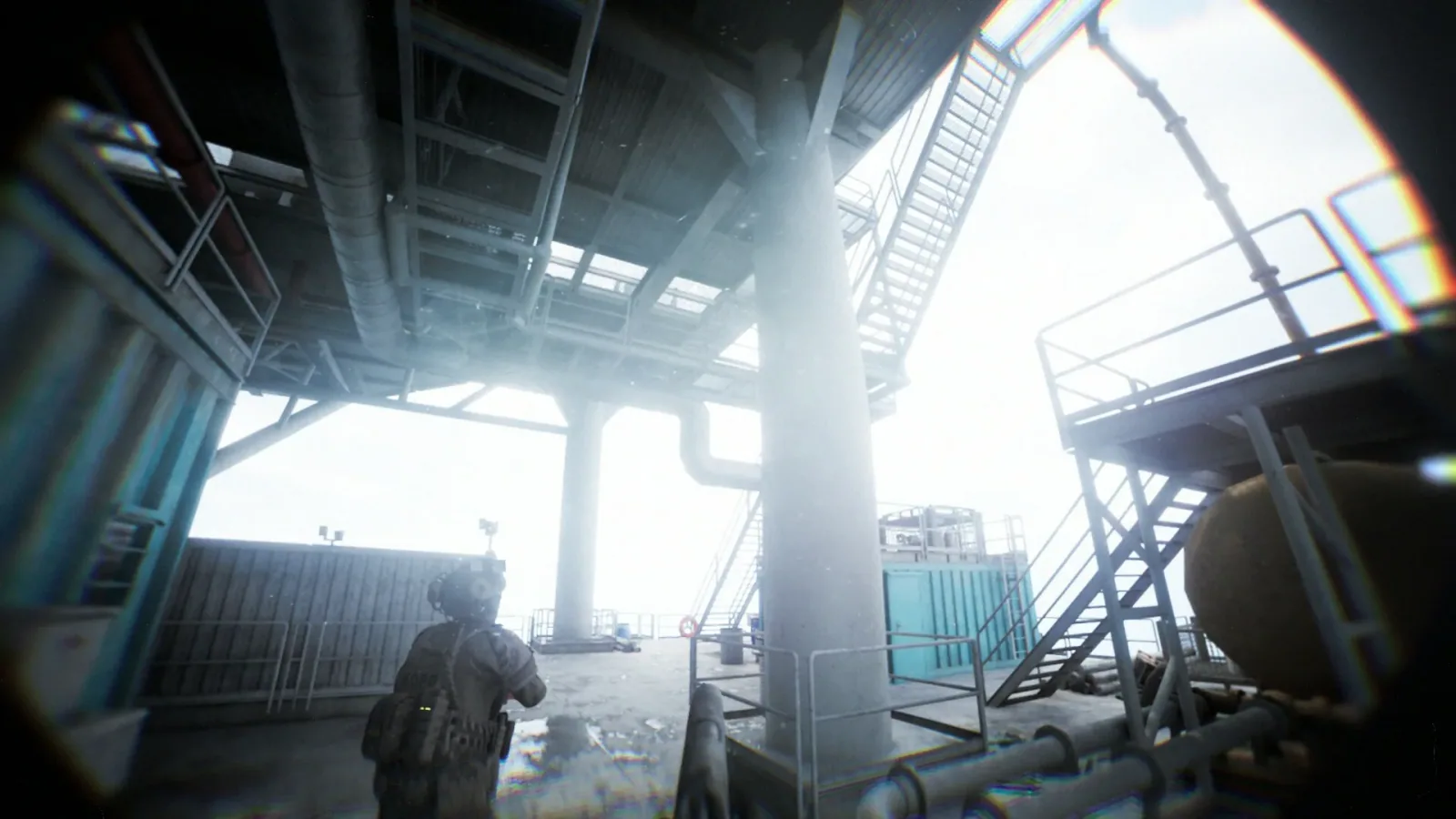
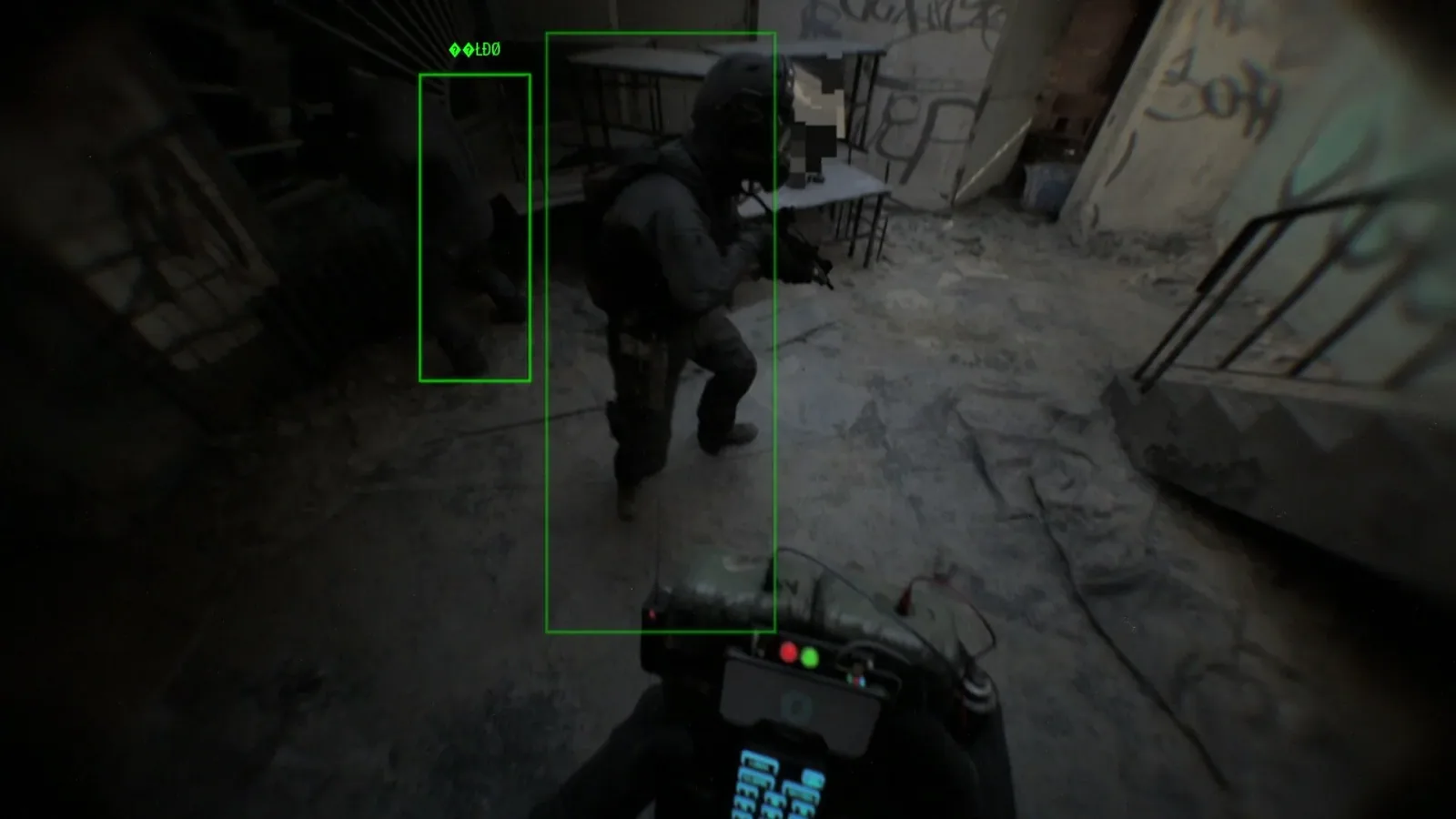
The graphics help sell it, of course. Photoreal environments, exposure shifts, camera compression, motion, reflections, and lighting all contribute. But realism is not one expensive texture. It is a stack of small agreements between the camera, environment, audio, body, and controls.
When those agreements hold, your brain stops asking, “How good are the graphics?” It starts asking, “Why did that feel real?”
Even the Scopes Are Becoming Optical Systems
Scopes are another place where games usually cheat for good reasons. A clean image, stable reticle, and predictable zoom make a shooter easier to read and often more fun to play.
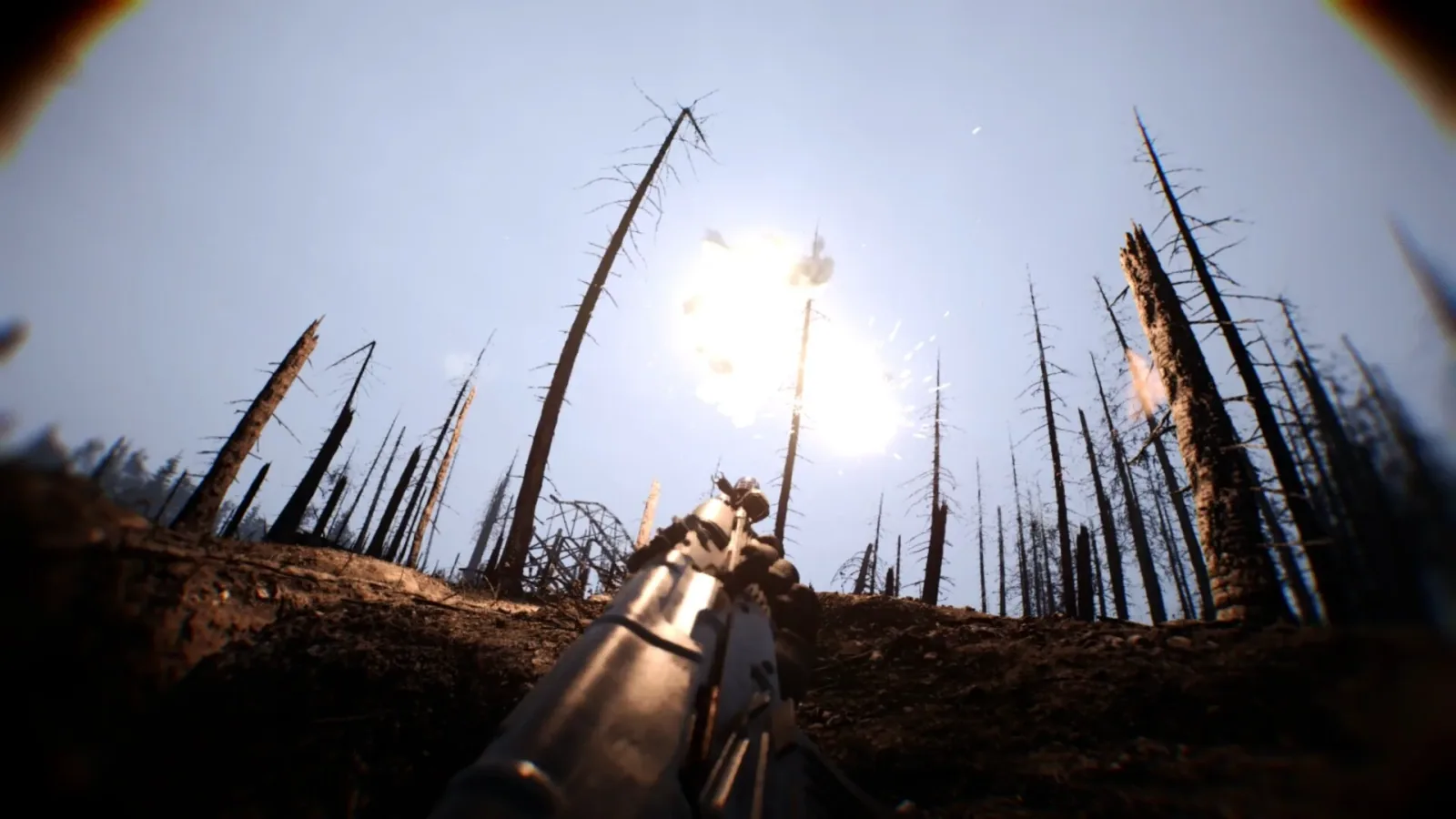
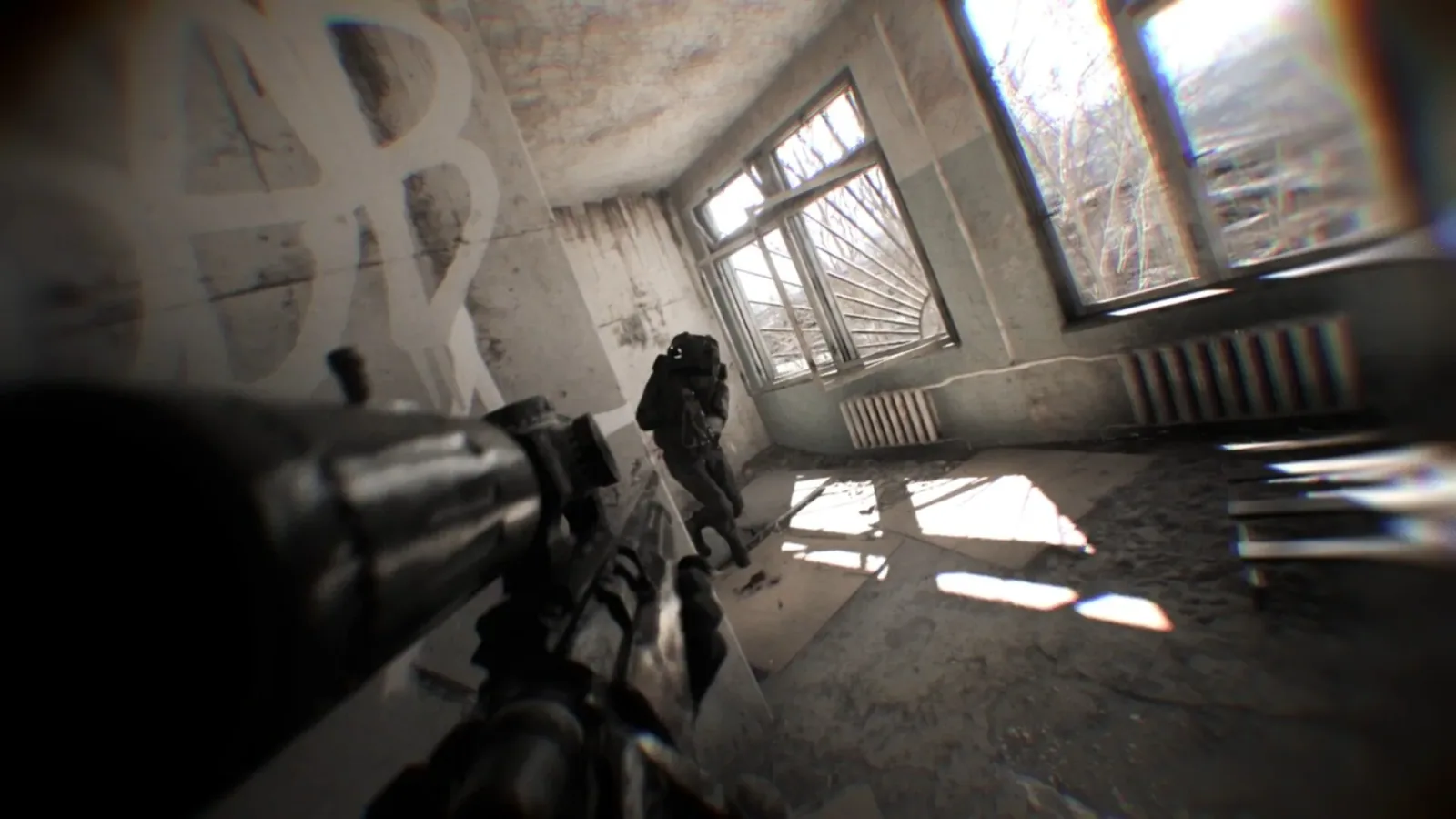
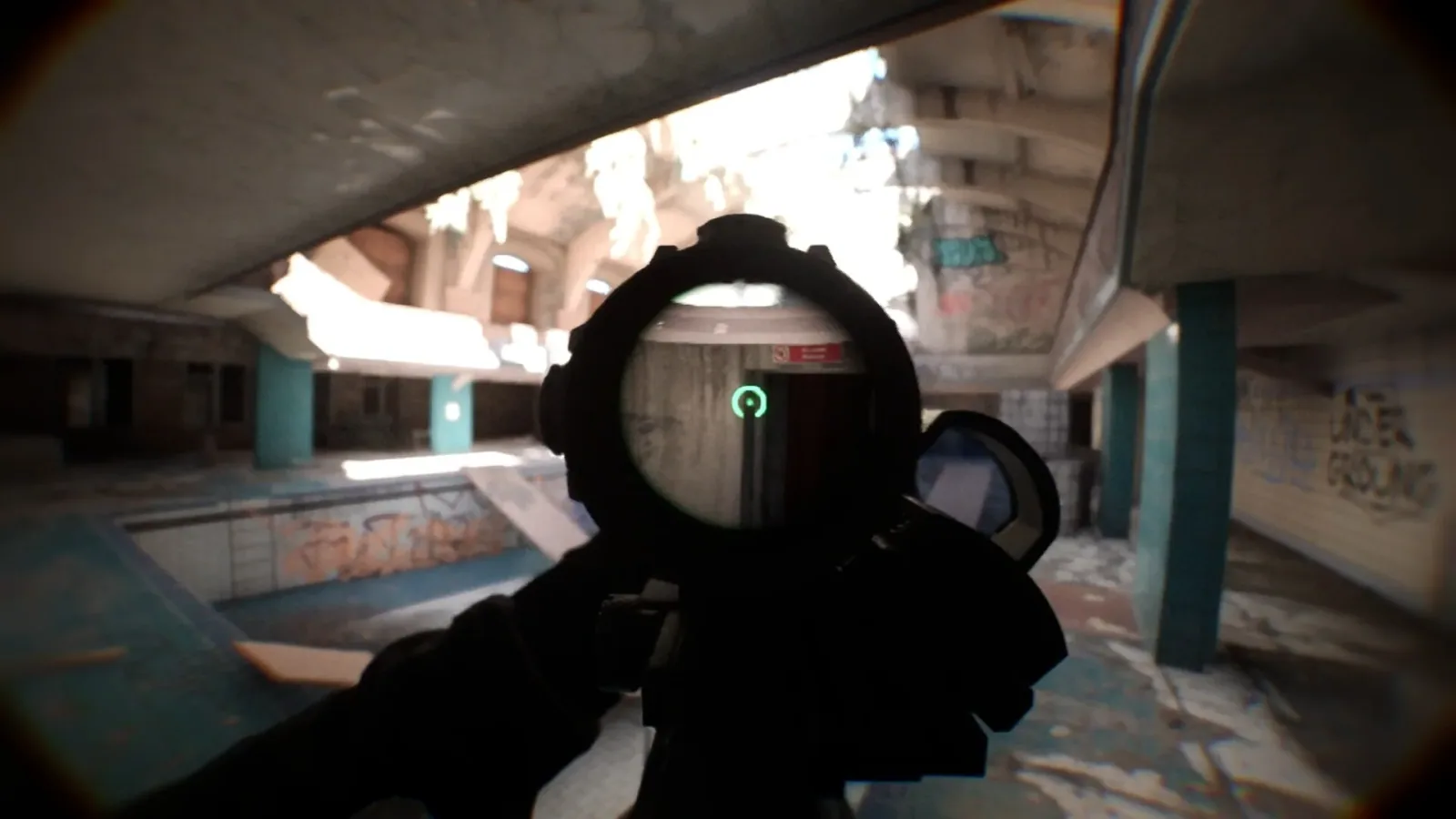
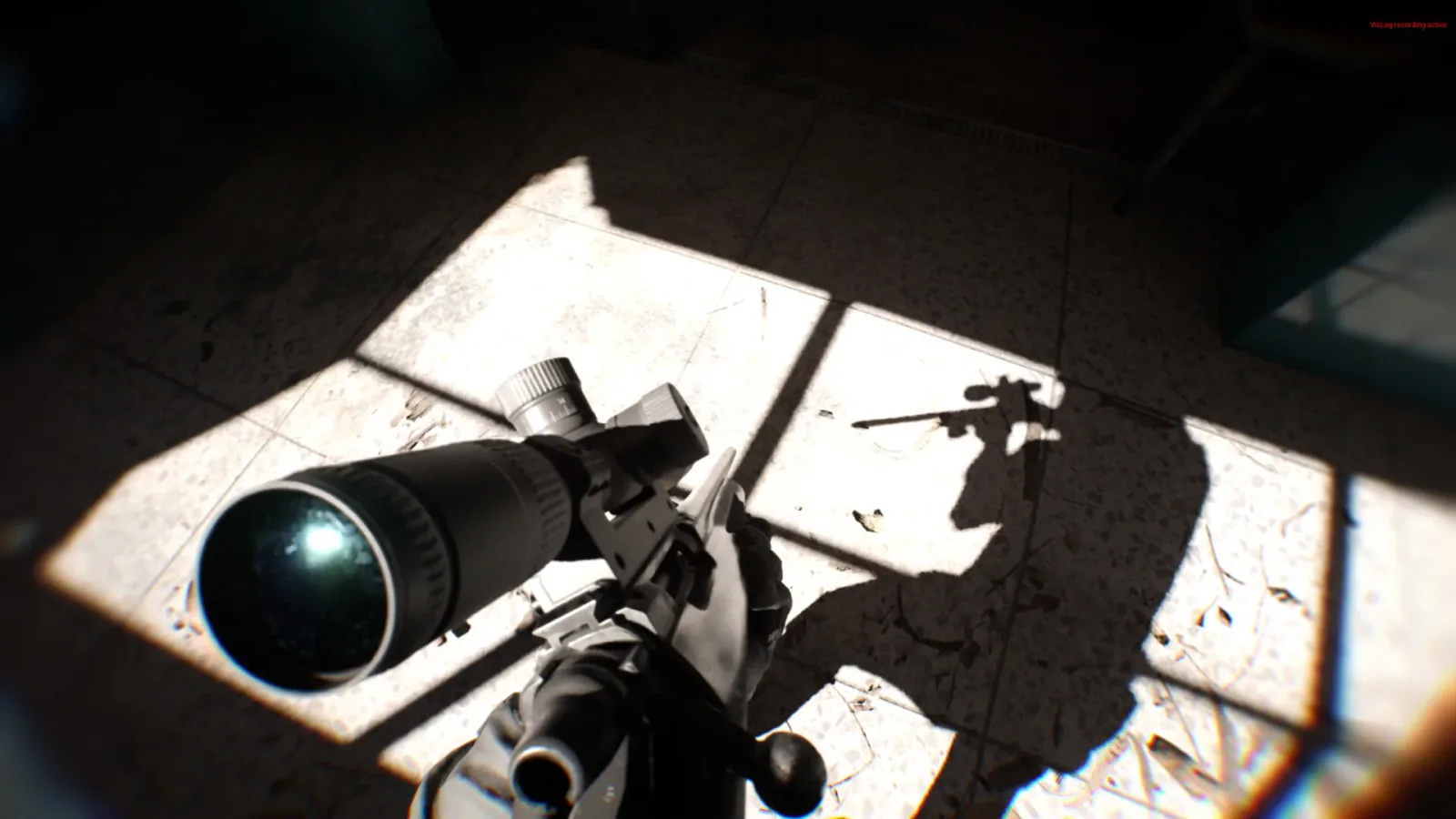
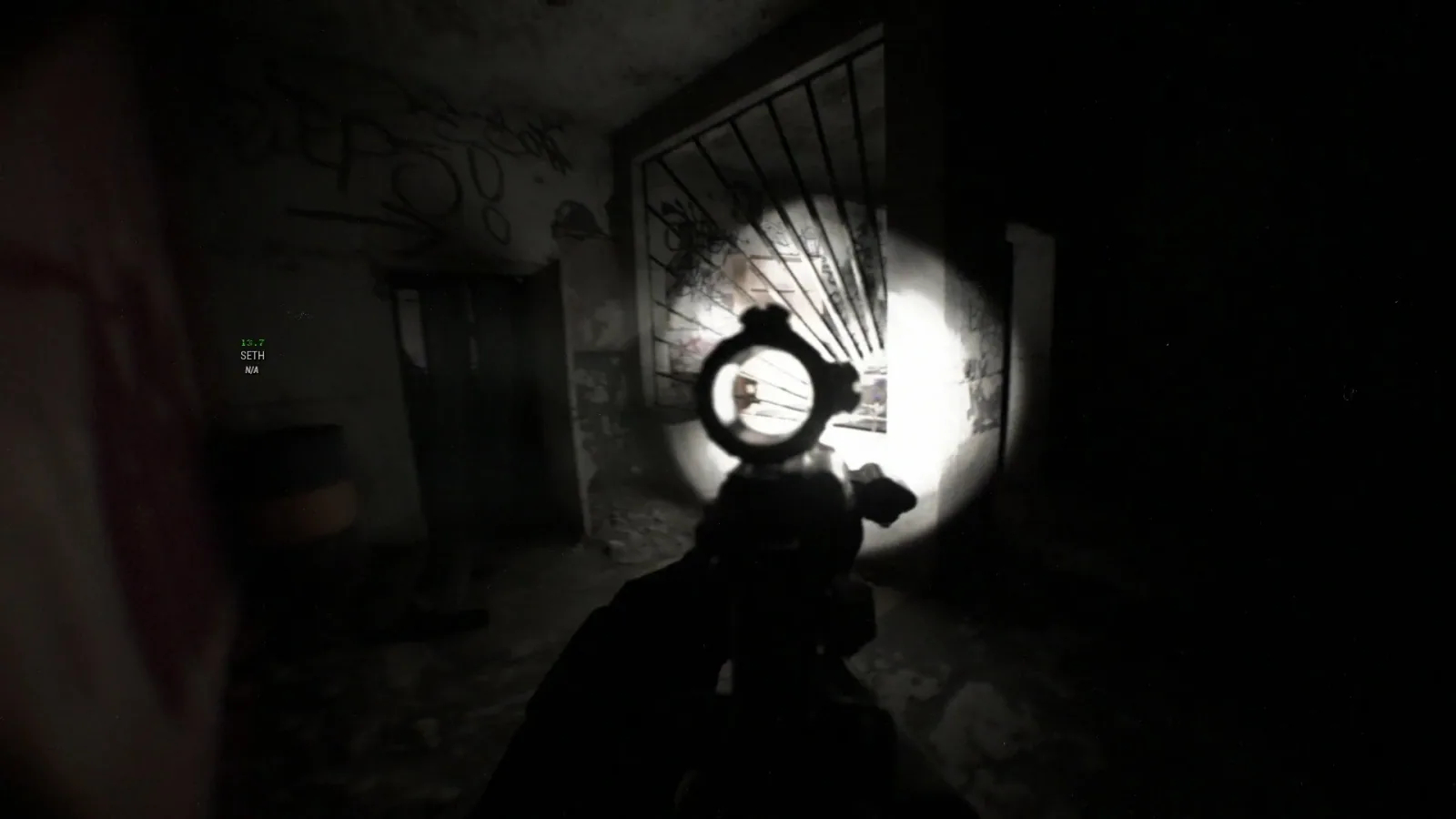
Bodycam appears interested in what happens when the scope stops feeling like a zoom button and starts feeling like a piece of glass mounted to a moving object. The view through the optic, surrounding body-camera image, reflections, distortion, light, and motion all have to coexist.
That is not only a graphics problem. It is a perception problem. The developers have to make the glass believable without making the game unusable, while preserving performance in an already demanding scene.
I love that kind of technical obsession. It is work most players may never name, but everybody feels when it is right.
The FPV Part Pulls Me All the Way In
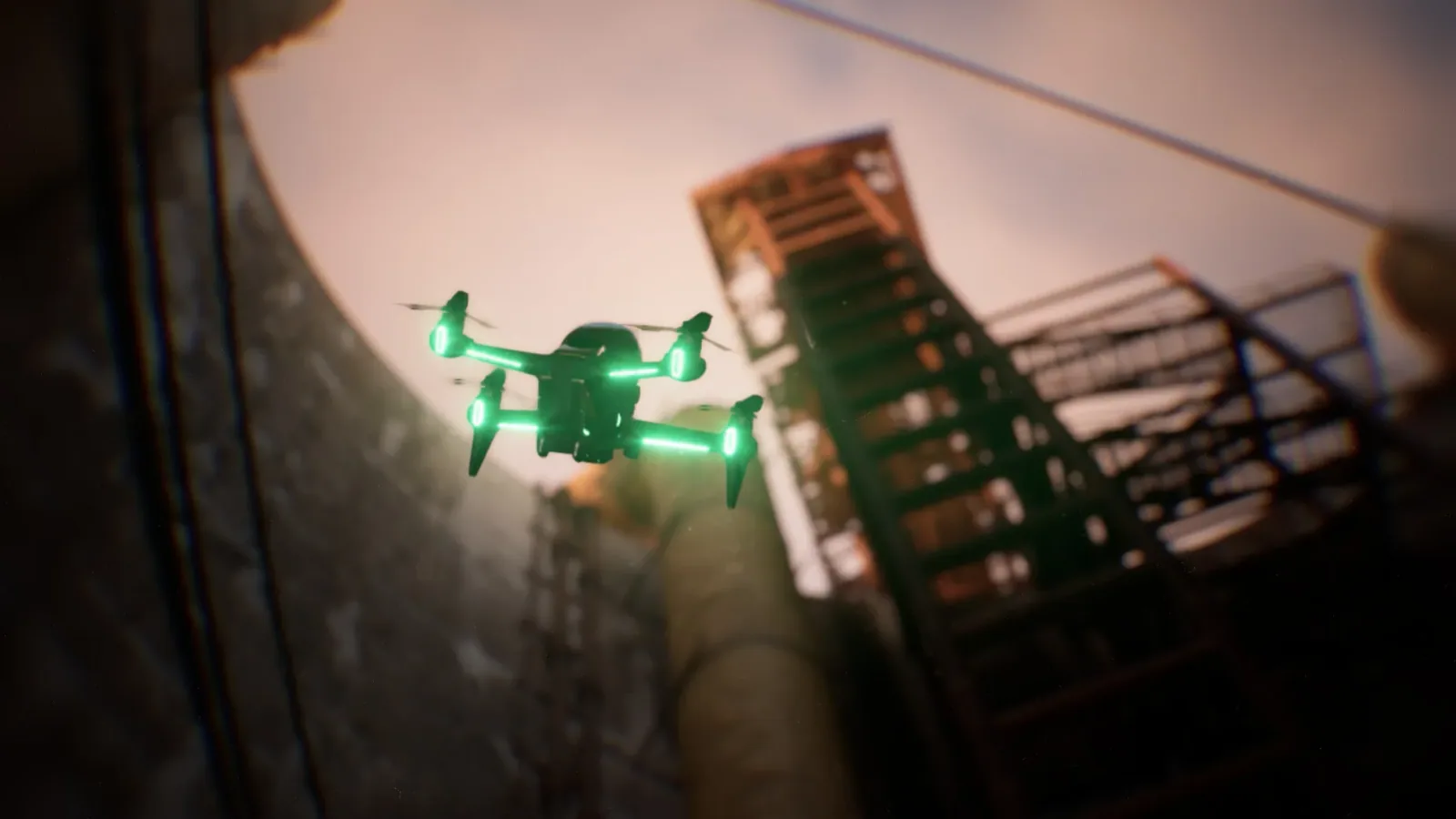
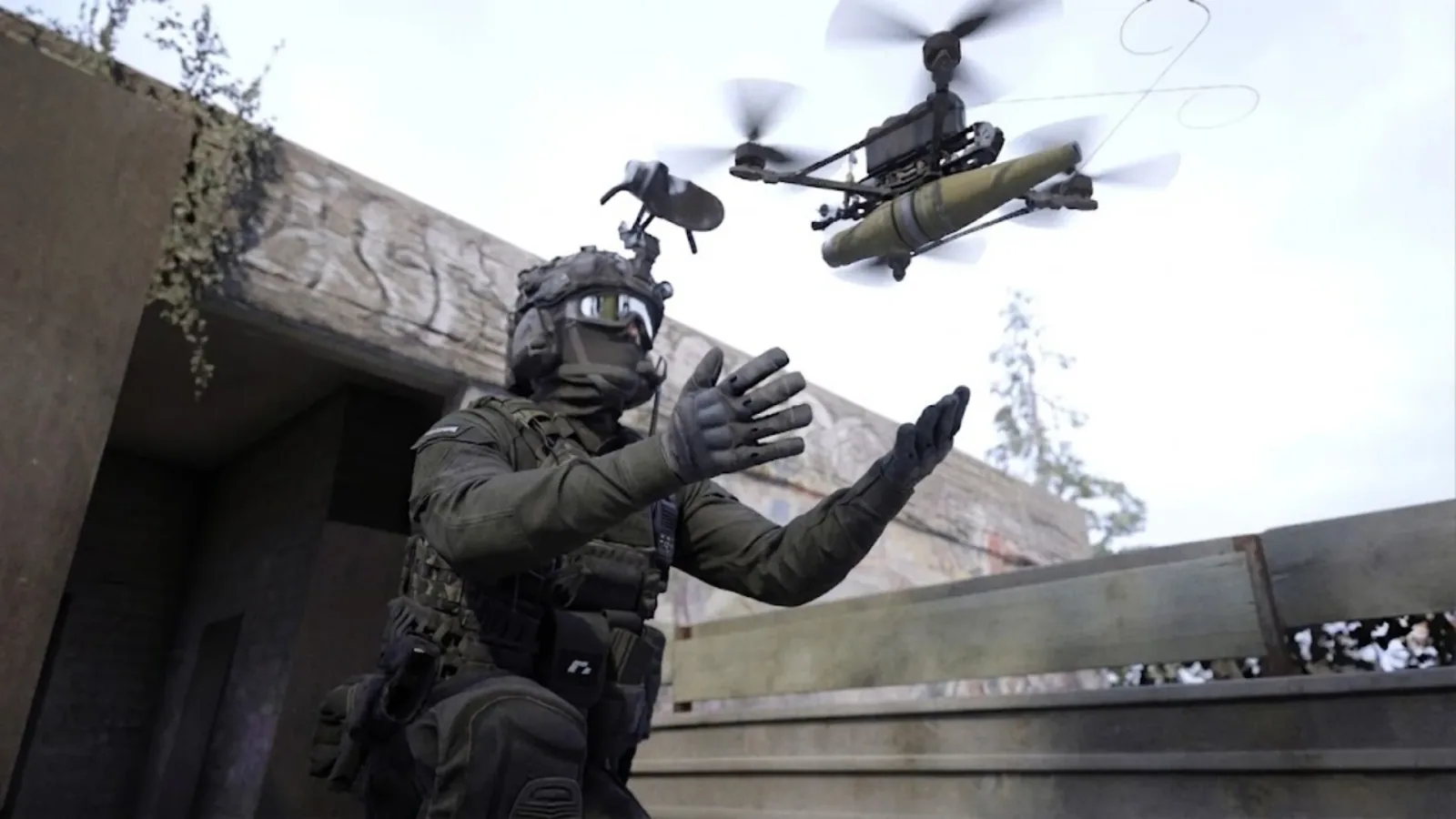
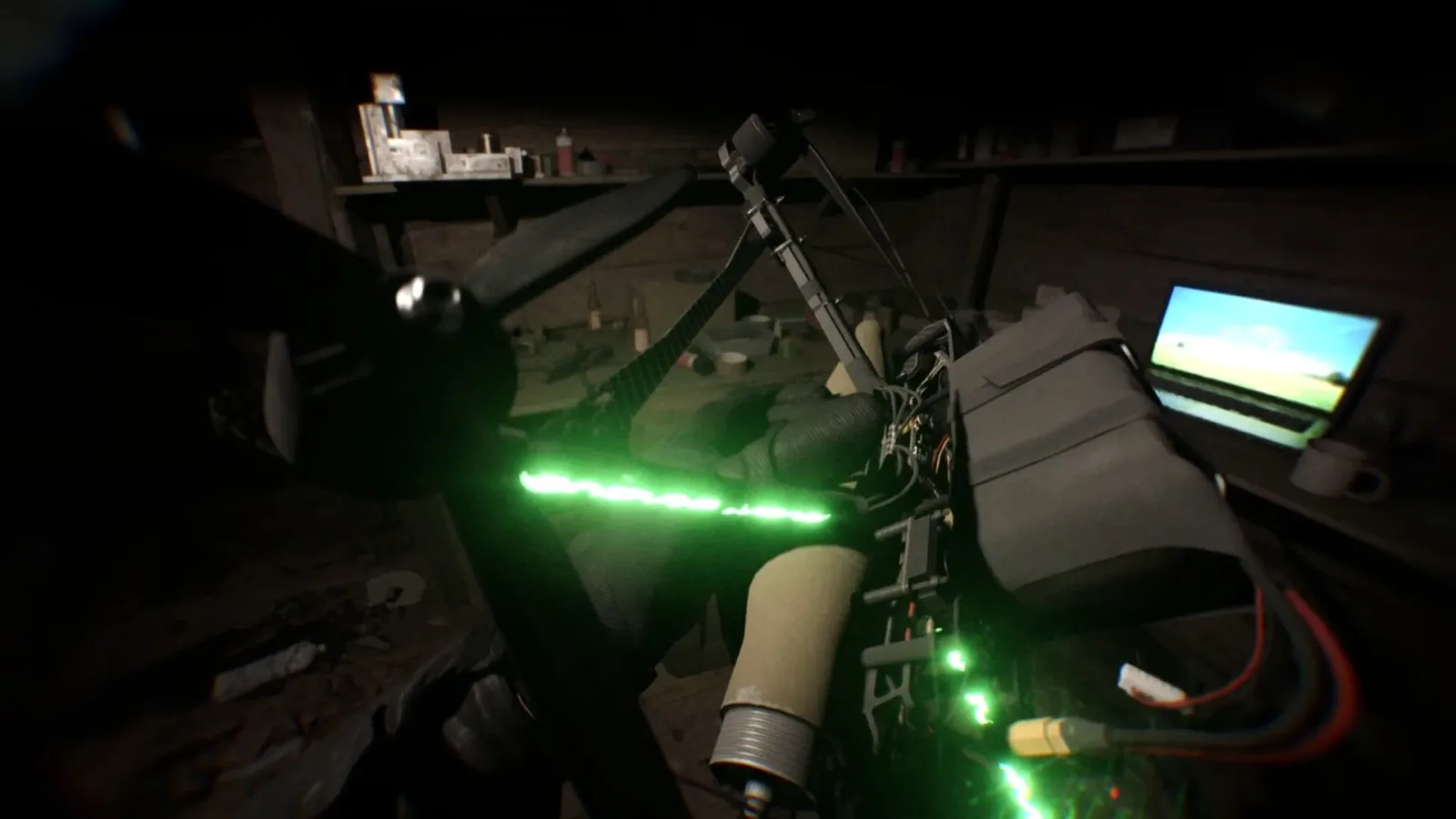
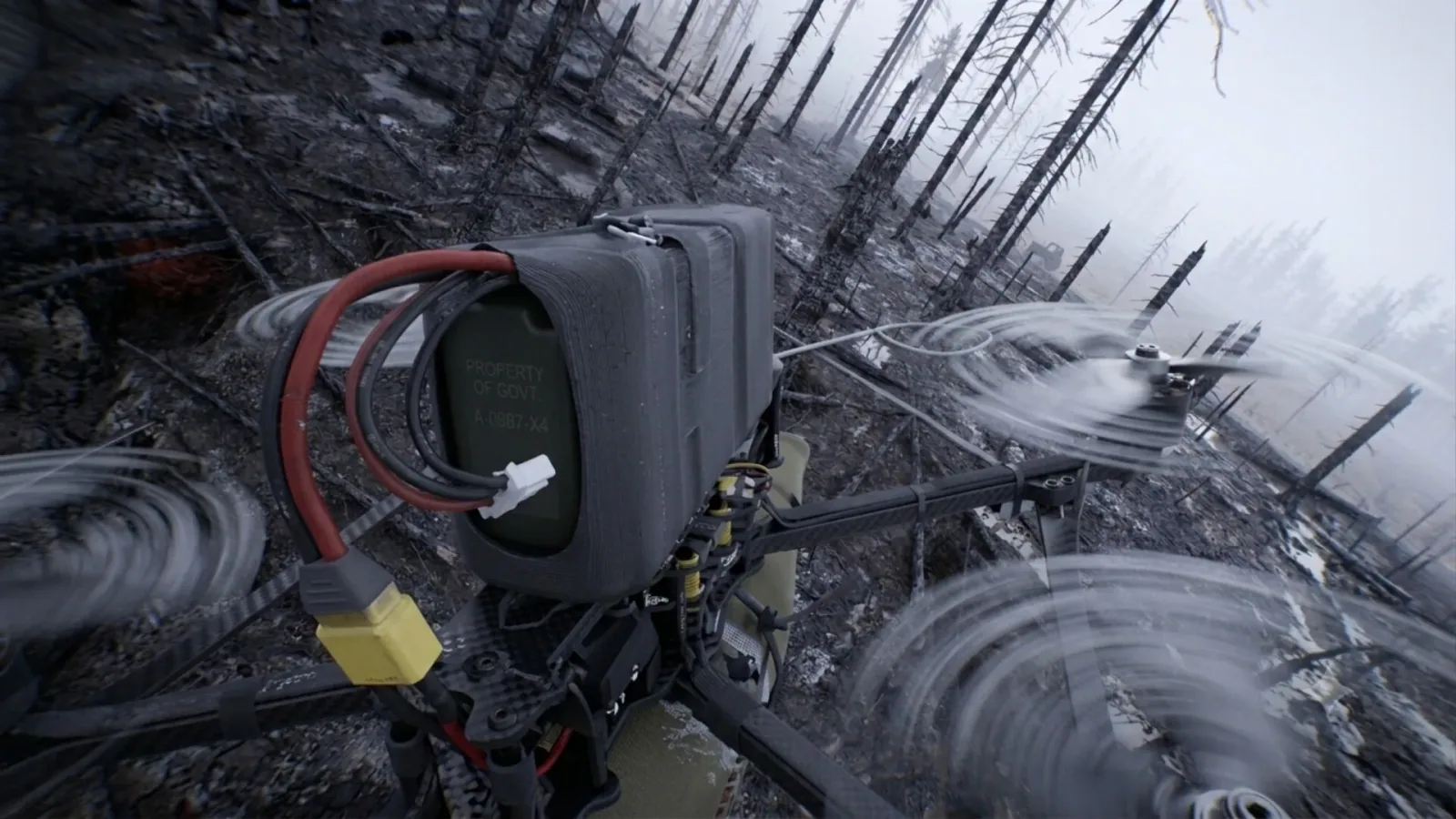
The FPV drone is not presented as a bonus camera floating around the map. Reissad Studio says Bodycam models more realistic flight behavior and offers both a Stabilized mode and full-manual Acro mode. The current Steam description also lists rates, throttle curves, and flight profiles.
FPV pilots know why those words matter.
Acro mode does not level the aircraft for you. Rates change how the drone responds to stick movement. Throttle curves alter how power is delivered. A flight profile can turn the same virtual airframe from manageable to twitchy.
I have not flown Bodycam's implementation yet, so I cannot tell you whether it genuinely feels like one of my quads. But the vocabulary says the developers are looking at the controls pilots actually tune instead of adding a generic “drone goes forward” minigame.
That creates a fascinating crossover. An experienced FPS player might enter the drone view and suddenly feel like a beginner. An FPV pilot might enter the same moment and recognize muscle memory that has nothing to do with conventional shooter controls.
It is also where the realism gets uncomfortable. FPV is freedom, speed, exploration, and creative flying for me. In modern conflict, it is also surveillance and a weapon. Bodycam puts those truths uncomfortably close together.
That discomfort belongs in the conversation. We should not crop it out of the trailer.
The Tablet Makes the Interface Part of the Risk
A conventional loadout screen pauses the world mentally even if the game does not literally pause. It feels like administration happening outside the action.
Bodycam's in-world tactical tablet changes the psychology. If the menu is an object in your hands, then changing an optic or checking equipment is something your character is visibly doing. Information is no longer free. Attention is no longer invisible.
That sounds like a small interface flourish, but it fits the larger project: remove the comfortable layer between the player and the system. The HUD, weapon, drone, and loadout all belong to the same body.
Sound May Be the Part That Tricks Us the Most
The second Locked & Loaded devlog is devoted to gunshots and how sound changes with space. That matters because the eye can admire a screenshot, but sound is what tells the nervous system that something just happened nearby.
An indoor report should not feel like the same audio file with more reverb. Walls, openings, distance, obstruction, echoes, and outdoor space all change how the event reaches the player. When those cues line up with the body-camera image, the brain gets two matching stories at once.
That is when “photorealistic” stops being a visual adjective. It becomes an embodied reaction.
Could Bodycam Be a Training Tool?
Potentially—but we need to be precise about what “training” means.
A game can help someone practice observation, communication, spatial awareness, controller familiarity, FPV orientation, or decisions under simulated pressure. A shooting-range hub can teach the game's own systems. A credible Acro model might help a newcomer understand why manual FPV control is difficult before risking real hardware.
Those are legitimate forms of familiarization and practice.
Professional training is a much bigger claim. A validated system needs defined learning goals, accurate equipment and environments, measurable performance, useful feedback, instructor control, and evidence that the learned behavior transfers safely to the real task. Photorealism alone proves none of that.
There is also a danger in teaching the wrong lesson very convincingly. A beautiful simulation can still simplify consequences, reward unrealistic behavior, or omit the procedures that matter outside a match.
So my answer is not “this is definitely a military trainer.” My answer is that Bodycam is crossing into the kind of system-rich simulation where training uses become imaginable. That line is worth watching.
The Moment the Screen Stops Feeling Safe
There is a specific kind of fear here, and it is not simply fear of a videogame opponent.
It is the fear of realizing how cheaply reality can now be imitated.
The image has body-camera distortion. The hands make imperfect movements. The scope catches a bad reflection. The exposure blows out when someone crosses a doorway. The audio tells you the wall is six feet away. None of those tricks is enough by itself. Together, they become a convincing witness.
That phrase bothers me: a convincing witness.
We already live in a world where clips are cut out of context, synthetic images circulate as evidence, and cameras mediate an enormous part of what we believe. A game like Bodycam is not responsible for that problem. It is simply a spectacular demonstration of how many signals our brains accept as proof.
This is the Matrix-is-real moment for me. Not a cable in the skull. Not green code falling down a wall. A normal monitor showing a normal-looking camera feed that persuades me before I remember to question it.
So, Yes, My Brain Jumped to Body Armor and Better Surveillance
Half joking and half not, my reaction was: maybe I need to research body armor and better surveillance.
That thought says more about the emotional power of the footage than it does about my actual shopping list. A frighteningly realistic game can activate the same instincts as a frightening news clip, even though I am sitting safely at a desk.
If I turn that reaction into useful real-world research, I want it to stay grounded.
For body armor, the starting point is not a dramatic marketplace listing or “tactical” branding. It is the National Institute of Justice's current ballistic-resistance standard and its list of models actually tested and found compliant. Armor is specialized protective equipment with specific limits; a videogame is not a reason to make an impulsive purchase.
For surveillance, “better” should not mean cameras everywhere forever. I mean practical lighting, cameras positioned to capture usable evidence, secured accounts with multifactor authentication, sensible retention, and an honest answer to who can view, share, or hand over the footage. I am pro-camera when it helps document what actually happened. I am not pro-unaccountable access.
The boring governance questions matter as much as resolution: who controls the recording, how long it survives, whether access is logged, who it is shared with, and what happens when someone misuses it.
That will make a worthwhile follow-up article. It should be about evidence and protection, not fear-driven tactical cosplay.
My Three-Question Reality Test
When a game looks this convincing, I think it helps to ask three separate questions:
- Does it look real? Are the lighting, materials, camera behavior, optics, and animation convincing in a one-second glance?
- Does it behave real? Do stress, physics, sound, controls, and equipment interact believably when the player changes the situation?
- Does it teach real? Are there clear learning objectives, accurate feedback, measured outcomes, and evidence that skills transfer beyond the game?
Bodycam already makes a powerful case for the first question. Locked & Loaded is an ambitious attempt at the second. The third remains open, and that is exactly where “amazing game technology” and “actual training tool” have to stop being treated as synonyms.
More Official Footage and Gameplay to Explore
Here is the deepest watch list I could assemble without pretending every upload shows the current build. The first group comes from the official Bodycam channel; older videos may represent much earlier versions of the game.
Current Locked & Loaded Devlogs
- Animation & Loadout Devlog 1 of 4 — redesigned animation, reloads, customization, and the tactical tablet
- We Reinvented Gunshots in Video Games—Devlog 2 of 4 — the new sound system
- The Most Realistic Trench Warfare Ever Made—Devlog 3 of 4 — environment and trench-warfare development footage
- Gamology: Bodycam Just Became More Realistic Than Ever — the video that started this article for me
Official Trailers, Recaps, and Feature Videos
- What's Next for Bodycam? Loadouts, Zombies, New Content!—Devlog 1
- Bodycam—Major Update & Zombies Official Trailer
- Bodycam—Zombie Mode Trailer
- Bodycam Zombie—Asylum Lore Cinematic
- Bodycam Zombie Teaser
- Bodycam—Early Access Release Date Announcement
- Bodycam—First Official Playtest Recap
- Bodycam—Early Access Stress-Test Recap
- Bodycam—Community Compilation
- XQC Bodycam Compilation
- POV: We Add VOIP in Bodycam
Independent Gameplay and Graphics Showcases
- jackfrags: early Bodycam gameplay — useful as a look at an older playable build, not the September 2026 update
- Bodycam: Ultra Realistic Graphics & Combat Showcase in 4K — an independent RTX 5090 gameplay showcase published in December 2025
- IGN: Bodycam Official Trailer — an earlier trailer upload
That is 18 video links in one place. Some are trailers, some are development diaries, some are community or independent gameplay, and some are older builds. Watch them as a visual timeline, not as 18 promises about exactly what v0.8 will be on release day.
Ready Player One Meets the Matrix
We are not plugging a cable into the back of our heads, and Bodycam is not the OASIS. It is still a PC game on a monitor.
But those stories were never only about hardware. They were about the point where a simulated world becomes convincing enough to change our behavior, attention, and sense of what counts as an experience.
Bodycam attacks that boundary from the bottom up. It does not need a magical headset if the body, camera, optics, sound, drone, stress, and interface systems can persuade your brain that the ordinary rectangle in front of you is a place.
That is the Ready Player One part: increasingly deep worlds made from connected systems.
The Matrix part is the scarier question: when the image becomes this believable, how quickly do we stop interrogating it?
Final Thought
I am excited about Bodycam because it looks like a team asking harder questions than “Can we add more guns?”
What does stress look like in a pair of hands? What does a camera mounted to a body do to the language of first-person games? Can a scope feel like glass? Can an FPV pilot bring real stick knowledge into a tactical shooter? Can a sound system make a room feel solid? How much realism makes a game more immersive—and when does it make the experience genuinely unsettling?
Locked & Loaded may not answer all of those questions perfectly. It is Early Access, the update still needs to be played, and development footage is not the final product.
But the direction is obvious. Games are not only getting prettier. They are getting better at modeling the tiny systems our brains use to decide what feels real.
Ready Player One is getting closer. The Matrix may not arrive with a dramatic green-code screen. It may arrive one imperfect reload, one piece of scope glass, one echo, and one perfectly tuned FPV rate at a time.
Sources
- Bodycam on Steam
- Official Bodycam YouTube channel
- Gamology: Bodycam Just Became More Realistic Than Ever
- Bodycam Devlog Part 1: Animation & Loadout
- National Institute of Justice: Ballistic Resistance of Body Armor, NIJ Standard 0101.07
- CISA: Turn On Multifactor Authentication