Trust & transparency
Evidence & disclosures
Not yet classified. This article has not yet been classified under the current editorial standard. It may predate the policy; do not assume a product was owned, tested, supplied, or independently verified unless the article says so.
Linked references: 2 explicit sources in the article.
Biscuits is a push-your-luck dice game project built as a playful browser-based experiment. The current preview already has the shape of a complete game table: rounds, scoring, roll controls, difficulty modes, camera presets, social hooks, achievements, leaderboards, and a waiting lobby for future multiplayer flow.
Project Links
- Preview: https://biscuits-488600.web.app
- Repository: https://github.com/ColinMichaels/virtual-bitches
What Biscuits Is
At its core, Biscuits is about quick decisions, risk, and momentum. The player rolls, evaluates the board, and decides whether to keep pushing or sit down before the run turns against them. That simple loop gives the game its tension: every roll feels like an opportunity, but also a mistake waiting to happen.
The goal is not just to build another dice roller. The goal is to create a small but polished game system that can grow into a social arcade experience with table seats, replays, achievements, profiles, leaderboards, and between-round mini games.
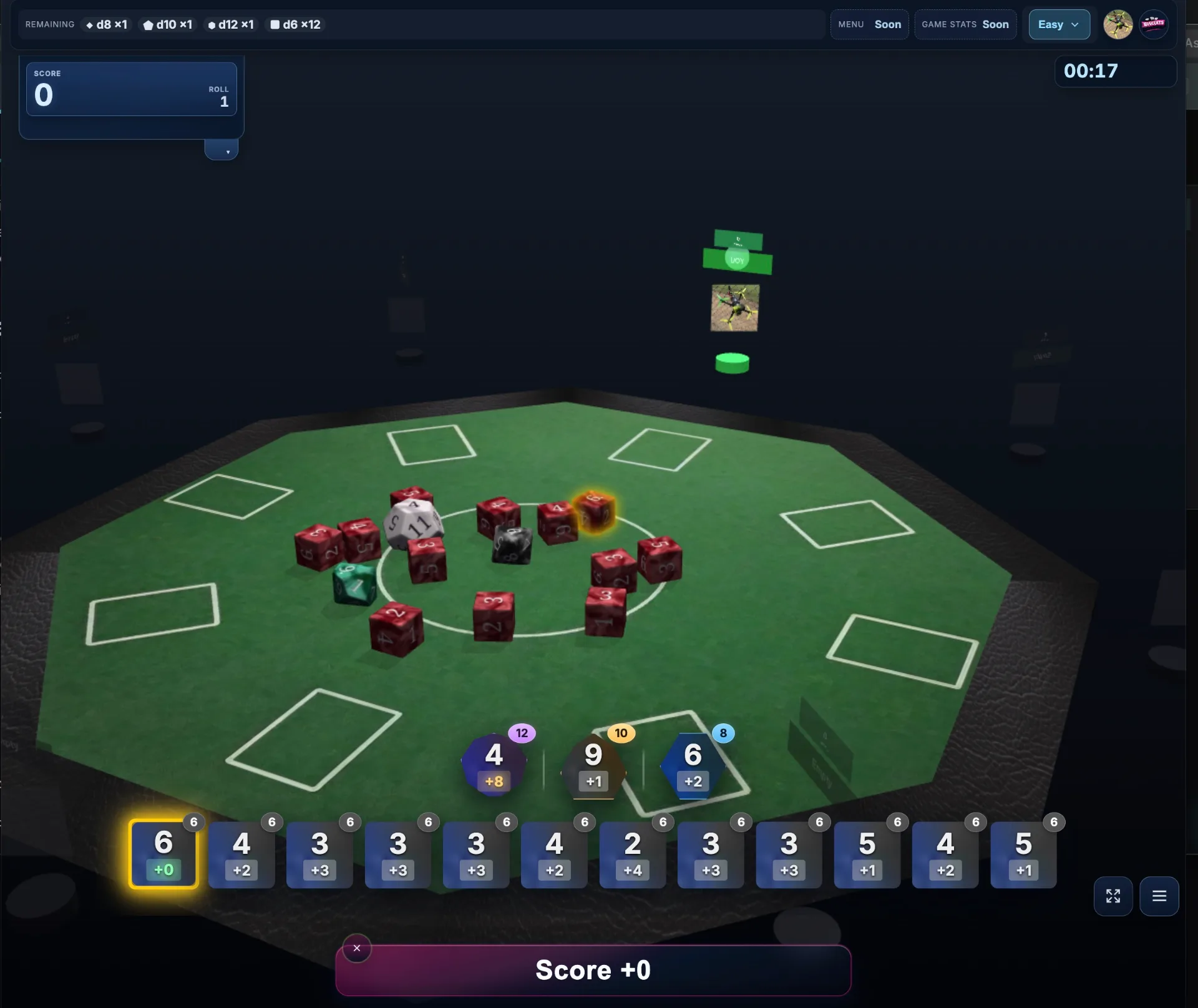
What the Preview Shows So Far
- A round-based game flow.
- Roll and sit-down controls.
- Difficulty modes for easy hints, normal rules, and hard no-assist play.
- Score tracking with lower-score-is-better logic.
- Camera presets including default, top, side, and front views.
- A full-screen play mode.
- Social placeholders for invite copying, room chat, profiles, and leaderboards.
- Achievement and game-complete screens.
- Seed copying and downloading for replayable runs.
- A waiting lobby scaffold for solo warmups, queue challenges, and arcade minis.
Why I Wanted to Build It
I like projects that sit somewhere between software engineering, creative design, and games. Biscuits gives me a focused playground for all three. It is small enough to iterate quickly, but complex enough to explore real architecture decisions around state, UI flow, game logic, multiplayer readiness, replayability, and polish.
The Engineering Angle
From an application-development perspective, the interesting part is turning a simple dice mechanic into a maintainable product. The game needs predictable state, clean transitions, difficulty-aware assists, replayable seeds, reusable UI panels, and room for future multiplayer without making the current solo experience brittle.
- Game state should be deterministic and replayable.
- UI panels should be modular enough to support both solo and multiplayer modes.
- Difficulty settings should change assistance without fragmenting the core rules.
- Achievements and leaderboards should be data-driven.
- The waiting lobby should become a real part of the experience, not just a loading screen.
The Creative Direction
The name, tone, and interface all point toward something lighthearted and a little chaotic. I want Biscuits to feel like a digital table game with personality: quick to understand, funny enough to share, and polished enough that people want to come back for another run.
The best small games are simple to start, dangerous to underestimate, and hard to stop replaying.
Project note
What Comes Next
The next phase is about turning the scaffolded ideas into real features. The preview already shows where the game wants to go: social rooms, profile identity, leaderboards, achievements, seed sharing, and mini games that keep players engaged between rounds.
- Tighten the core scoring and round loop.
- Improve the onboarding and rule explanation.
- Polish the game-complete flow.
- Build out achievements and persistent stats.
- Expand leaderboard support.
- Make seed sharing a real replay feature.
- Prototype the waiting-lobby mini games.
- Explore multiplayer room behavior when the core loop is stable.
The Bigger Picture
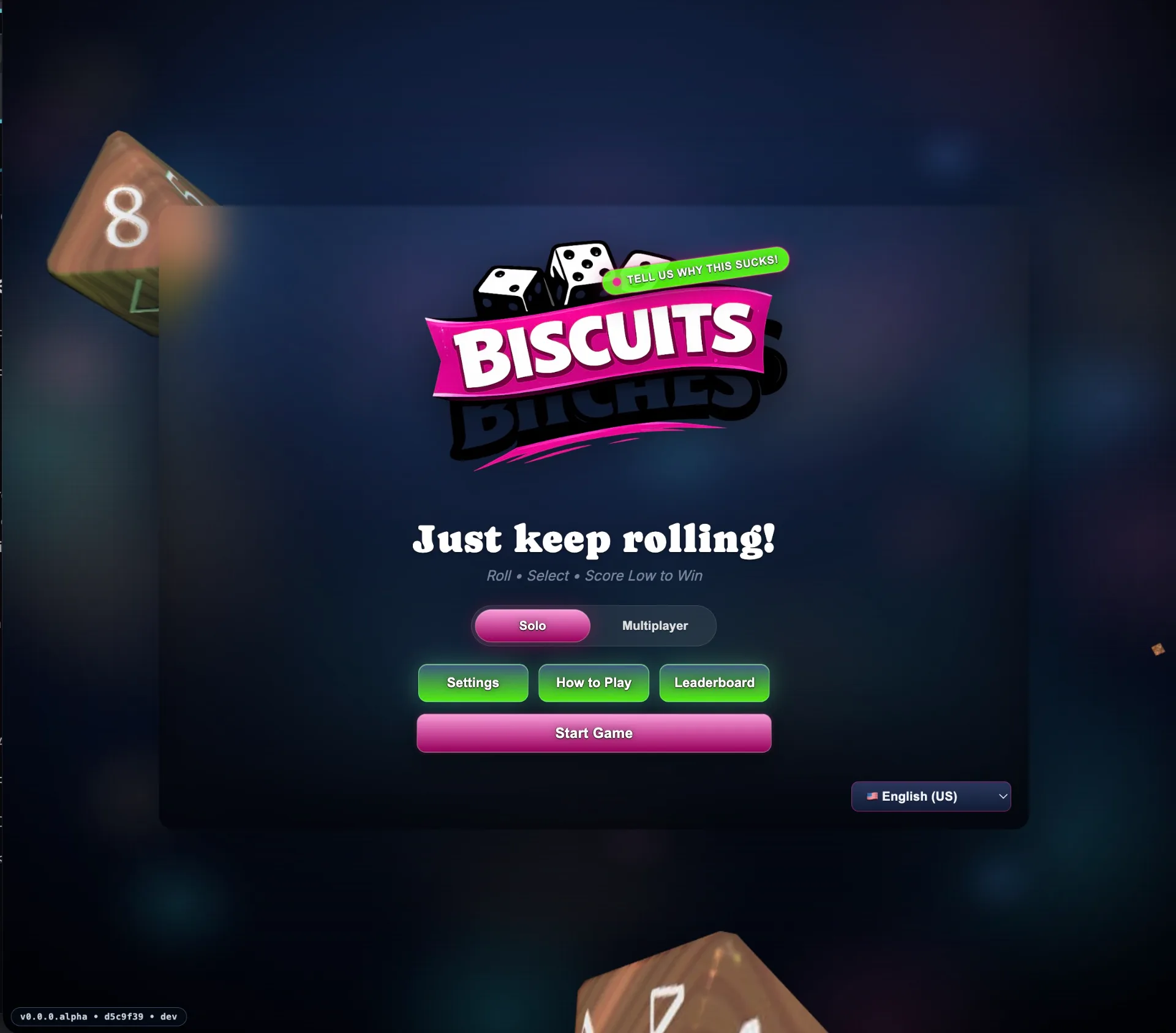
Biscuits is one of those projects that starts as a small game and quickly becomes a test bed for bigger ideas. It can help validate patterns for interactive apps, game-state architecture, real-time social features, and creative UI systems that could eventually feed into larger experiments on ColinMichaels.com.
For now, it is a fun, strange, very Colin-style experiment: a push-your-luck dice game with enough structure to become something real and enough weirdness to keep it interesting.