Trust & transparency
Evidence & disclosures
Evidence basis: Researched analysis. The article compares public evidence and does not claim hands-on testing unless a section says otherwise.
Based on National Weather Service, CDC, and NHTSA heat guidance; it is a general safety checklist, not individualized medical advice.
Sources checked: Aug 20, 2026
Linked references: 6 explicit sources in the article.
Before You Head Outside: A Simple Summer Heat Safety Plan
Summer heat has a way of becoming background noise. The forecast says it will feel miserable outside, the car has been baking in the sun, and we still treat the grocery run, yard work, practice, or afternoon walk like it is just another item on the schedule.
I do not think the answer is to spend the summer hiding indoors. I do think we should stop letting routine make the safety decisions for us.
I went through the National Weather Service heat guidance and built the kind of checklist I would actually send to family: check the alert, change the timing, know where the cool stop is, check on the right people, and make the parked-car rule automatic.
I am not writing this after a dramatic heat emergency, and I am not going to invent one to make the article sound more important. This is a practical, normal-person translation of guidance from the National Weather Service, the Centers for Disease Control and Prevention, and the National Highway Traffic Safety Administration.
The goal is simple: make the plan before the hottest part of the day starts making decisions for you.
TLDR
- Check the local forecast and heat alert before an outing, then move, shorten, or cancel the plan when conditions call for it.
- Pick a cooler time, a shaded or air-conditioned stop, and a clear point when everybody agrees to head home.
- Make a short list of children, older adults, pregnant people, people with chronic conditions or disabilities, outdoor workers, and anyone without reliable cooling who may need a check-in.
- Never leave a child, disabled person, or pet in a parked vehicle. Check the whole car, lock it when parked, and keep keys away from children.
- Put water and cooling breaks on the schedule instead of trusting that everybody will remember once they are hot and busy.
- Confusion, slurred speech, fainting, or loss of consciousness in the heat can signal a life-threatening emergency. Call 911.
Heat Safety Gets Easier When It Becomes a Plan
Official heat pages contain plenty of good information. The problem is that nobody wants to study a government website while standing in a parking lot with a melting bag of groceries.
The useful question is not, "Do I understand everything about extreme heat?"
It is, "What am I changing today because of the heat?"
That might mean moving the walk to the morning, doing the errand after sunset, choosing the library instead of the playground, adding shade breaks to a job, or calling an older relative before the afternoon gets rough.
Preparedness should change a decision. Otherwise it is just reading.
1. Read the Alert Like an Instruction
The National Weather Service uses different heat alerts because the expected conditions and the action you should take are different.
- Extreme Heat Watch: Be prepared. Dangerous heat may develop, so identify a cooling option and be ready to suspend major outdoor plans.
- Heat Advisory: Take action. Consider postponing or rescheduling outdoor activity during the heat of the day, drink water, use shade breaks, and spend the hottest hours somewhere cool.
- Extreme Heat Warning: Take action now. Avoid outdoor activity during the heat of the day when possible, use air conditioning or another cooled space, and check on family and neighbors.
I would turn that into a thirty-second pre-outing check:
- What is the local forecast?
- Is there a heat advisory, watch, or warning?
- What time will we be outside?
- Where is the closest reliable place to cool down?
- What is Plan B if the heat feels worse than expected?
That is not overreacting. It is the same kind of quick check most of us already make for rain. Heat deserves a place in the plan too.
2. Plan the Route, Not Just the Bag
Water bottles and sunscreen matter, but they do not fix a bad schedule.
The National Weather Service recommends slowing down and moving strenuous activity to the coolest part of the day. It also recommends lightweight, loose-fitting, light-colored clothing and reducing direct sun exposure.
For a family outing, I would decide three things before leaving:
- The cooler window: When can we go that avoids the worst part of the day?
- The cool stop: What shaded or air-conditioned place can we use if somebody needs a break?
- The exit signal: What will make us stop instead of saying, "We are almost done" for another forty minutes?
The exit signal could be dizziness, a headache, unusual weakness, anyone feeling unwell, or simply reaching the break time you agreed on.
The plan is allowed to end early. An unfinished errand is cheaper than an emergency-room visit.
3. Make a People List Before You Make a Shopping List
The National Weather Service and CDC both emphasize that anyone can be affected by heat, but some people face more risk. That includes infants and children, adults over 65, pregnant people, people with disabilities or chronic health conditions, people without reliable cooling, people who are socially isolated, outdoor workers, and people doing strenuous activity.
Some medications can also affect heat tolerance or be damaged by direct heat. That is a reason to ask a pharmacist or care team about a personal plan, not a reason to change medication on your own.
Start with one simple step: write down the people in your life who may be most vulnerable to heat.
Then make the check-in specific.
Instead of texting, "You good?" try:
- Is the air conditioning working?
- Do you have water and something easy to eat?
- Are you planning to go outside this afternoon?
- Do you need a ride to a cooler place?
- Who will check again this evening?
"Let me know if you need anything" is kind. "I will call at 2:00, and I can pick you up if the house gets too hot" is a plan.
4. Make the Parked-Car Rule Automatic
This is the part that should never depend on memory alone.
The National Highway Traffic Safety Administration says more than 1,000 children have died after being left or becoming trapped in hot vehicles over the past 25 years. In 2025, 31 children died of heatstroke in vehicles.
NHTSA's message is simple: Stop. Look. Lock.
- Never leave a child in a vehicle unattended, even briefly and even with the windows down.
- Check the entire vehicle, especially the back seat, before locking it.
- Put a purse, work bag, or another item you will need in the back seat as a physical reminder.
- Ask the childcare provider to call if a child does not arrive as expected.
- Lock parked vehicles, including at home, and keep keys and fobs out of children's reach.
- Teach children that a vehicle is not a play area.
This is not about judging a tired or distracted parent. NHTSA notes that these tragedies can happen to anyone. The point of a routine is to protect the family on the day when sleep, stress, or a changed schedule makes memory less reliable.
If you see a child alone in a locked vehicle, call 911 immediately.
5. Put Water and Cooling Breaks on the Clock
"We brought water" is not the same as "we stopped and drank it."
The National Weather Service recommends drinking water even before thirst becomes the reminder. People working outdoors should drink often, cool down in the shade during breaks, and gradually build back up to a full workload if they are new to the heat or have been away for a week or more.
For an outing, yard project, practice, or outdoor job, set the break times before starting. A phone alarm is not glamorous, but neither is trying to prove toughness to a lawn.
During each break:
- Move into shade or air conditioning.
- Drink water.
- Check how everybody is acting and feeling.
- Decide whether the plan should continue, shrink, or end.
There is no one-size-fits-all amount of water for every person and every condition. People on fluid-restricted diets or managing fluid retention should talk with their clinician before increasing fluids. The schedule is a reminder to follow the plan that fits the person.
6. Know When the Checklist Becomes a 911 Call
Heat exhaustion can include heavy sweating, weakness, cool or clammy skin, dizziness, headache, nausea, vomiting, muscle cramps, or fainting. The National Weather Service advises moving the person to a cooler environment and seeking medical attention if symptoms worsen, vomiting occurs, or symptoms last longer than an hour.
Heat stroke is a severe medical emergency. Warning signs can include confusion, slurred speech, fainting, loss of consciousness, a body temperature above 103 degrees, hot red skin that may be dry or damp, and a rapid, strong pulse.
If heat stroke is possible, call 911 immediately. Move the person to a cooler place and follow the dispatcher's instructions. The National Weather Service says not to give fluids to someone with suspected heat stroke.
I am not a doctor, and this article is not medical advice. The point of including these signs is not to help anyone diagnose a stranger from a blog post. It is to make the line clear: confusion, slurred speech, fainting, or loss of consciousness in the heat is not a "walk it off" situation.
The Five-Minute Family Heat Plan
Copy this into a phone note and fill it out before the next hot-day outing:
- Today's forecast and heat alert:
- Coolest time for the outing:
- Closest shaded or air-conditioned stop:
- Water and break times:
- People I will check on:
- Who will check the back seat:
- Plan B if conditions get worse:
- Next family check-in time:
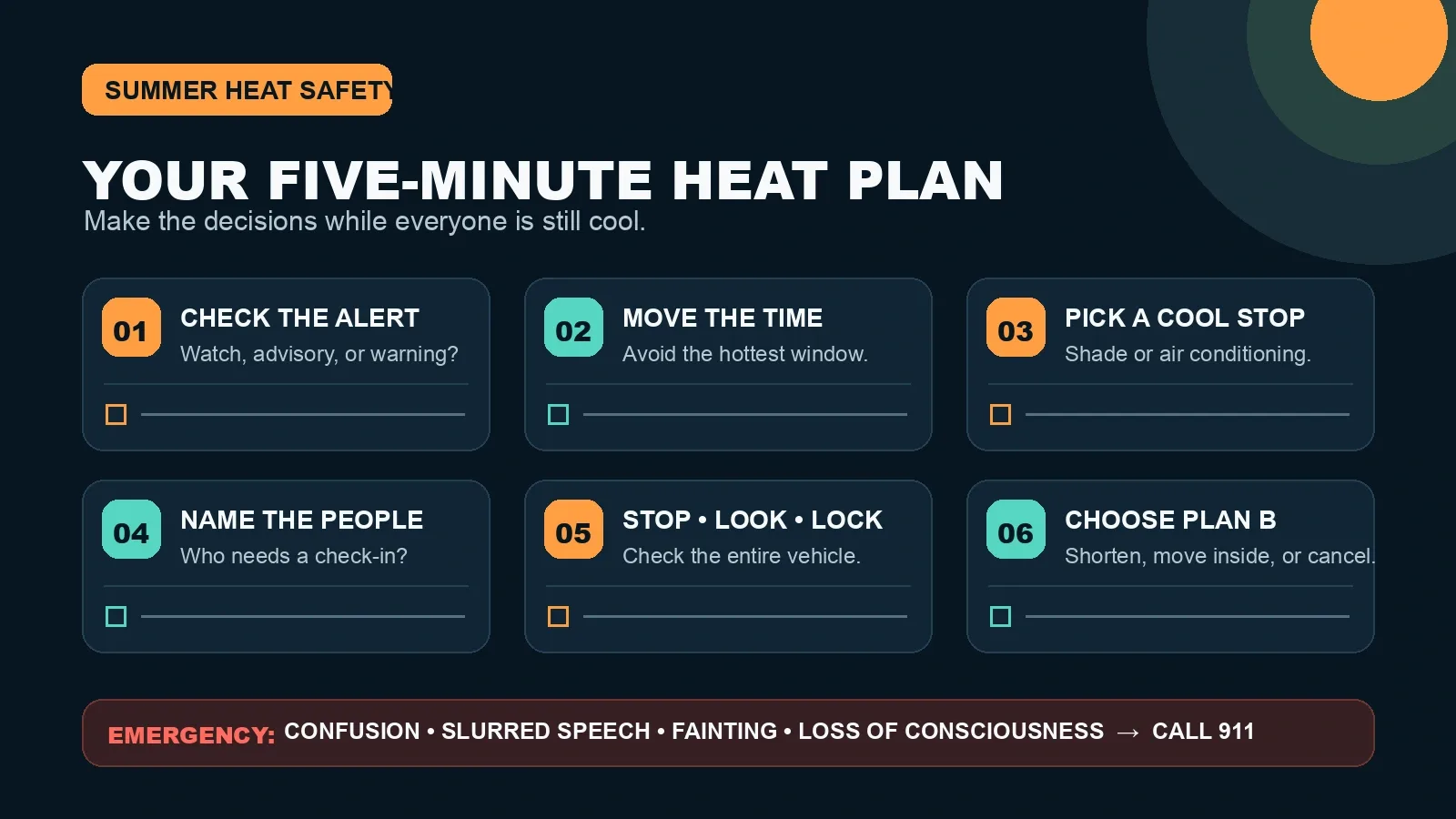
The useful part is not the note itself. It is forcing the decisions to happen before everybody is hot, rushed, and trying to improvise.
Try a Ten-Minute Family Heat Check Today
You do not need to buy anything for this one.
- Pick three people who may need a heat check-in.
- Decide who will contact each person and when.
- Choose the family's automatic back-seat reminder.
- Name one reliable cooled place you could use if home cooling failed.
- Move one outdoor task or outing to a safer time.
- Save the heat plan in the family group chat.
That is a small amount of work for a plan that can protect children, older relatives, outdoor workers, and the person who always says they are fine because they do not want to be a bother.
Final Thought
Heat safety does not need to sound dramatic to matter.
Most of the useful steps are almost boring: check the alert, change the time, bring water, take the break, call the relative, look in the back seat, and go home before the outing turns into an endurance contest.
That is exactly why they work. They are ordinary decisions we can make early.
Do not wait until the parking lot feels like an oven to start negotiating with the weather. Make the plan while you are still inside.
Official Sources
- National Weather Service: Heat Safety Tips and Resources, accessed July 17, 2026
- National Weather Service: Understanding Heat Alerts, accessed July 17, 2026
- National Weather Service: During a Heat Wave, accessed July 17, 2026
- National Weather Service: Heat Cramps, Exhaustion, and Stroke, accessed July 17, 2026
- CDC: Heat and Health, accessed July 17, 2026
- NHTSA: Child Heatstroke Prevention, accessed July 17, 2026
This article is general preparedness information, not medical advice. Follow local alerts and emergency instructions, and discuss personal medical risks, medications, or fluid restrictions with your own care team.