Trust & transparency
Evidence & disclosures
Not yet classified. This article has not yet been classified under the current editorial standard. It may predate the policy; do not assume a product was owned, tested, supplied, or independently verified unless the article says so.
Linked references: 4 explicit sources in the article.
I can see the appeal of a screwdriver that tells me which bit to use. A loose cabinet knob is a small problem. Standing in front of it with six almost-right bits can make it feel bigger than it is.
Arrowmax’s AI electric screwdriver pitch speaks to that hesitation: identify the screw, point out the matching bit, and control the turning force. My question is whether that guidance would help someone finish one ordinary repair with less confusion than a manual screwdriver and a patient five minutes.
I haven’t tested this tool. The three jobs below are the checks I would want to see, not results from a review bench. A clever demonstration gets my attention. A beginner choosing the right bit, keeping the screw intact, and knowing when to stop would earn my confidence.
What Arrowmax is promising
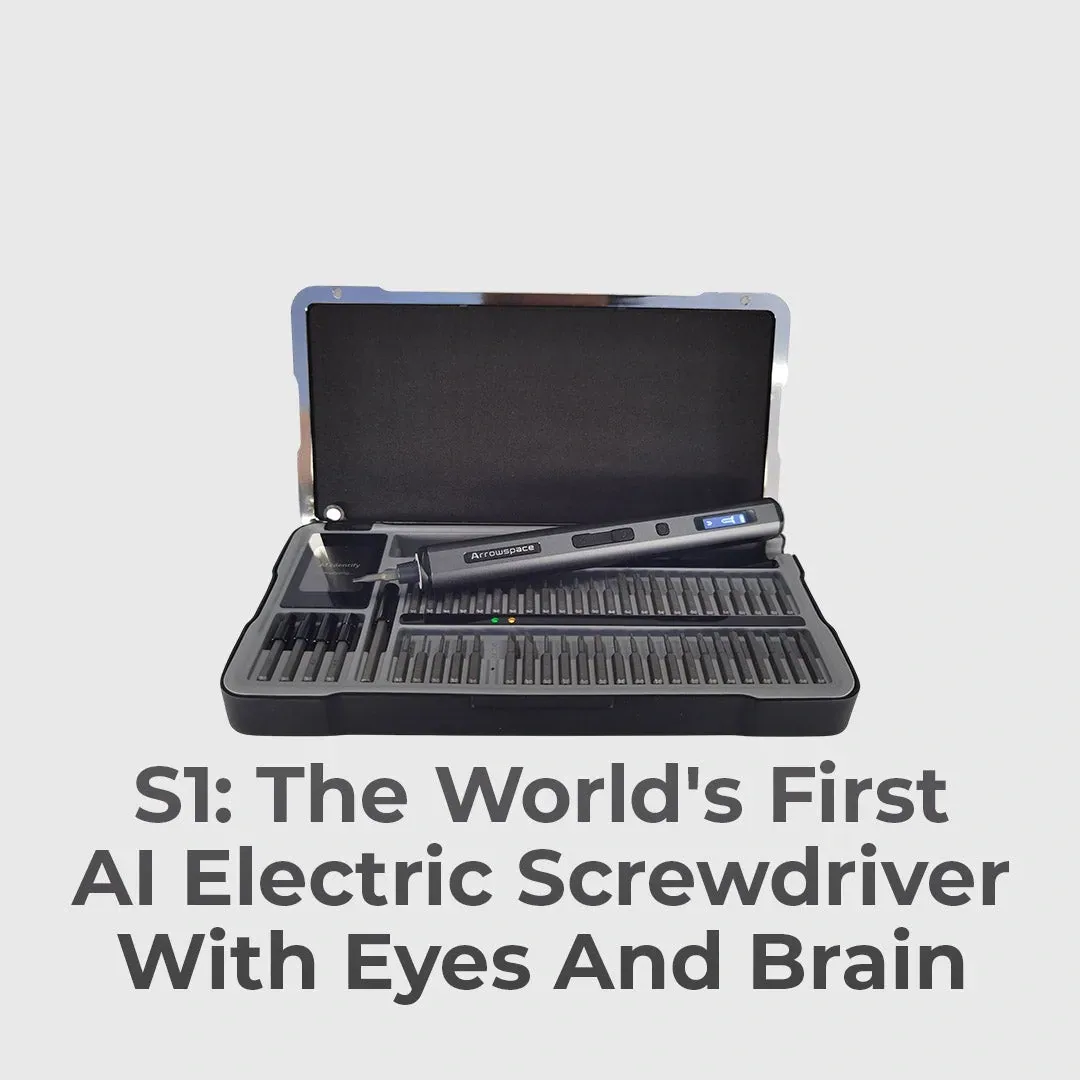
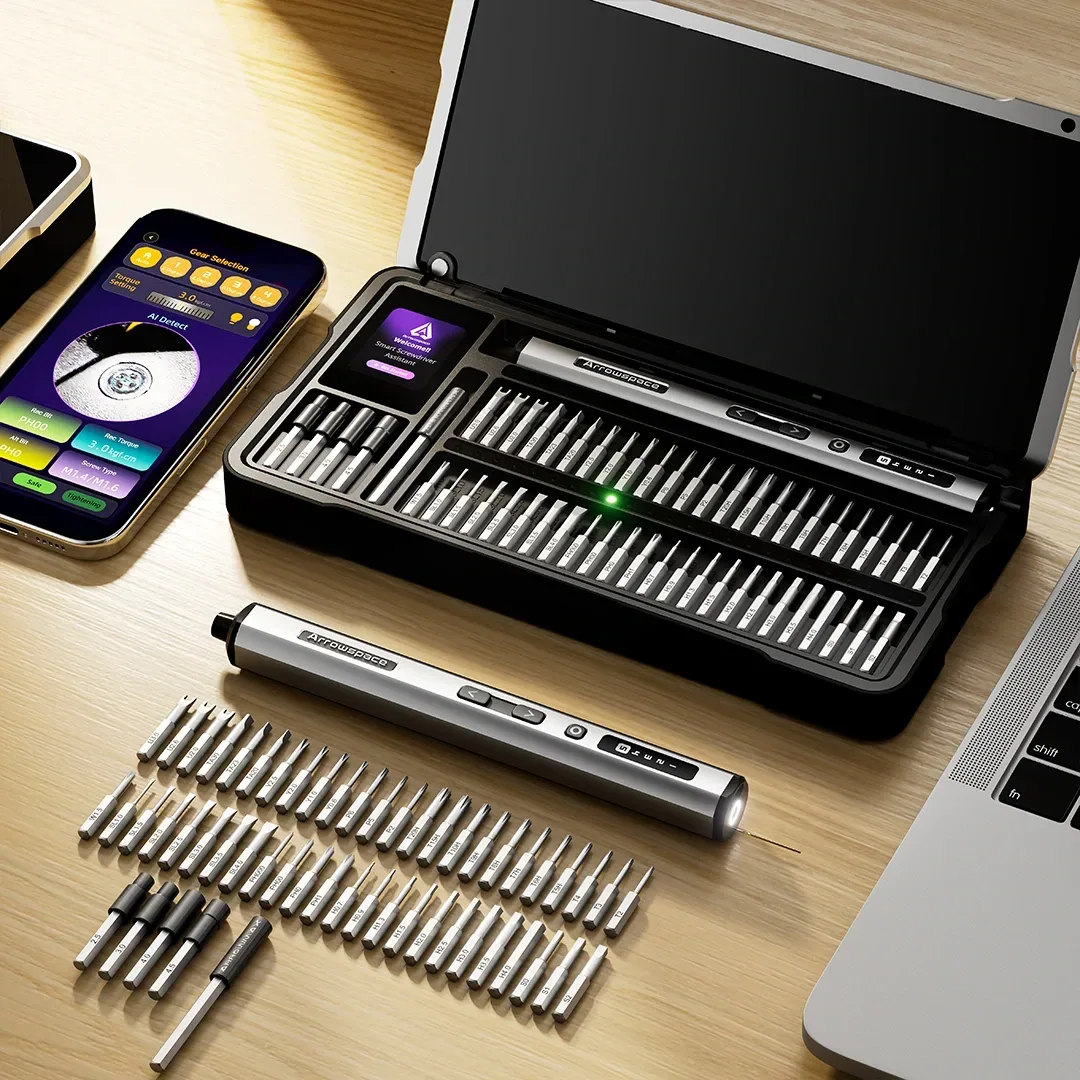
The creator’s Kickstarter campaign describes a screwdriver that recognizes a screw, illuminates a matching bit, and limits torque. Torque is the twisting force applied to the screw. These are creator claims, not capabilities I have independently verified.
The campaign dates supplied with this story are October 20–December 4, 2026; a campaign-tracking listing also shows that window. I checked sources on October 26. The full Kickstarter page was inaccessible through my research tool, so I could not recheck its detailed specifications, reward terms, or updates. The supplied October 25 campaign notes anchor the feature summary here.
I’m leaving out a price, delivery promise, recognition accuracy, and battery-life figure because I don’t have verified current evidence for them. I’m also leaving “world’s first” where it belongs: in the campaign’s marketing, rather than treating it as an established fact.
The part that could actually be useful
A motor can save turning. Guidance could save guessing. Those are different benefits.
For someone who already recognizes screw heads, a light pointing at a bit might add little. For someone who avoids the toolbox because the bits all look similar, that same light could remove a real obstacle. The useful comparison is how much uncertainty disappears before the first turn.
There is another step the pitch needs to earn: knowing when the answer is uncertain. A worn screw, an awkward angle, or poor lighting would be useful things to include in a demonstration. I would want the tool to admit it cannot identify something confidently, with a clear way to stop and choose manually.
A screw-head image also doesn’t establish everything about the assembly behind it. As an editorial test, I would ask how the tool chooses a torque limit for different materials and how a beginner overrides or stops it. I would not treat a matching-bit light as permission to tighten anything in reach.
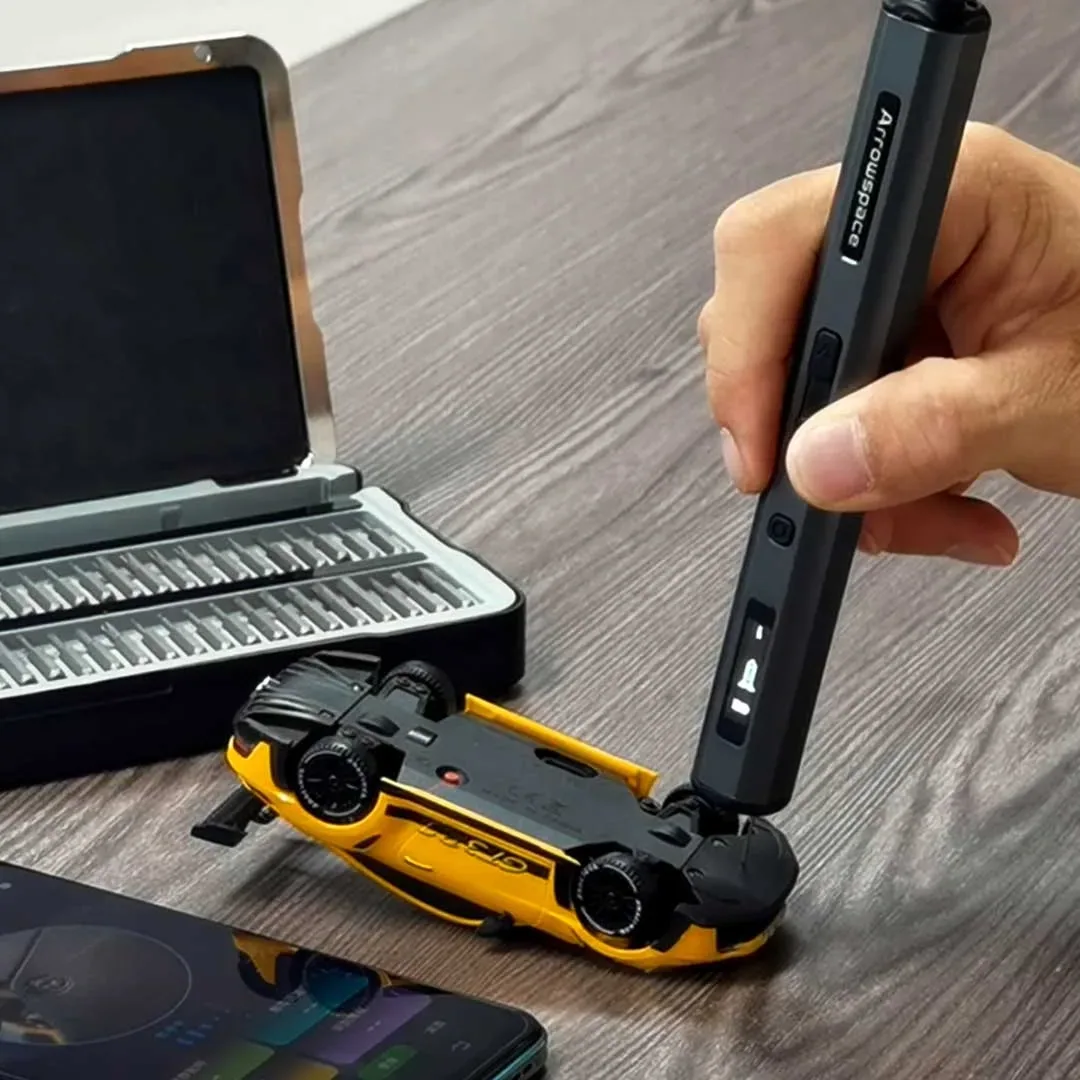
My three-job reality check — proposed, not performed
1. One loose cabinet knob
This is the ordinary job I would start with: a non-powered cabinet knob with a visible, accessible screw and no damaged parts. The comparison would use a correctly fitting manual driver and the proposed guided tool, on equivalent hardware.
I would count time spent identifying the bit, wrong selections, slips, and whether the knob ends up secure without damage. Setup and explanation count as part of the job. If finding and waking the smart tool takes longer than the repair, that matters too.
My prediction is that bit selection is where guidance has the best chance to help a nervous beginner. That is a hypothesis, not a result.
2. A loose pull on a small, empty drawer
This asks whether the tool helps when access is less convenient. The drawer and hardware would need to be stable, accessible, and clearly understood. I would avoid disturbing a loaded drawer or unfamiliar mechanism just to create a demonstration.
The question is whether a beginner can keep the driver aligned and recognize when the pull is secure. I would look for unnecessary extra turns, awkward handling, and whether the person can explain why they stopped. A fast motor would not earn extra credit for making a bad decision happen sooner.
3. A worn screw in a disposable practice block
I would reserve this one for a controlled demonstration on scrap material, not a reader’s furniture. The desired outcome may be refusal: a warning, an uncertain identification, or an instruction to stop.
A tool that confidently suggests a bit for a damaged screw needs more scrutiny than one that pauses. For this job, the success measure is avoiding further damage. Finishing the turn is optional.
Across all three, I would want ordinary beginners, the same instructions, comparable hardware, and unedited footage. The record should include mistakes and stop decisions. Until those comparisons exist, I can describe the idea, but I can’t award it a win.
A small “know when to stop” card
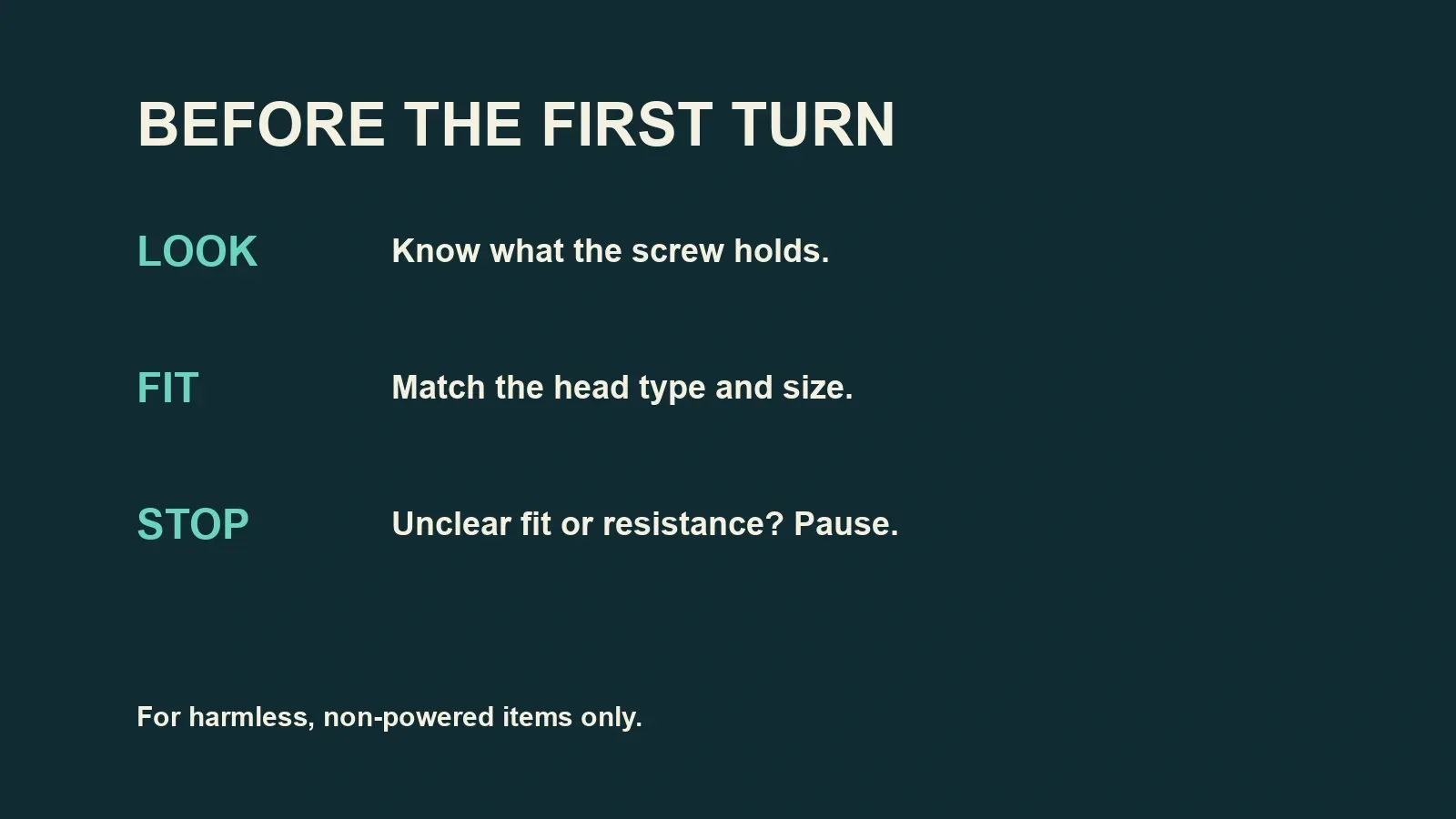
Before touching a screw, ask: Do I understand what this screw holds, and can I leave the item stable if I stop? If either answer is unclear, leave it alone.
Match both the head type and size. The Canadian Centre for Occupational Health and Safety specifically recommends both, and warns that Phillips and Pozidriv drivers can differ in fit. Keep the work stable and the driver aligned; don’t force a slipping tool.
For this beginner exercise, choose only a harmless, non-powered item. Keep powered equipment unplugged and outside the exercise; unplugging alone does not make an appliance safe to open. Stop for a worn head, uncertain fit, unusual resistance, a spinning screw, cracks, or an unfamiliar assembly.
Leave electrical, structural, gas-related, vehicle, appliance, medical-device, and safety-critical work to a qualified person. A recognition feature does not establish that a repair is suitable for you.
Ten small things that deserve a slow, manual first look
This is a look-first list, not ten instructions to tighten everything. Only consider an adjustment when the item is harmless, stable, clearly understood, and the correct tool fits.
- A loose cabinet knob.
- A loose pull on an empty drawer.
- An accessible screw on a freestanding desk organizer.
- A screw on a decorative box lid.
- A fitting on a lightweight, non-load-bearing craft project.
- A handle on an empty desktop storage box.
- A fastener on a tabletop photo stand, away from glass.
- An accessible screw on a non-powered hobby display base.
- Hardware on an empty, freestanding stationery tray.
- A practice screw in a secured scrap block.
Skip wall mounts, chairs, bed frames, overhead fittings, child-safety hardware, and anything whose failure could hurt someone. Even the small items above can have damage that tightening won’t fix.
What I would check before backing it
First I would want the unedited beginner comparison. Then I would ask about supported screw types and sizes, replacement bits, manual control, stopping behavior, battery replacement, repairability, and support.
I would also check the total pledge cost with shipping and taxes, estimated delivery, warranty coverage, and any stated return or refund terms. Those details remain unverified here and may change. Kickstarter’s own explanation makes clear that backing a developing project differs from shopping for a finished product. An estimated delivery date is not a tool already sitting in your drawer.
If you need to fix something this weekend, a crowdfunding campaign cannot answer that immediate need. If you enjoy backing unusual tools, the question is whether the possible benefit and the unresolved details make sense to you.
Final Thought
I like the idea of tools that make beginners feel less lost. I would like this one more after seeing it help a beginner choose correctly, avoid damage, and stop when the job gets uncertain.
For today, choose one harmless cabinet knob and take a photograph before doing anything. Look at the head, find a manual driver that fits properly, and stop if anything is unclear. You may finish the fix. You may decide to ask for help. Either outcome tells you more about what guidance you actually need than an AI label does.