Trust & transparency
Evidence & disclosures
Evidence basis: Researched analysis. The article compares public evidence and does not claim hands-on testing unless a section says otherwise.
Based on official app, league, technology, and player-rights sources; I did not test all six apps or independently audit their AI models.
Sources checked: Aug 20, 2026
Linked references: 13 explicit sources in the article.
6 AI Sports Apps You Can Try—and Where Sports Draw the Line
Your phone can already watch a practice, count what you did, and tell you what to try next. Some of the most interesting sports-AI tools are already available to ordinary athletes, and several cost nothing to test.
I started with one question: how is AI being used in lacrosse? That quickly became a six-sport countdown covering lacrosse, soccer, golf, baseball, tennis, and basketball—followed by what the NFL, NBA, and FIFA are doing with the same basic ideas.
I have not independently tested these apps for coaching accuracy, and free access can change. I am treating them as practical examples, not replacements for a real coach.
AI is already in sports. The useful question is: what helps, what stays fair, and who remains responsible when the computer gets it wrong?
TLDR
- The countdown runs from LaxCoach AI for lacrosse at #6 to HomeCourt for basketball at #1.
- Each featured product offers a free app, free activity, limited free analysis, free tier, or trial at the time of writing.
- Most sports AI does four understandable things: it watches, counts, compares, and suggests.
- Professional leagues use the same basic idea at a larger scale for workload, injury risk, player movement, statistics, officiating, and fan experiences.
- Sports rarely ban “AI” as one giant category. They control when electronics can be used, what data can be collected, and whether a system is approved for competition.
- Players generally welcome information that helps them train or recover. Their bigger concern is access to their own data, consent, explanation, and the ability to challenge a mistake.
- My rule is simple: use AI as a second opinion, not the final word on an athlete.
The Countdown: Six AI Sports Apps You Can Try
Free access and trials change, so I would always check the current offer before signing up. I would also read the privacy settings before uploading video of a child, a teammate, or an entire practice.
With that said, these tools make the idea much easier to understand than another futuristic presentation about “revolutionizing performance.”
#6: LaxCoach AI for lacrosse
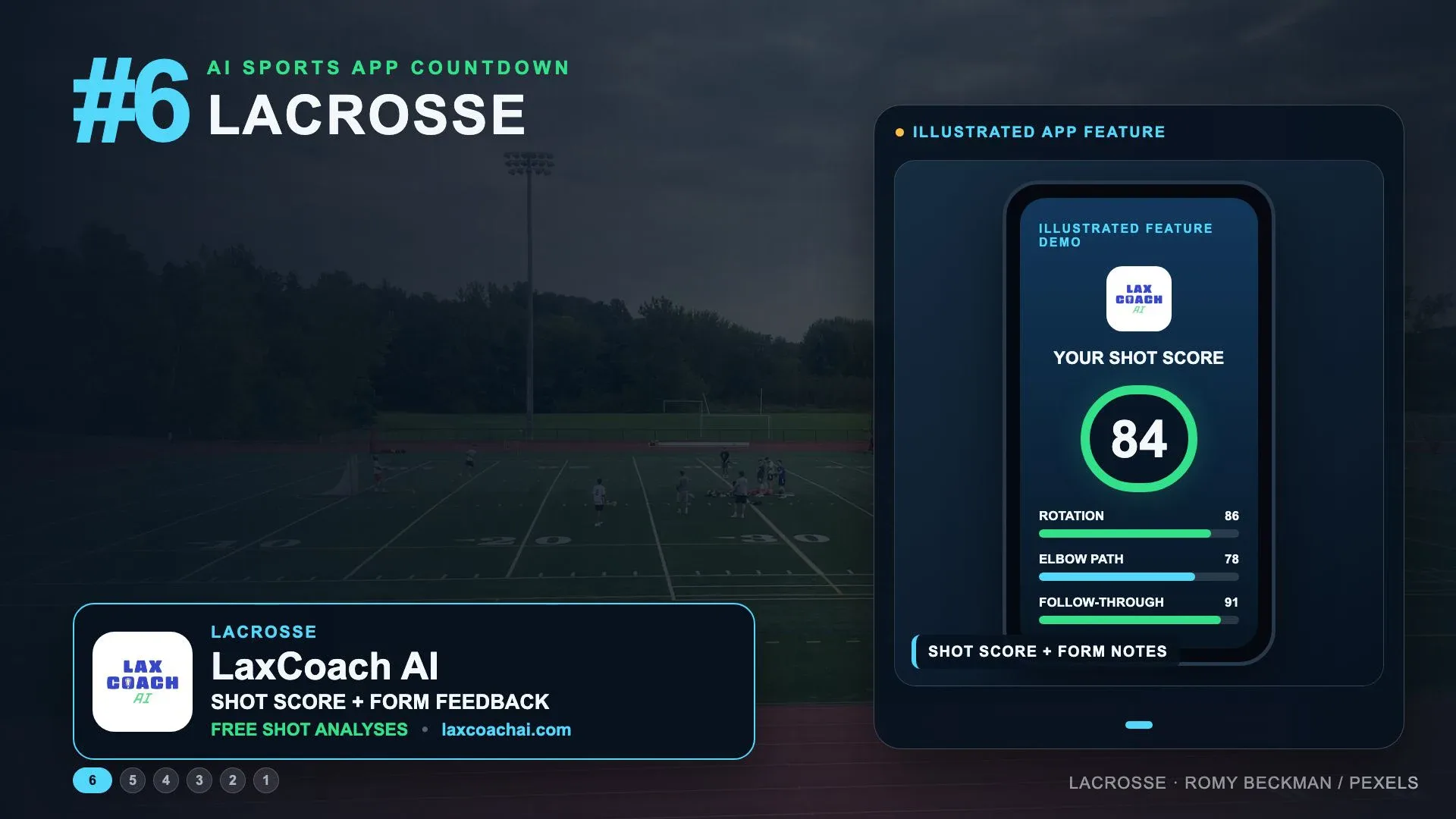
LaxCoach AI reviews a lacrosse shooting video and returns a shot score with basic form feedback. New users can try a limited number of full analyses before the free access becomes more restricted.
The app says it looks at areas such as rotation, elbow position, alignment, and follow-through. Those are vendor claims rather than an independent test of coaching accuracy, but it is a useful starting point because lacrosse was the sport that sent me down this rabbit hole.
#5: aiScout for soccer
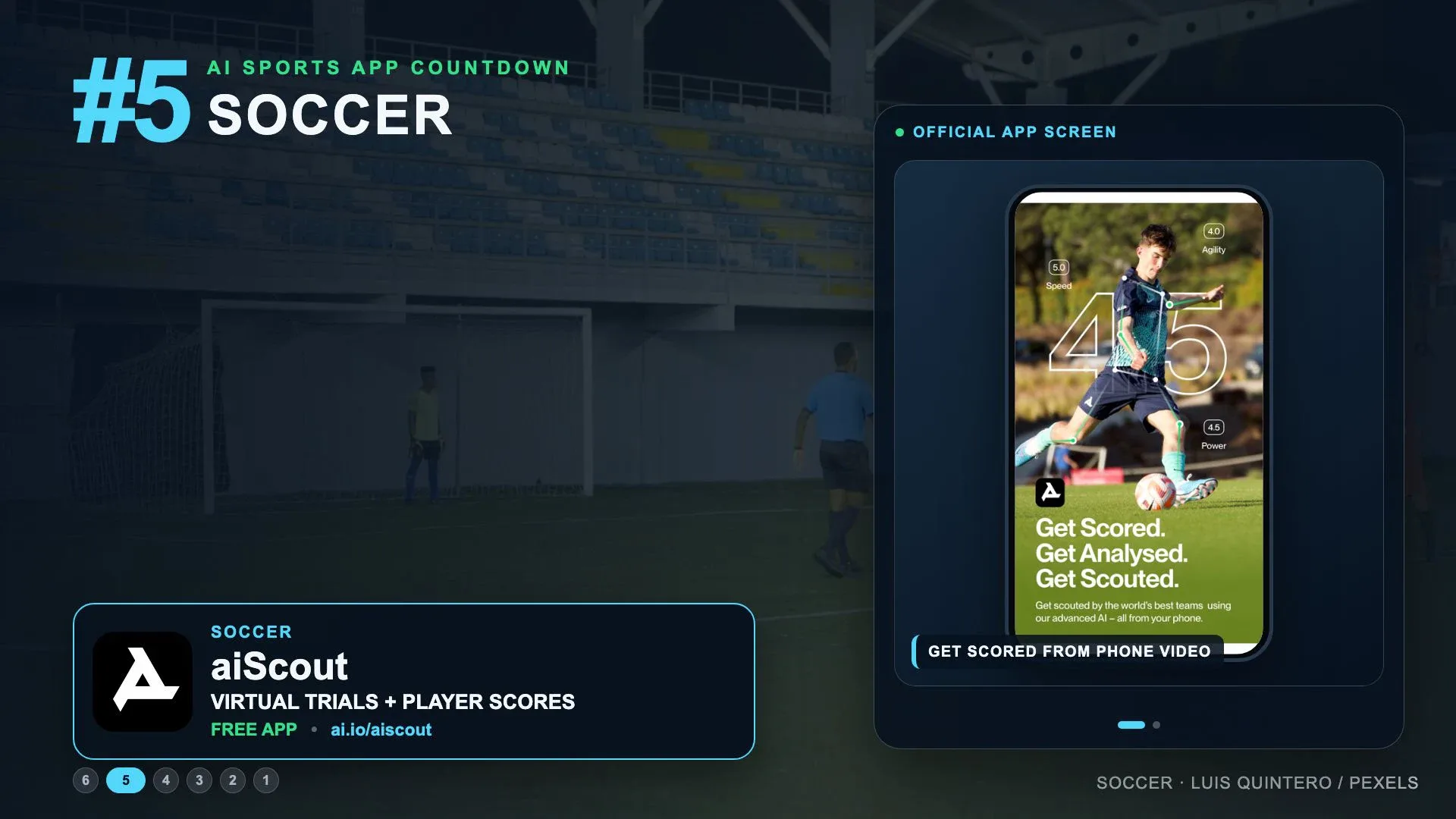
aiScout lets soccer players record standard drills, receive scores, build a profile, and enter virtual trials from a phone. The app is free.
This could widen the door for a talented player who does not live near a major academy or regularly play in front of traditional scouts. It also raises an important question: if an algorithm becomes the first gatekeeper, how does a player understand or challenge the score?
#4: GolfFix for golf
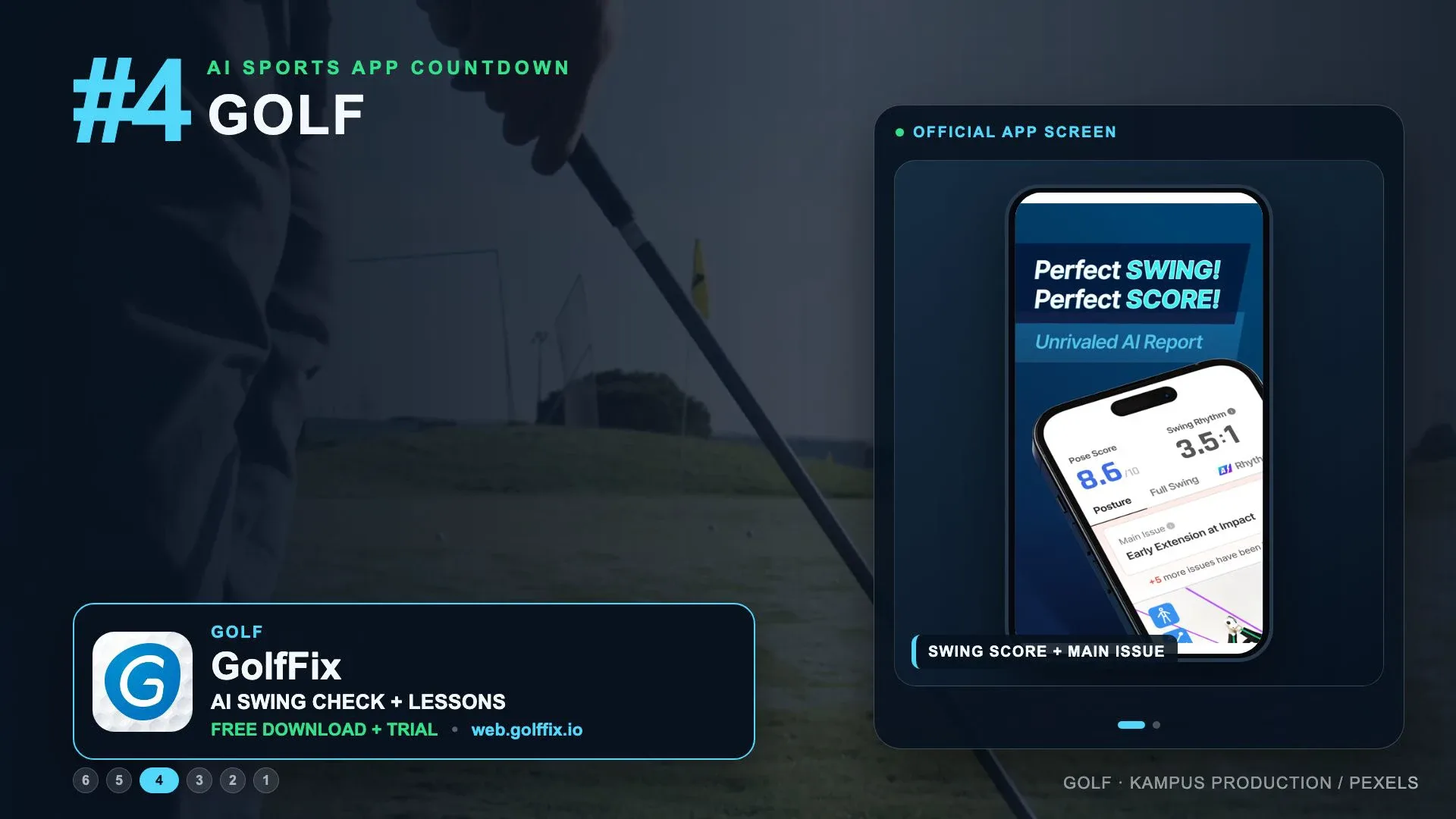
GolfFix watches one golf swing, produces a score, points to the position it thinks needs work, and suggests lessons. It is a free download with paid upgrades and a premium trial.
Golf is almost designed for this experiment because one swing produces plenty of visible positions to compare—and because golfers were recording themselves long before the phone started talking back.
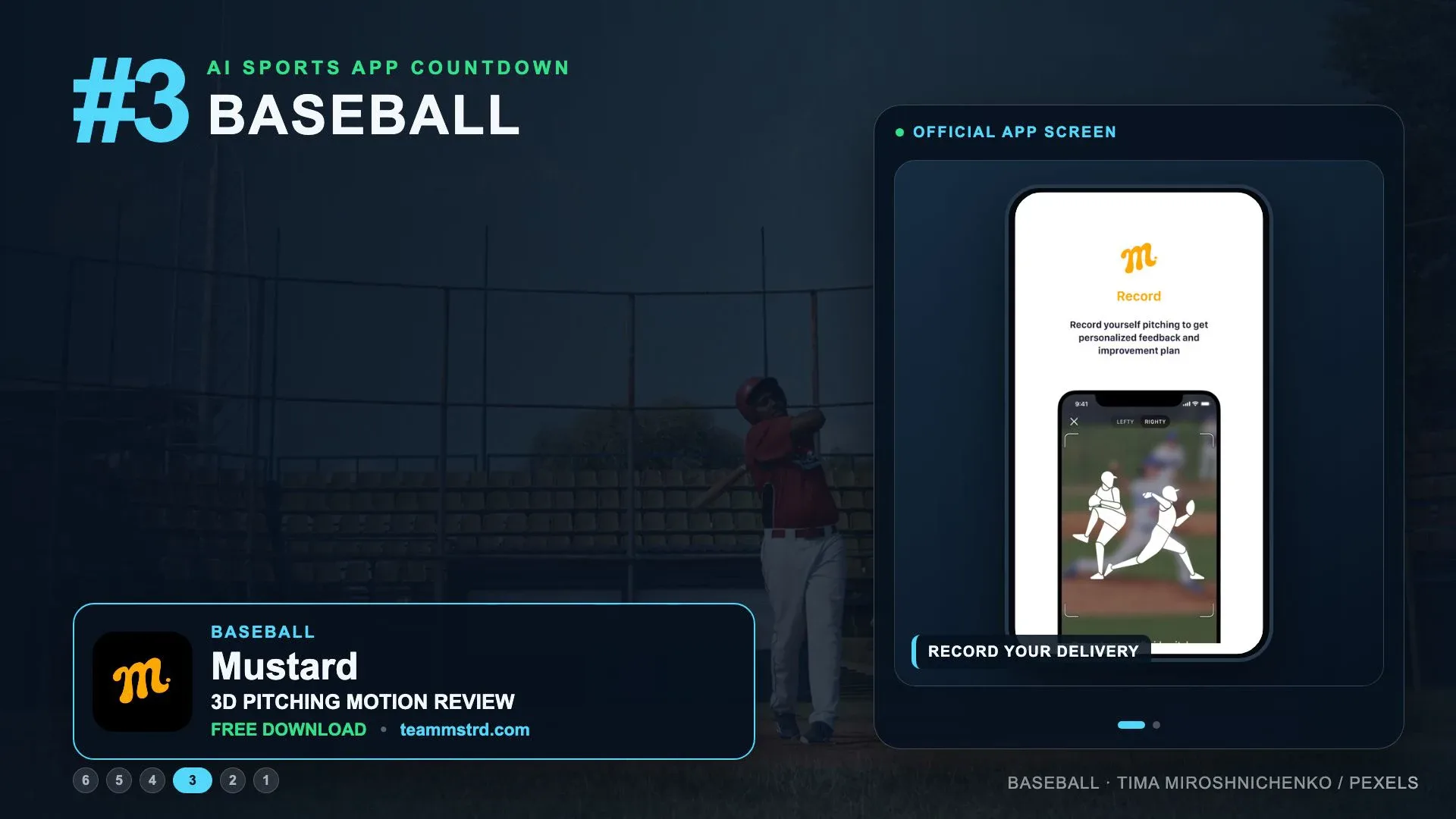
#3: Mustard for baseball
Mustard turns a baseball pitching video into a motion review with personalized training suggestions. It is free to download, with optional paid features.
The software can point to timing, stride, balance, and important positions in the delivery. I would still want a real pitching coach involved, especially if pain or injury is part of the conversation, but it gives a player a useful place to begin.
#2: SwingVision for tennis
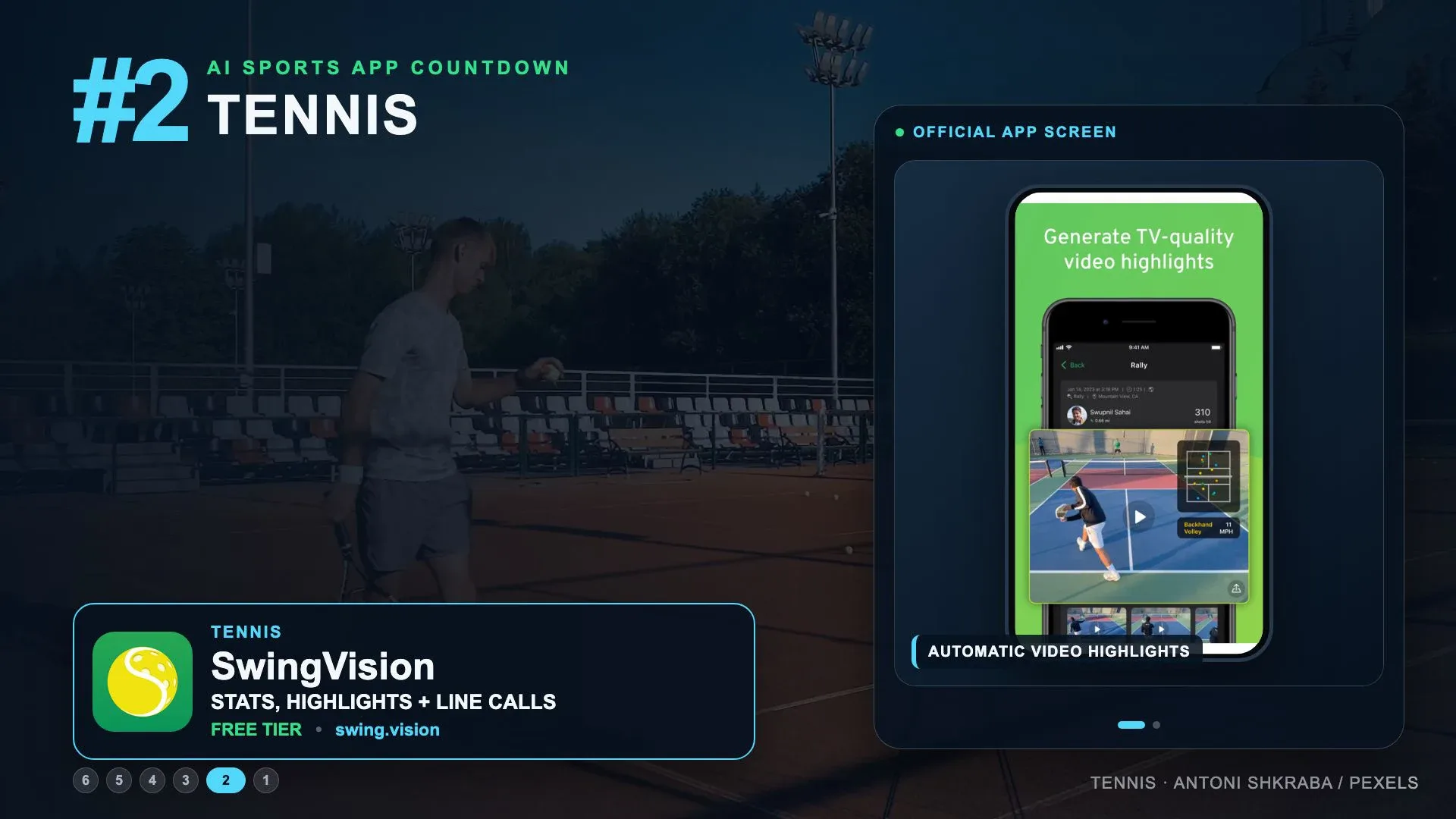
SwingVision turns one camera into a tennis match-analysis tool. It can create highlights, calculate statistics, and help review close line calls. The company offers a free tier, so the basic experience is not limited to professional players.
This is a good example of AI doing the boring work first: sorting a long recording into the moments somebody actually wants to watch.
#1: HomeCourt for basketball
HomeCourt uses a phone or tablet camera to guide basketball drills, count shots, follow movement, and provide feedback. Its official site lists free activities and free team creation, while premium features begin with a trial.
This is number one because the idea is immediately understandable. Instead of writing down every make and miss, a player can record a normal practice and get a simple record of what happened.
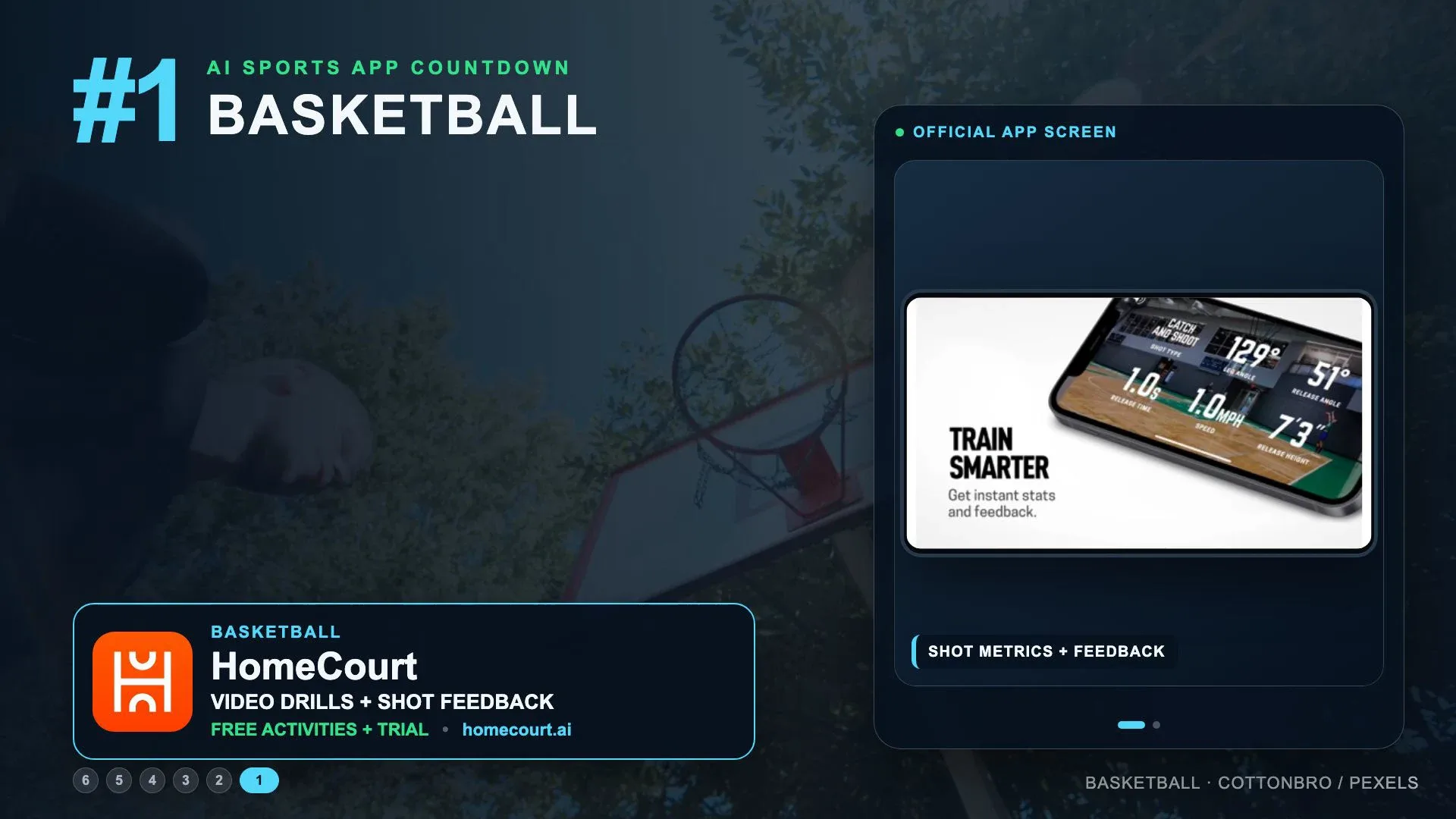
These are the six ranked demonstrations from the latest v6 companion-vlog cut, ordered from #6 to #1. Five panels use official App Store promotional screens. LaxCoach AI did not publish usable screenshots through the same metadata feed when I checked, so that panel is deliberately labeled as an illustrated feature demonstration rather than the real interface.
What All Six Apps Are Really Doing
The language around sports technology can become technical very quickly, but the useful part is much simpler.
Most of these tools do four jobs:
- Watch a video or read information from a sensor.
- Count shots, movement, speed, distance, workload, ball position, or useful moments.
- Compare the attempt with earlier attempts, other athletes, a coaching model, or a rule.
- Suggest what to review next.
That pattern appears everywhere. A basketball phone app and the NFL's Digital Athlete are obviously not the same product, but they are relatives. Both turn movement into information and ask a person to decide what to do with it.
What Professional Sports Are Doing
Professional sports take the same watch-count-compare-suggest pattern and scale it up with more cameras, more data, and much higher stakes.
The NFL's Digital Athlete combines video and tracking data to help all 32 clubs think about training volume, injury risk, and recovery. It is not a magical prediction of the next injury. It is another source of information for designing practice and understanding repeated patterns.
The NBA uses optical tracking and AI to turn player movement into new statistics and explanations of what happened during a play.
FIFA's semi-automated offside technology tracks players and the ball to help officials review close decisions. The technology supports the decision; it does not remove the need for rules, testing, approval, or a responsible official.
This is the important difference between the professional and consumer versions. The basic job may be familiar, but a professional system can influence health decisions, contracts, selection, and the result of a match. The higher the stakes, the stronger the human review needs to be.
Lacrosse Sent Me Down the Rabbit Hole
The original lacrosse question was not wrong. It was simply one entrance into a much larger subject.
The National Lacrosse League named Sportlogiq its official statistics partner in 2019, bringing AI-assisted performance analytics to professional games. The Premier Lacrosse League later used Catapult GPS units to study workload and performance with selected players.
The PLL also created GameSync, which lets a fan photograph a live broadcast so the league's AI can check the teams, score, and clock. If the automated check fails twice, a person reviews it. That modest fallback may be the best design choice in the whole feature.
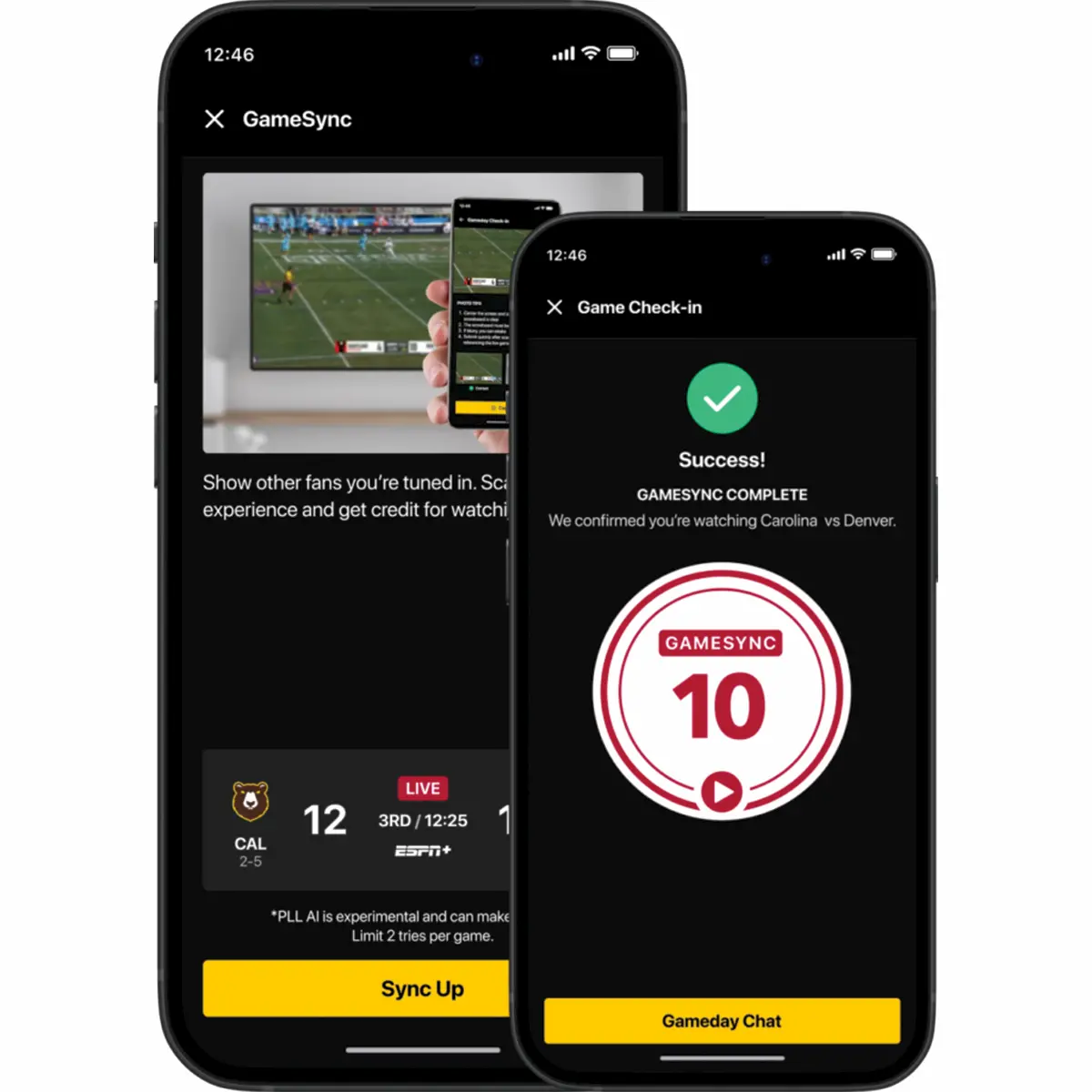
The image comes from the PLL's official GameSync demonstration, not a concept mockup. It shows both the convenience and the limit: the AI performs a narrow task, and a human remains available when it cannot finish the job.
How Is AI Being Banned?
Usually, it is not banned by name.
A rulebook rarely says, “No artificial intelligence.” It is more likely to say no unapproved electronic equipment, no live coaching from a device, no untested tracking system, or no access to a certain kind of data during competition.
That distinction matters because a phone coach may be perfectly acceptable during practice and completely unacceptable during a live game.
USA Lacrosse's 2026 boys' rules materials, for example, list electronic equipment as prohibited on the field and specifically use a helmet- or chest-mounted GoPro as an example. The rule controls the device and the moment of use, whether or not its software contains AI.
The WTA takes a similar approach. Players cannot simply use any electronic device during a match. Approved player-analysis technology still has to follow coaching rules.
FIFA tests and certifies tracking and offside systems for a defined purpose before they can be used live. Professional cycling allows some sensors but restricts others during competition when live biological information could become an in-race instruction.
So the practical boundary is not “technology bad.” It is:
- Is the device approved?
- Is this practice or live competition?
- Does one side receive an unfair advantage?
- What is the system allowed to decide?
- Who takes responsibility if it fails?
What Professional Players Think
Players are not one unified pro-AI or anti-AI group. Their response is more practical than that.
Technology that helps an athlete train, recover, stay healthy, or understand performance can be valuable. The problem begins when the athlete cannot see the data, does not know how it will be used, or cannot challenge a conclusion that affects a career.
FIFPRO surveyed 119 professional footballers through ten player unions. Eighty percent wanted access to their own data so they could improve performance. The same work found concern and uncertainty about how that information was collected and used.
That is not a rejection of technology. It is a request for basic rights:
- Let me see my information.
- Tell me why it was collected.
- Explain what the score means.
- Let me correct a mistake.
- Do not quietly reuse or sell it for a different purpose.
Former MLB player Carlos Peña offered a version of the same idea when discussing analytics: the information should enhance intuition rather than replace it, and somebody needs to translate the output into language a player can actually use.
That may be the best standard for the whole industry. A complicated model is not useful coaching just because it produced a number with two decimal places.
How I Would Try One of These Apps
I would start with one ordinary practice, not a dramatic test designed to make the software look smart.
- Pick one app that fits the sport.
- Use the free activity, tier, download, or trial before subscribing.
- Record one normal practice with the camera placed exactly as instructed.
- Repeat the same motion a few times and see whether the feedback stays consistent.
- Compare the result with a coach, trainer, or experienced player.
- Check what happens to uploaded video and who can access it.
If a child appears in the recording, I would be even more careful. A fun training experiment is not worth building a permanent video-and-biometric record nobody fully understands.
Most important, I would treat the app as a second opinion. It may notice something useful. It should not diagnose an injury, decide a player's potential, or overrule every human who knows the athlete.
My Simple Fairness Test
Before a team, parent, coach, league, or athlete adopts an AI tool, I would ask five questions:
- Who benefits first—the athlete, the coach, the league, or the company collecting the data?
- Does the athlete understand what is being recorded and why?
- Can a person explain the result in plain language?
- Is there a way to correct or appeal a mistake?
- Would the technology still feel fair if the other team had the same access?
The higher the stakes, the more important those questions become. A wrong fan check-in is irritating. A wrong health, scouting, or officiating decision can change a career or a championship.
Keep the Human in the Game
Lacrosse sent me into this story, but it is only one example.
AI is becoming another sports tool, from a free phone app at practice to a stadium full of cameras at a professional game. The best version gives more people access to feedback, saves coaches time, helps players stay healthier, and makes difficult decisions easier to review.
The worst version hides behind a score nobody can explain and turns an athlete's body into data everyone controls except the athlete.
I would try the tools. I would keep the ones that genuinely help. I would also insist that a real person remains responsible for any important decision.
The future of sports can absolutely use better technology.
It should just remember that the athlete is not one of the tools.